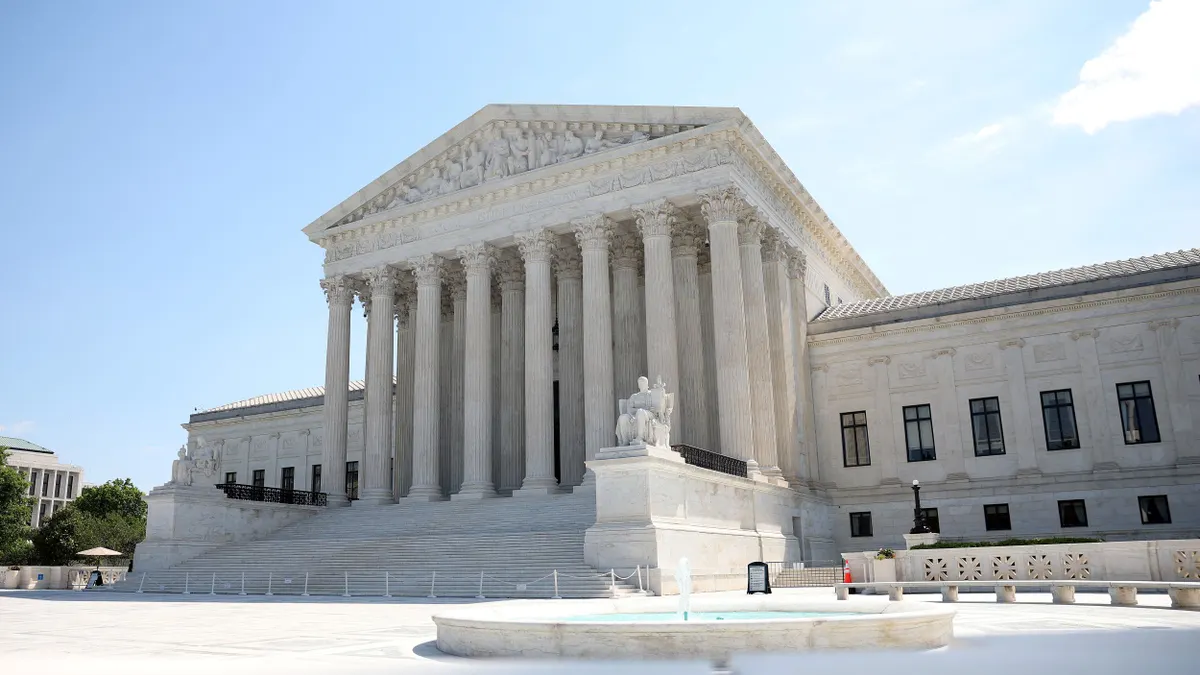
In St. Mary Catholic Parish v. Roy, Catholic parents and schools in Colorado are seeking to partake in a universal preschool program that allows families 15 hours of free preschool a week at the public or private preschool of their choice. The benefit is worth about $6,000 per child, according to the petitioners.
However, Colorado requires any school participating in the program to sign a nondiscrimination agreement, which includes a prohibition on discrimination based on LGBTQ+ identity.
The petitioners — which include parents of preschool-age children and two religious parishes that have affiliated preschools — say the provision excludes religious preschools that, based on their faith, will not enroll children of same-sex couples. They sued under the First Amendment’s free exercise clause, saying the provision preventing them from discriminating against children violates their religious freedom rights.
The petitioners also claim that Colorado has allowed many “exemptions,” such as for schools aimed toward low-income families or children with disabilities.
"They are wrong," Helen Norton, an attorney representing Colorado's Department of Early Childhood, said during oral arguments Tuesday. “Schools advance equal opportunity when they recognize that a child with a visual impairment needs different treatment in order to learn. Schools advance equal opportunity when they understand that kids in poverty can't learn if they're hungry, or because they're in pain because their parents can't afford dental care to treat their cavities."
On the other hand, Nicholas Reaves, who represented the petitioners, said Catholic families and schools "just want the same treatment" as others in being able to participate in the universal preschool program.
The court’s ideologically conservative justices seemed to agree that there may be some instances when private religious schools receiving public funding, such as through Colorado's universal preschool program, should be able to exercise their religious beliefs in a way that excludes LGBTQ+ families and their children.
"So we have here a requirement that has a very severe impact on certain religions and that was something that everyone could've anticipated and almost must have anticipated when this requirement was imposed," said Justice Samuel Alito on Tuesday. "And we have little evidence of a practical problem, little evidence — if any evidence, you’ll tell me if I’m wrong — that there are LGBTQ+ couples who cannot find other preschools to send their children to."
Justice Brett Kavanaugh questioned where schools would draw the line, such as refusing to hire gay coaches or athletic directors.
"I think every diocese can make their own decision about where exactly that line is," said Reaves.
The case follows similar ones decided by the high court in recent years.
In Espinoza v. Montana Department of Revenue, heard by justices in 2020, the Supreme Court decided in favor of a Montana mother who wanted to use the state’s tax credit-funded scholarship to send her children to a Christian school.
In 2022, the justices ruled that Maine violated the First Amendment by restricting religious private schools from using public tuition assistance programs.
And in 2018’s Masterpiece Cakeshop, Ltd. v. Colorado Civil Rights Commission, the court decided in favor of a Colorado baker who refused to make a custom wedding cake for a same-sex couple.
The Supreme Court's decision in the St. Mary Catholic Parish v. Roy case will be released as part of its 2026-27 term, which breaks during the summer.