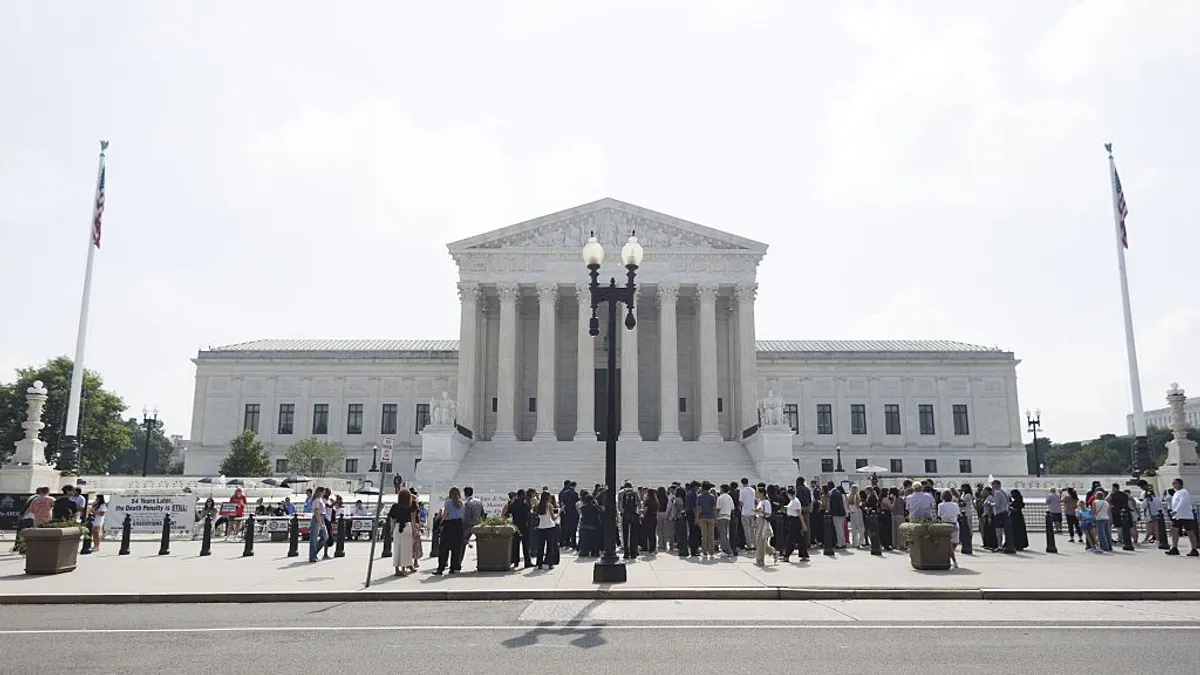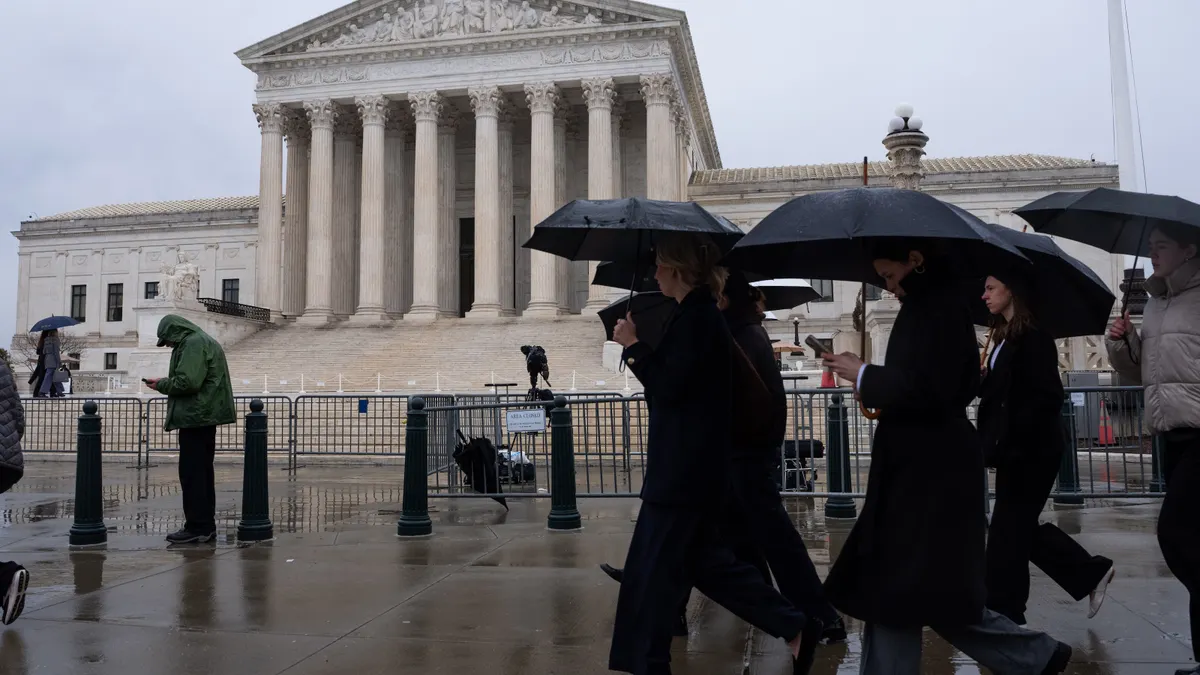
The U.S. Supreme Court’s landmark decision Tuesday allowing the separation of athletics based on "biological sex" is reverberating throughout the K-12 sector, which has long navigated a growing divide over whether transgender students should be able to play sports on teams aligning with their gender identities.
The combined ruling in Little v. Hecox and West Virginia v. B.P.J. is a major blow to the transgender rights movement, which has sought greater inclusion in K-12 schools — including transgender students' access to bathrooms and locker rooms aligned with their gender identity rather than birth sex.
"This ruling represents another significant setback for transgender youth across the country, limiting their ability to fully engage in school life," said Melanie Willingham-Jaggers, CEO of Glisten, which advocates for LGBTQ+ youth inclusion in K-12. "Exclusion from these spaces shapes not only athletic access, but the broader message about who should be valued and included in our schools and societal ecosystem."
However, the decision drew praise from those who say it preserves the essence of Title IX and protects cisgender girls' and women's athletic opportunities and physical safety on the field.
"The Court recognized what the law has always required: equal athletic opportunity depends on separate women's sports based on biological sex," said Beth Parlato, senior legal counsel for Independent Women's Law Center, in a June 30 statement. "This decision restores the law to its original purpose and confirms that states may protect female athletes and preserve women's sports for women."
Here's what the decision does — and doesn't — do:
It doesn't require exclusion of transgender students
While the Supreme Court's 6-3 decision says Title IX allows athletics teams to be separated based on "biological sex" — regardless of whether students take hormones or puberty blockers — it stops short of saying that Title IX requires such separation to protect the rights of cisgender women or that transgender students cannot play on teams aligning with their gender identities.
"The majority opinion was clear that the Court was not addressing the question of whether under Title IX and/or the Equal Protection Clause, schools or states may allow transgender females to participate on girls’ and women’s sports teams," said Melinda Kaufmann, an education attorney with Pullman & Comley in Connecticut who regularly counsels educational institutions on Title IX, in an email to K-12 Dive. "This question will likely be answered in the future."
That means that bans through state laws in 27 states preventing transgender students from playing on girls' athletics teams can stay in place, and so can state policies allowing transgender students to play on those teams.
"I think it's up to individual states," said Jenny Denny, an education attorney at firm Liebert Cassidy Whitmore, located in California.
Lower court orders had fully or partially blocked at least six states from moving forward with transgender athlete access bans prior to the Supreme Court decision, according to a tracker by the Movement Advancement Project. Those states — including Idaho and West Virginia, which brought their cases to the high court for review — have been given the green light to move forward with their bans.
Other states permit transgender students to play on teams consistent with their gender identities.
"Those laws still stand even after this decision today," said Denny.
Areas impacted by the opinion
Denny and other legal experts, however, expect the U.S. Department of Education to use the ruling to target state and district policies in liberal-leaning areas allowing transgender students to play on women and girls' sports teams.
"I can see the department using this opinion today to support its position," said Denny, adding that enforcement actions from the Education Department are "the next frontier in the world of Title IX."
The Education Department, which had participated in defending West Virginia and Idaho's bans in the Supreme Court, already said as much in a statement responding to the decision.
"The Trump Administration has fought to restore Title IX’s protections for women and girls since Day One," U.S. Education Secretary Linda McMahon in a June 30 statement. "Today’s ruling cements those reforms and builds on decades of work to secure equal educational opportunities for women and girls. This is a tremendous victory, and we look forward to ensuring that every educational institution in America abides by the law of the land.”
In June alone, the Education Department launched or advanced Title IX investigations cracking down on transgender or LGBTQ+ access in Kentucky, Kansas, Maryland, Michigan, North Carolina, and Colorado.
"This case will certainly embolden the challengers," said Andrew Siegel, a professor at Seattle University School of Law, where he is also Supreme Court Initiative faculty director.
However, the Supreme Court decision doesn't prevent a future administration from changing course — meaning the policy pingpong on the issue that has continued under the past few administrations is set to roll on unless future cases fill in the blanks.
Gray areas yet to be settled
While the Supreme Court’s decision answered the question of whether teams can be separated based on "biological sex," it also left a number of questions unanswered.
"The next step in litigation is really trying to nail down what Title IX requires, as opposed to what it permits," said Denny.
The decision did not address the questions of whether schools or states may allow transgender students to participate on girls’ and women’s sports teams, or whether statutes or policies requiring school districts to allow transgender females to participate on women’s sports teams violate Title IX or the Equal Protection Clause, said Kaufmann.
The decision also leaves the question of whether there may be a more tailored approach for students who take hormones or puberty blockers.
"I think that this decision is not particularly insightful, that there is absolutely plenty of room for advocates to continue to work to support and protect the rights and protect the equality of trans students outside the context of physical competitions and maybe spaces like locker rooms and such," said Siegal.