A federal judge on Wednesday partially blocked the Trump administration's effort to overhaul the Teen Pregnancy Prevention Program, saying its new emphasis on abstinence instead of contraception for pregnancy prevention — and termination of grants that don't align with that approach — was carried out without going through the proper administrative channels.
While the judge temporarily blocked the implementation of the program's policy overhaul, he did not order reinstatement of the grants — of which nearly all were terminated — because of questions over the court's jurisdiction.
The administration's approach stressed "a nebulous concept that appears to elevate fertility and marital procreation over well-tested forms of contraception and pregnancy prevention," Judge Christopher Cooper of the U.S. District Court for the District of Columbia said in Hennepin County v. United States Department of Health and Human Services.
While it's "perfectly entitled to formulate its own views about how to stem teen pregnancy — or even whether it is worth preventing at all," the administration may not impose that on grant recipients in a way that is "unreasonable or unexplained," Cooper said.
Congress began funding the Teen Pregnancy Prevention Program in 2010. The bipartisan program funds about $101 million in grants annually to improve the sexual and reproductive health outcomes of youth by using evidence-based education programs.
The program’s goal is to help teens make healthy decisions that, in turn, reduce risky sexual behaviors and decrease sexually transmitted infections and unintended teen pregnancy.
Between 1991 and 2025, the birth rate for mothers ages 15 to 19 fell from 61.8 births per 1,000 mothers to 11.7 births per 1,000, according to data from the U.S. Centers for Disease Control and Prevention. The rate declined 72% since 2007.
"The effort seems to be working," Cooper said.
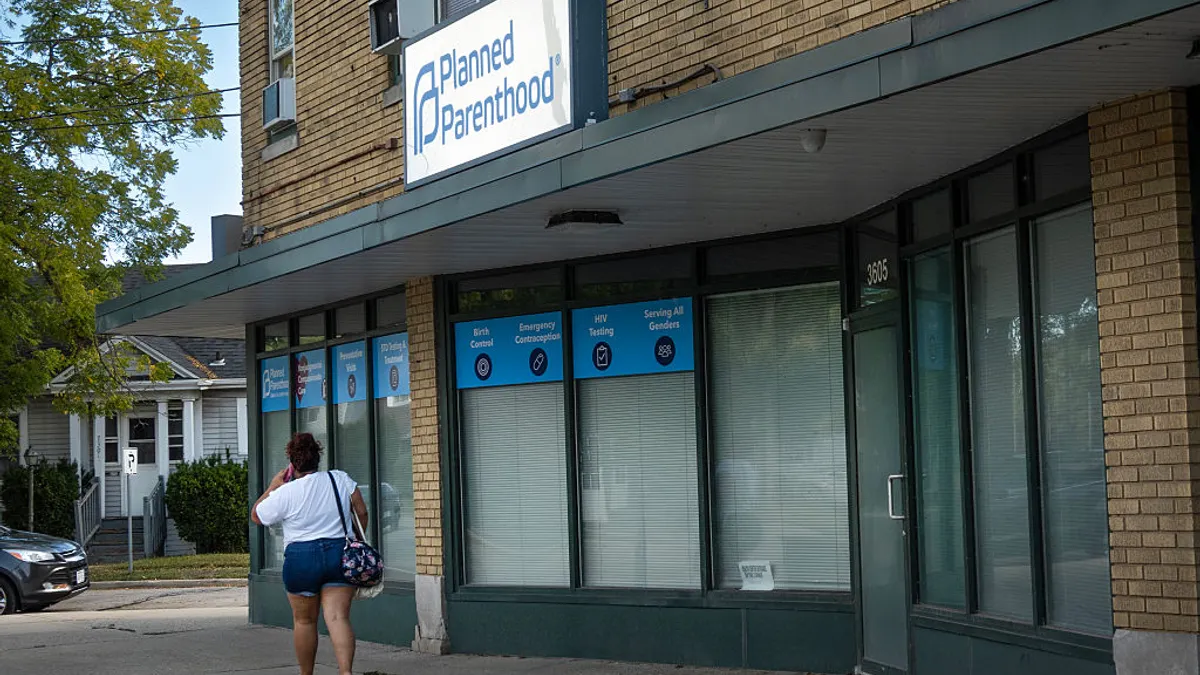
Plaintiffs in the lawsuit include two local governments — Minnesota's Hennepin County and Washington's King County — and a Planned Parenthood organization that were affected by the grant cancellations. The termination letters told 53 of the 66 grant recipients across the country in June that their multi-year funding, which was supposed to last from 2023 until 2028, would be canceled because the recipients' goals no longer aligned with "the program goals or agency priorities."
“After a review of all curricular content, [the agency] believes that some curricula normalize adolescent sexual activity and are not age appropriate," the U.S. Department of Health and Human Services, which administers the program, told recipients about its decision to cancel the grants, court documents stated.
Some recipients used the funds to work with schools on issues including sexually transmitted infection education, pregnancy prevention, and other sex health and hygiene issues.
However, the Trump administration changed the program's requirements so it would mandate that recipients take "an abstinence-only approach to pregnancy prevention" and bar "programming that could be understood to 'normalize' sexual activity among adolescents," according to the court opinion issued Tuesday.
"And an educational initiative that counsels teens on how to avoid pregnancy without discussing the realities of unprotected intercourse and its alternatives would seem to defy social reality, common sense, and scientific evidence alike," Cooper said in the order. "Yet HHS seeks to impose these and other unexplained criteria on all TPP grantees moving forward. As such, HHS’s new TPP policy is likely arbitrary and capricious."
However, the millions in funding cancelled for recipients will not be immediately reinstated, with Cooper saying that may be a matter for the Court of Federal Claims rather than federal district court.
Abrupt grant cancellations under the second Trump administration — which it consistently says are being issued for not aligning with the administration's priorities — have impacted a slew of education-related areas, including mental health supports for students and teacher preparation programs.
Legal challenges to those grant cancellations are also pending, with court rulings in the interim being a mixed bag so far.