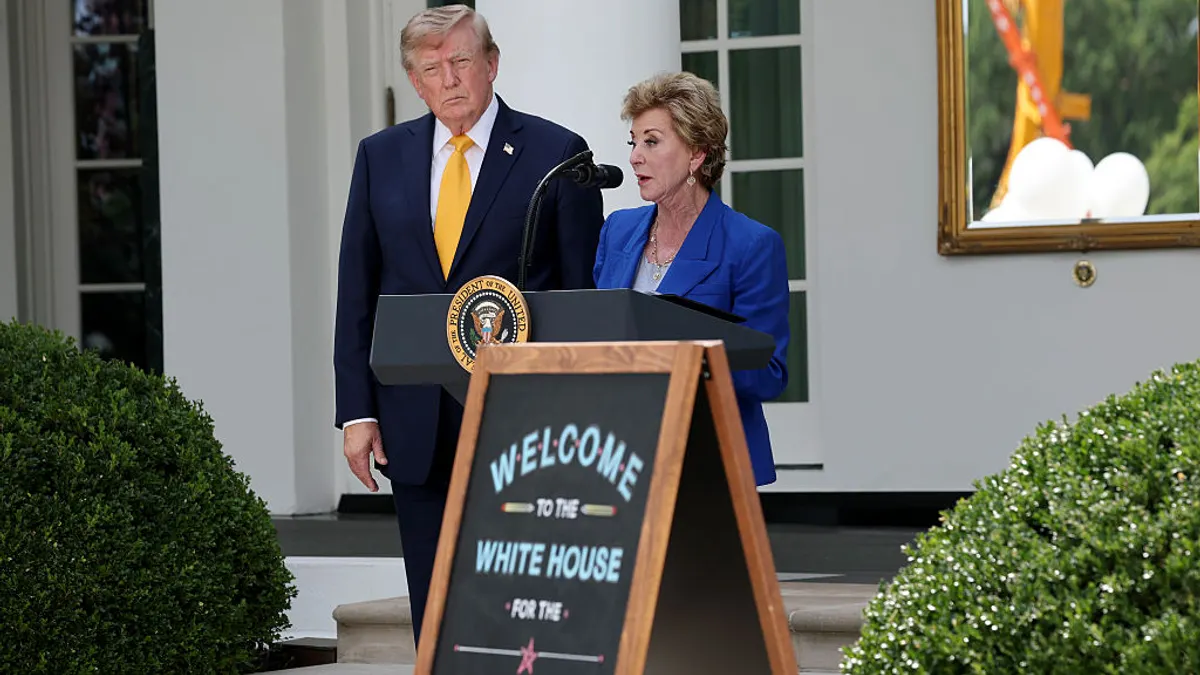
States would have limited power to set specific conditions for how the first nationwide school choice program would operate in their localities, according to a proposed rule published today by the U.S. Treasury Department
Families would be allowed to use taxpayer-supported scholarships for private school tuition and public school expenses such as tutoring, services for students with disabilities, books, computers and other costs, the proposed rule said.
The release of the proposed rule for the Education Freedom Tax Credit initiative marks a major development in the controversial program promoted by the Trump administration and approved through 2025's One Big Beautiful Bill by the Republican majority in Congress.
Supporters have said the program will open up elementary and secondary school choice for families and generate billions of dollars in taxpayer contributions for educational expenses for public, private and homeschooled students. Critics, however, worry that public school funding will suffer, racial disparities will increase, and a lack of accountability and transparency could harm student outcomes.
The Treasury Department and the IRS on Thursday also released a temporary regulation governing how states can participate in the voluntary program and approve scholarship-granting 501(c)(3) organizations to manage and disburse student scholarships. The temporary regulation was released to give states guidance before the program's launch on Jan. 1, 2027.
States and scholarship-granting organizations can rely on the proposed and temporary regulation to plan their programs, Treasury and U.S. Department of Education officials said during a press call late Wednesday.
The regulations aim to help states and organizations prepare, give taxpayer donors clear information, and create more educational opportunities for families, the officials said.
Here are some highlights from the proposed and temporary regulations, according to the Treasury and the Education Department press call and press release:
- Participating states may not impose additional operating restrictions on SGOs beyond what's allowed by the federal law. That means they can't restrict the type of school that students with scholarships can attend or the types of education expenses that can be funded through scholarships.
- Streamlined eligibility verification procedures for scholarships will be in place for certain families, including those with foster children, those participating in needs-based services, and certain students receiving tutoring or services for students with disabilities living in low-income areas.
- Participating states will have until Feb. 15, 2027, to submit their lists of qualifying SGOs.
- Annual independent reviews will be conducted into SGOs' finances and program compliance. Restrictions will be placed on awards to "insiders" and their families, and procedures will be imposed for removing organizations that don't comply. Taxpayers may not earmark donations to specific students.
Treasury and the IRS estimate that by 2030, more than 11 million taxpayers will donate nearly $26 billion annually toward the program through an estimated 600 to 700 SGOs. That would equal about 2.2 million scholarships a year. By comparison, the Education Department's budget for Title I grants for low-income schools in fiscal year 2026 was $18.4 billion.
How states, students and taxpayers can participate
The new federal scholarship program is intended to operate in conjunction with existing state-led private school choice programs. About 1.6 million students in 34 states, the District of Columbia and Puerto Rico participate in 75 state-level private school choice programs as of Sept. 30, according to EdChoice, a nonprofit research and advocacy group that supports private school choice.
Only students living in states that opt into the federal school choice program will be eligible for scholarships. Thirty states had indicated they would participate as of Sept. 14, according to the IRS.
Some state leaders, including those in Wisconsin and Oregon, have said their states will not participate. States must commit by Jan. 1, 2027, to participate in the program that year.
Students living in households with incomes up to 300% of their area’s median gross income would qualify for a scholarship. Treasury and the IRS estimate that would translate to about 96% of students living in participating states.
The money for the scholarships would come from federal taxpayers, who would be able to donate up to $1,700 annually — not to exceed the donor's income tax liability — to a scholarship-granting organization. In turn, the taxpayer would be eligible for a 100% federal income tax credit for their contribution.
SGOs will determine individual student scholarship amounts based on their program design, available funding and the student's eligible expenses, Treasury and Education Department officials said.
Taxpayers can begin making contributions to SGOs beginning next year. Donor parents would not be able to direct their contributions to their own child’s education expenses.
What's next?
Public comments on the proposed rule will be accepted for 60 days, after which the Treasury Department will review the comments and issue a final rule.
In the meantime, groups have already begun expanding existing or forming new SGOs to be in a position to solicit and award scholarship funds.
For instance, the Future School Fund, a scholarship-granting organization founded by Deborah Gist, former Rhode Island commissioner of education, aims to funnel donations to services supporting public school students.
ACE Scholarships, a long-established SGO, is encouraging families to submit applications and for individuals to make donations in 2027 that could be applied for tax credits by Tax Day in 2028.
"From a public school side, it's, I think, incredibly exciting, because you've got a system right now that they would make the case that they are underfunded, that they need more money, and this is a great way to motivate and inspire them" to raise donations, said ACE Scholarships CEO Norton Rainey, in a May interview with K-12 Dive.
Polling released by EdChoice on Sept. 23 shows that while 77% of parents with school-aged children support their state's participation in the program, but only 27% of parents with school-aged children said they'd heard about it before they took the survey. About 1,300 school parents participated in the polling.
William Hansen, who helped launch the Education Department's first school choice office in 1989, is now CEO of Building Hope, a nonprofit that helps school communities create learning spaces.
He called the federal school choice program "revolutionary" and said it will generate more funding for various school models that will benefit students. Still, Hansen predicts a learning curve as states and SGOs create the infrastructure to manage donations and build awareness among potential donors.
"It's not going to change our system overnight," Hansen said. "I think this has the opportunity to be a game changer, to really inject competition and innovation and more choice into our education system."
Program faces resistance
Critics, however, are urging states, districts and public schools not to participate. And they're sending warnings about a loss of funding and resources for underfunded public schools.
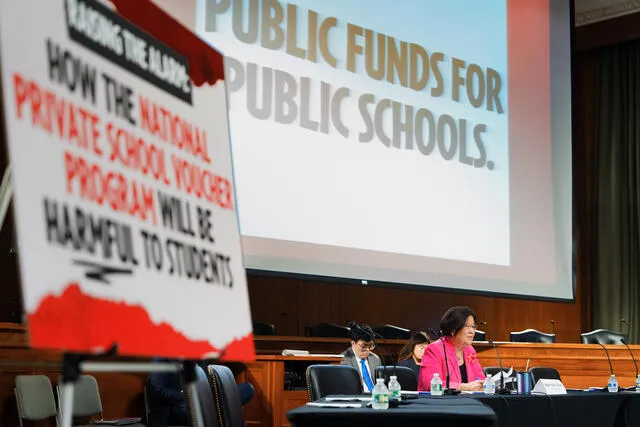
Jacqueline Rodriguez, CEO of the National Center for Learning Disabilities, voiced concerns about how the federal program will impact students with disabilities who transfer to private schools. These students would lose their federally protected right to a free and appropriate public education guaranteed under the Individuals with Disabilities Education Act, she said. Rodriguez spoke during a spotlight forum hosted by Sen. Mazie Hirono, D-Hawaii, on Sept. 22 in Washington, D.C.
"It is so deeply troubling that this program, funded with federal tax dollars, will be implemented without regulation or further clarification of rights and protections for students most marginalized — those with disabilities," Rodriguez said. "A program that was designed to fund private school tuition is not a solution for public schools."
Rather, she said, the federal government should fully fund IDEA and other programs that help public schools serve students with disabilities.
NCLD and 15 other civil rights organizations sent a letter to governors on Sept. 28 urging them to opt out of the program. "The false promise of meaningful funding for public school students is a veneer to hide the reality that this program was specifically designed to benefit private schools and the students who attend them,” the letter said.