Dive Brief:
- K-12 schools and higher education institutions can better prepare for and protect themselves from swatting incidents by developing procedures and training to identify and respond to false threats, according to guidance issued jointly on Sept. 25 by the U.S. Department of Education and the U.S. Department of Justice.
- The guidance recommends several steps that schools and colleges can take, including training their staff and educating their communities on typical characteristics of a swatting event so they can detect false threats sooner.
- The federal agencies called swatting a "crisis" that causes significant disruption and trauma to school communities. Swatting also costs taxpayers millions of dollars in personnel and equipment, lost classroom time and property damage, the Education and Justice Departments said.
Dive Insight:
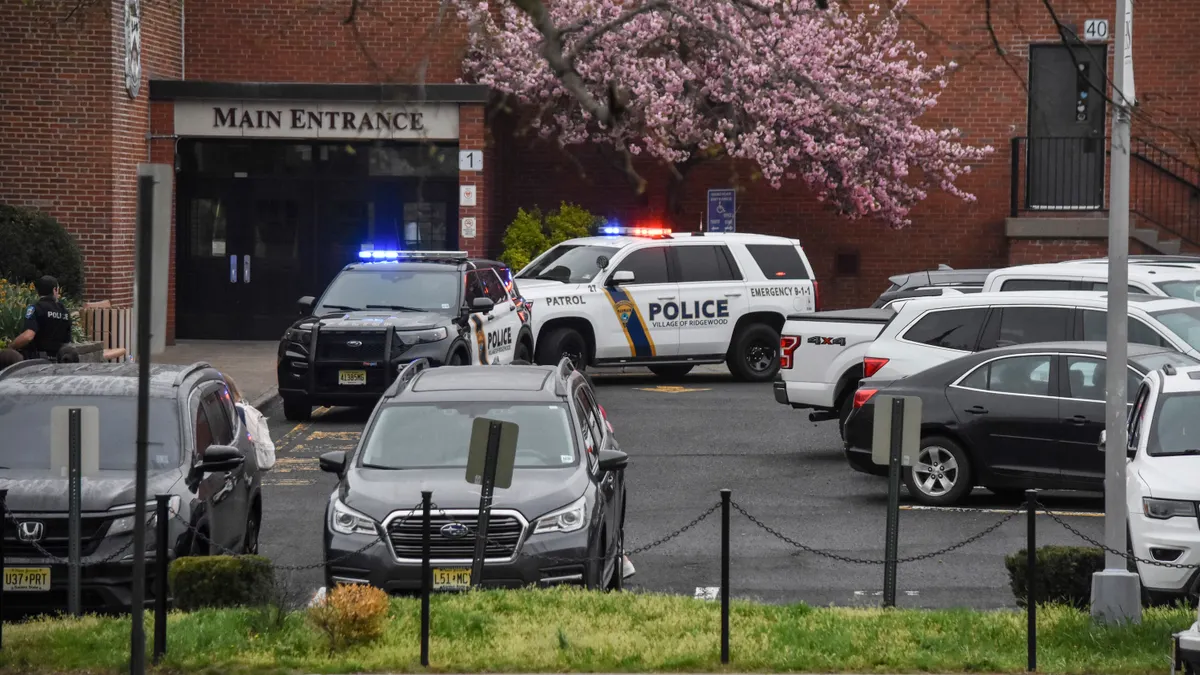
Swatting is a false report of a violent crime at a certain location, intended to result in a heavy law enforcement response. At schools, these incidents often trigger shelter-in-place or lockdown orders, which can cause "chaos and other harmful consequences when campuses are not well-prepared," the Education Department said in a Friday statement.
All threats should be treated as credible when they are received, the agencies said.
According to the Educator's School Safety Network, swatting incidents have consistently decreased since the 2022-23 school year, when there were 446 swatting incidents recorded. There were 124 swatting incidents in K-12 schools during the 2024-25 school year, which was down 72% from the 2022-23 school year and down 22% from the 158 incidents in 2023-24.
The network's analysis of violent incidents and threats during the 2024-25 school year found it was difficult to determine why swatting incidents decreased so significantly. But it noted that the increased prosecution of offenders is a factor.
The Education Department and DOJ guidance, which is voluntary for schools to follow, emphasized that swatting offenders could violate one or more federal criminal laws in addition to state laws.
In addition to training employees to detect false threats sooner, the guidance also recommends schools and colleges have:
- Partnerships between on-campus officials, including security staff, and external law enforcement that establishes clear communication lines for response coordination.
- Training exercises familiarize leaders with emergency decision-making protocols in advance.
- A multidisciplinary threat assessment team that can help assess and address anonymous threats.
- A point person who leads efforts to publish campus-wide communications, notify law enforcement and evaluate the level of threats.
Additionally, the guidance suggests training for any school and college staff who are in a position to receive or answer a swatting report.
"Staff preparation is key and should be the foremost priority in front-line awareness of and development of appropriate responses to swatting incidents," said the guidance, which includes resources from various federal agencies like the FBI.
The Education Department and DOJ plan to provide additional guidance on this topic when available and necessary, according to Nicholas Kent, under secretary at the Education Department, and Stanley Woodward Jr., associate attorney general at DOJ.
"We are committed to the safety of students, teachers, and staff across the country and take all incidents of swatting and violence seriously," the pair said in the guidance document. "We welcome further conversations with educational institutions to determine how best to solve this crisis, which increasingly affects people and organizations across the country.”