This is the first installment of a three-part series on the impact of private school choice on public school enrollment.
Enroll here!
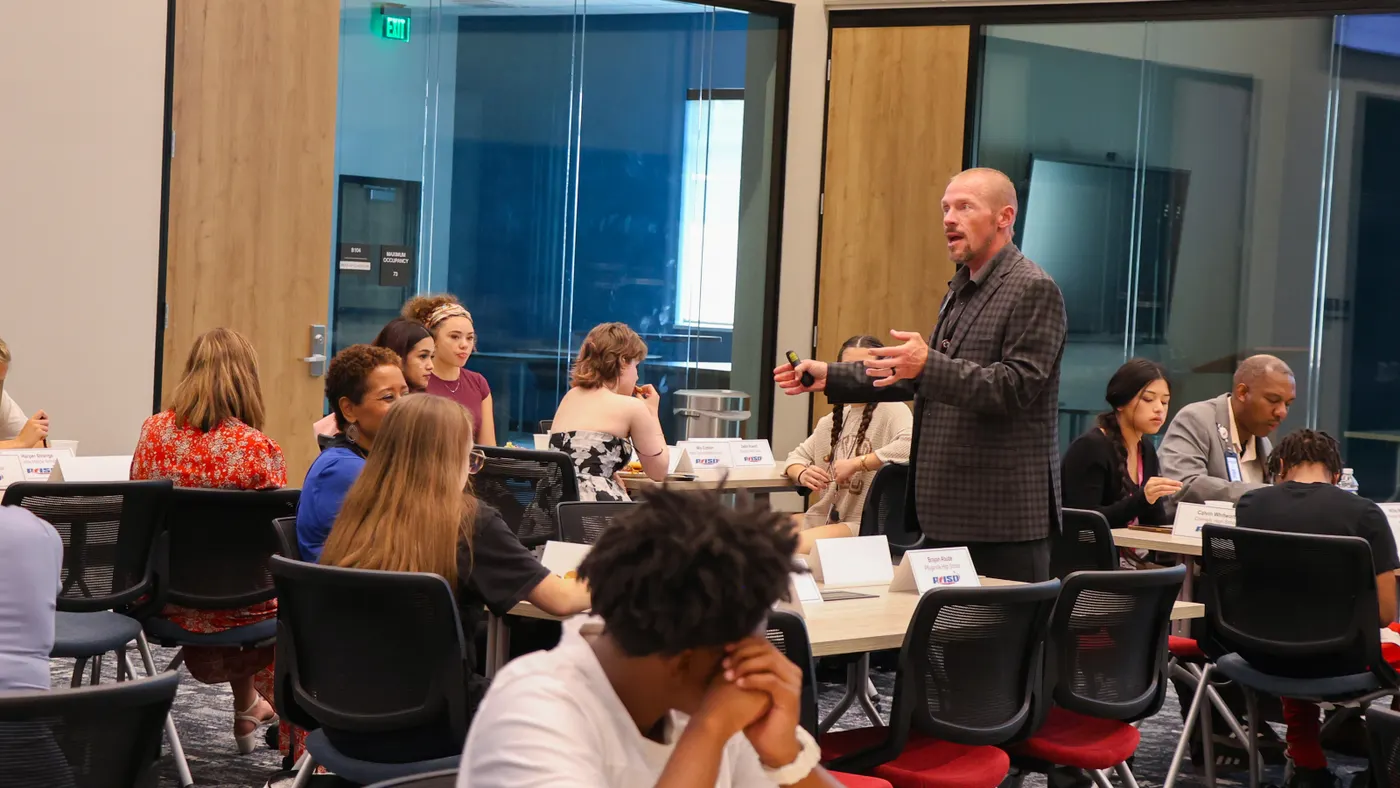
That's the message families across the country are hearing from both public and private schools as competition for students heats up in the wake of declining birth rates and the rapid growth of taxpayer-supported private school choice. And while private schools are used to marketing their offerings, it's a new world for public schools that historically were the first — and most often only — choice for the great majority of families.
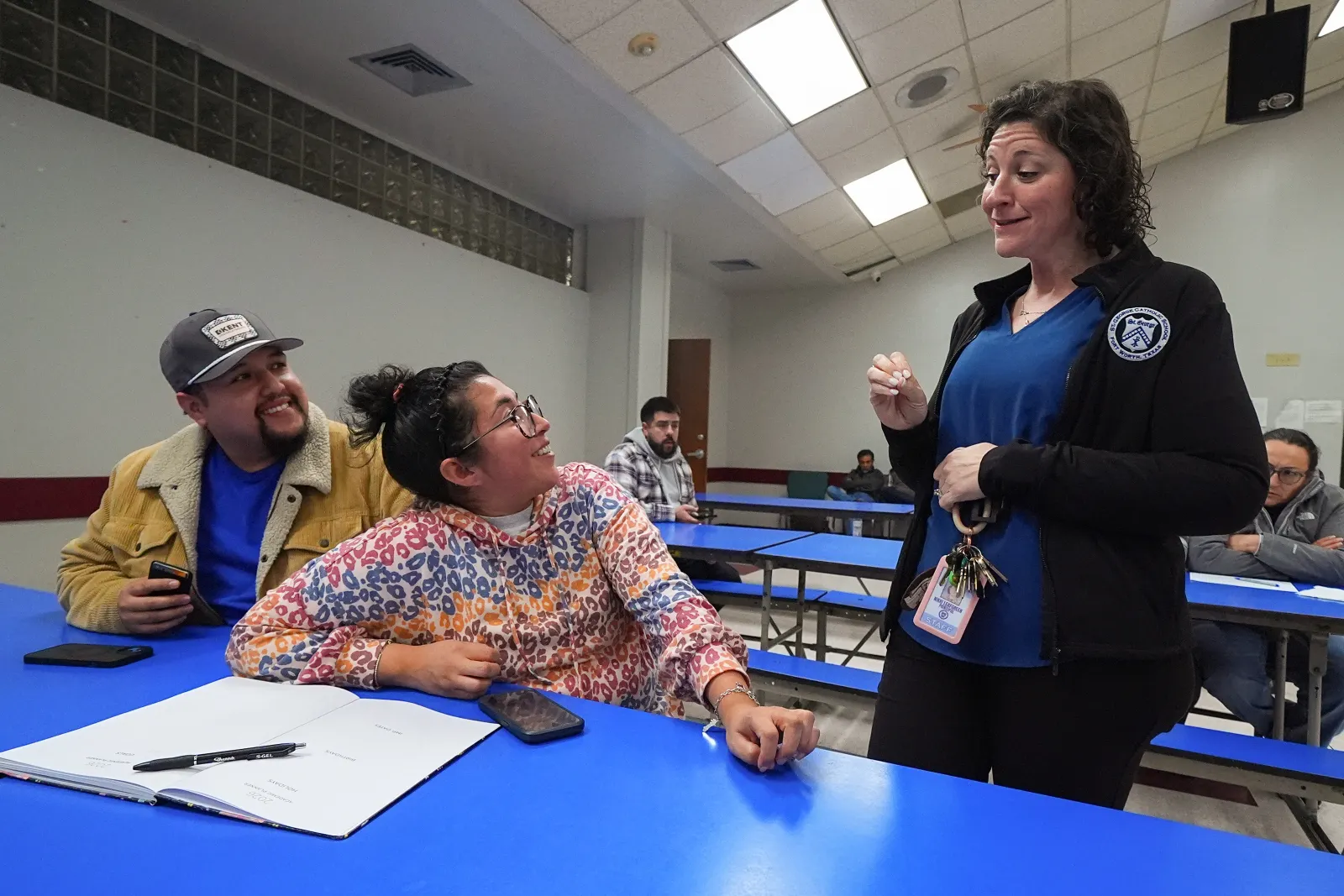
Now school districts large and small are scrambling for students as they watch their enrollments fall. They are boosting academic programs, giving personalized tours, and analyzing data on why students stay or go as they face greater rivalry with private schools.
All of this is adding strain to already cash-strapped public schools as government funding is tied to enrollment. Throughout the U.S., public schools are closing or consolidating because they simply don't have enough students to fill their classrooms.
‘Feels like an avalanche’
When Pflugerville Independent School District’s board of trustees in May approved closing four elementary schools in the 2027-28 school year, the district’s superintendent said a $20 million budget shortfall made the decision necessary.
The closures are expected to save the Texas district $15 million to $16 million a year as it grapples with declining enrollment alongside rising or fixed costs, said Pflugerville Superintendent Quintin Shepherd. Between the 2019-20 and 2025-26 school years, enrollment fell 5% from 26,400 students to 25,046, according to district data.
And Pflugerville ISD may face more difficult decisions about its budget and school consolidations in the future, district officials fear.
All of these things, we have to respond to simultaneously ... It sort of feels like an avalanche.

Quintin Shepherd
Superintendent, Pflugerville Independent School District
The district’s enrollment has dropped for a variety of reasons, Shepherd said, including a decline in birth rates, challenges with local housing affordability, changing demographics, charter school growth, virtual school options, migration patterns, open enrollment — and more recently a $1 billion universal statewide school choice program in Texas that’s rolling out this school year.
“All of these things, we have to respond to simultaneously,” Shepherd said. “It sort of feels like an avalanche.”
The state projected in April that Pflugerville ISD’s enrollment could drop as much as 1.6% — or by 389 students — in the 2026-27 school year directly because of the state's new Texas Education Freedom Accounts. That would amount to a loss of $4.3 million in state funds for the district.
“This is where the voucher conversation becomes so darn important,” Shepherd said.
While not all enrollment declines are driven by vouchers, he said, for those districts "already facing demographic challenges, the vouchers could become a tipping point. And that tipping point is what’s going to trigger the avalanche.”
For Pflugerville ISD specifically, Texas’ new school choice program “could become another tipping point,” Shepherd said.
“I think it puts everything back on the table for us,” he added. “Potential future closures, potential program cuts, and so on and so forth. It’s that our system has got to remain flexible and adaptive to the situation and the context as it continues to evolve.”
What’s driving enrollment declines?
As enrollment challenges continue for public school districts nationwide, school closures have steadily increased in recent years.
While 755 schools closed in the 2021-22 school year, the number jumped to 1,011 in the 2024-25 school year, according to the National Center for Education Statistics. That seems to signal a return to school closure trends from before the aberration of COVID-19 pandemic times. For instance, NCES data shows 1,122 closures in 2018-19.
However, the national data on school closures is limiting, said Marguerite Roza, director of the Edunomics Lab and research professor at Georgetown University, as it does not yet capture the spike in school closures over the past two school years. During that time, she said, closures appear to have drastically picked up mostly due to sweeping birthrate declines.
Even where you see a lot of school choice, a lot of the vouchers are going to kids who are already in private schools.
Marguerite Roza
Director, Edunomics Lab
School choice policies may be a variable that is impacting closures in certain communities, Roza said, but they are not the primary factor driving school closures. The key underlying issue is declining birth rates, she said.
“Even where you see a lot of school choice, a lot of the vouchers are going to kids who are already in private schools,” Roza said.
At the same time, some district leaders, public school advocates and researchers worry that large statewide school choice programs like those in Arizona, Florida and now Texas, could make matters worse and speed up public school closures.
Between 2022 and 2031, public school enrollment is expected to fall nationally by 5.5% — or 2.7 million students, according to an April analysis of NCES data by the Education Commission of the States. That enrollment loss would lead to a widespread decline in state revenue for public schools of $11.5 billion a year by the 2030-31 school year, projects a separate report by Bellwether and WestEd.
Private school choice participation grows as public schools see closures and enrollment declines
The ongoing enrollment drops are largely due to decreasing birth rates, the two education nonprofits said. But contributing factors include a “national slowdown in immigration,” families migrating out of state in some places, and growing interest in private school and homeschooling fueled by school choice initiatives.
Public school enrollment projected to drop in 37 states and DC
Private schools, meanwhile, are not immune to the enrollment challenges and pressures from school choice competition. For instance, of 5,829 member schools of the National Catholic Educational Association, 62 closed or consolidated during the 2025-26 school year, and only 13 schools opened, for a net loss of less than 1% of the total number of NCEA member schools.
National school choice enters the scene
The competitive pressure public schools are feeling from private school choice programs will likely intensify as the first federal school choice program available nationwide launches next year. The massive and controversial Education Freedom Tax Credit program is expected to fund 2.2 million taxpayer-supported student scholarships totaling $26 billion each year by 2030, according to the IRS, which along with the U.S. Department of Treasury where it is housed, is administering the program.
Only students living in states that opt into the program will be eligible to receive funds through a scholarship-granting organization. According to the IRS, 30 states indicated they will participate as of Oct. 22. The Treasury Department issued temporary and proposed rules for the program Oct. 1.
Opponents consider the program a threat to public school funding that will only benefit wealthy families. Supporters, on the other hand, say that because scholarships can go toward both private school tuition and public school expenses, the program will expand educational opportunities and funding for all students. Covered public school expenses can include tutoring, ed tech and services for students with disabilities.
"Everyone is a winner in the education freedom tax credit, whether it's a private school or it's a public school," said Norton Rainey, CEO of ACE Scholarships, a Denver-based nonprofit scholarship-granting organization.
But Augustus Mays, vice president of partnerships and engagement at EdTrust, said taxpayer funds shouldn't be “funneled” to private schools, which often don't accept all applicants. Instead, federal tax credit dollars should go into public funding streams like Title I and the Individuals with Disabilities Education Act that “support all students,” he said during a forum hosted by Sen. Mazie Hirono, D-Hawaii, on Capitol Hill in Washington, D.C., on Sept. 22.
“This is not free money or a targeted investment in students with the greatest needs,” Mays said. “It is a[n] uncapped federal tax subsidy steering public resources toward private education with few safeguards.”
Does private school choice have a ‘downstream effect’ on closures?
Meanwhile, public school advocates and researchers have said a majority of state private school choice program funds in Arizona, Florida and Texas have primarily benefited students already enrolled in private school or being homeschooled.
While that may mean there hasn’t been a “mass exodus” of public school students moving to private schools, even small groups transferring out can still “meaningfully impact” public schools — especially when enrollment is already slipping because of declining birth rates, said Joshua Cowen, a professor of education policy at Michigan State University.
When a state obligates more of its budget to expand voucher programs, he said, over time the state won’t be able to keep public school revenue above rising inflation costs.
“That leaves districts on their own at the local level, which leads to closure if you’re underenrolled or you’re just under financial distress," Cowen said. “So there’s like a downstream effect of all this.”
In the 2011-12 school year, Arizona implemented the nation’s oldest education savings account program. The state also became one of the first to expand its private school choice program to include all eligible students, beginning in the 2022-23 school year.
Education savings accounts, or ESAs, are funded from taxpayer dollars and can be used by parents for various educational purposes, including private school tuition, school transportation and tutoring. ESAs differ from vouchers, which give eligible families a portion of taxpayer-supported funding to pay for private school expenses.
Arizona’s school choice program’s participation boomed as more students gained eligibility, jumping from 12,000 students in 2021-22 to 88,000 by 2024-25, according to a Rand Corp. analysis published in November 2025. By the 2024-25 school year, about 7% of students in the state had an education savings account for private school tuition and other educational expenses.
Since 2022, Arizona school districts have shuttered 41 of the state's 2,418 public schools, according to a tracker by Save Our Schools Arizona, a public school advocacy group. Of the closures, 25 — or 61% — were Title I schools serving low-income communities.
We've long said that Arizona should serve as a warning sign for the rest of the nation of what a universal voucher program will do to public education.
Tyler Kowch
Communications manager, Save Our Schools Arizona
One reason schools are closing in Arizona is because districts in the state historically overbuilt schools to the point that about a third of classroom seats are empty, said Katie Ratlief, executive director at Common Sense Institute Arizona, a nonpartisan research organization focused on fiscal policy. Ratlief served in leadership roles in then-Gov. Doug Ducey’s administration at the time when he signed the ESA expansion into law.
According to Ratlief, families were already leaving Arizona public school systems before the state’s ESA program launched. The slow student exodus that began in 2008 “created the political environment where ESAs could pass and move forward in Arizona because parents were demanding them,” she said.
Nonetheless, some public school leaders and advocates in the state have attributed the latest school closures to enrollment declines driven by Arizona's ESA program.
For instance, one official at Arizona’s Kyrene Independent School District partially blamed the expansion of private school choice for a recent decision to close six of its 25 schools starting this school year.
During a board meeting on the initial proposal, Superintendent Laura Toenjes said the district’s declining enrollment was being compounded by rising housing costs and charter school growth. Moreover, she said, the state's ESA funds "unfairly incentivize families to leave traditional public schools.”
Tyler Kowch, communications manager at Save Our Schools Arizona, said the state is a bellwether as school choice policies go national.
“We've long said that Arizona should serve as a warning sign for the rest of the nation of what a universal voucher program will do to public education."
News Graphic Developer Jasmine Ye Han contributed to this story.