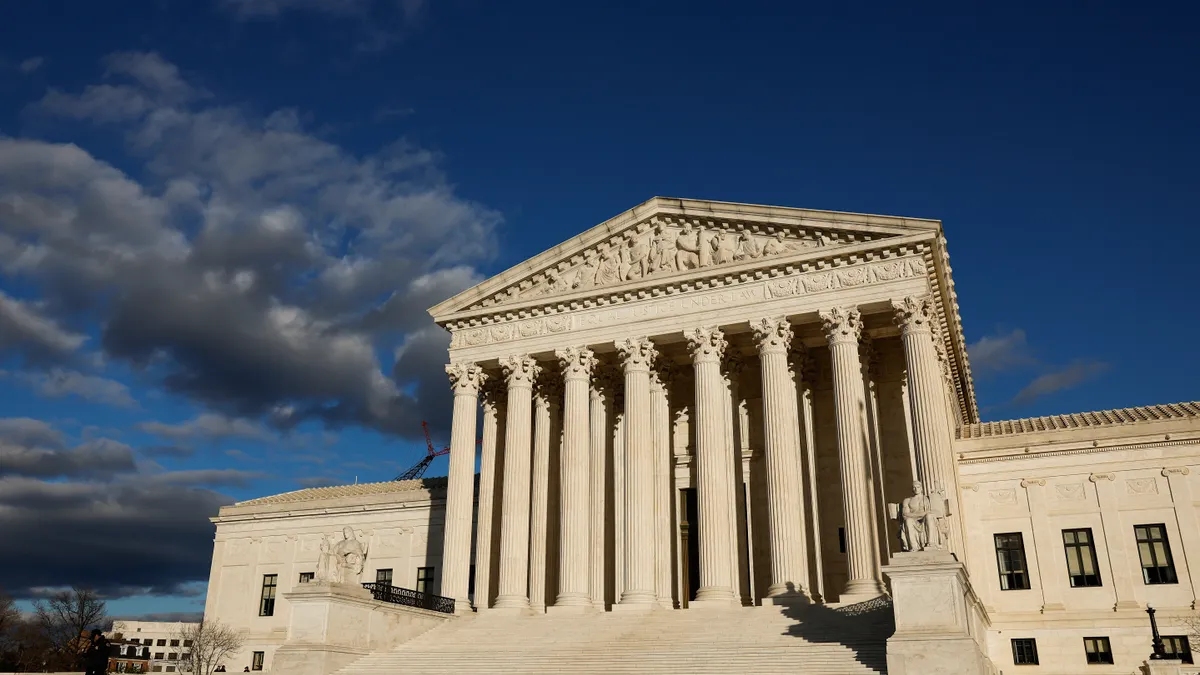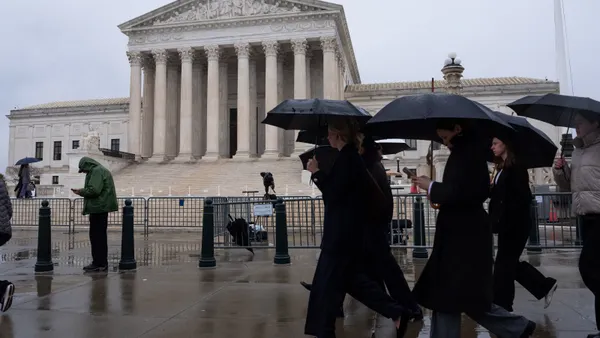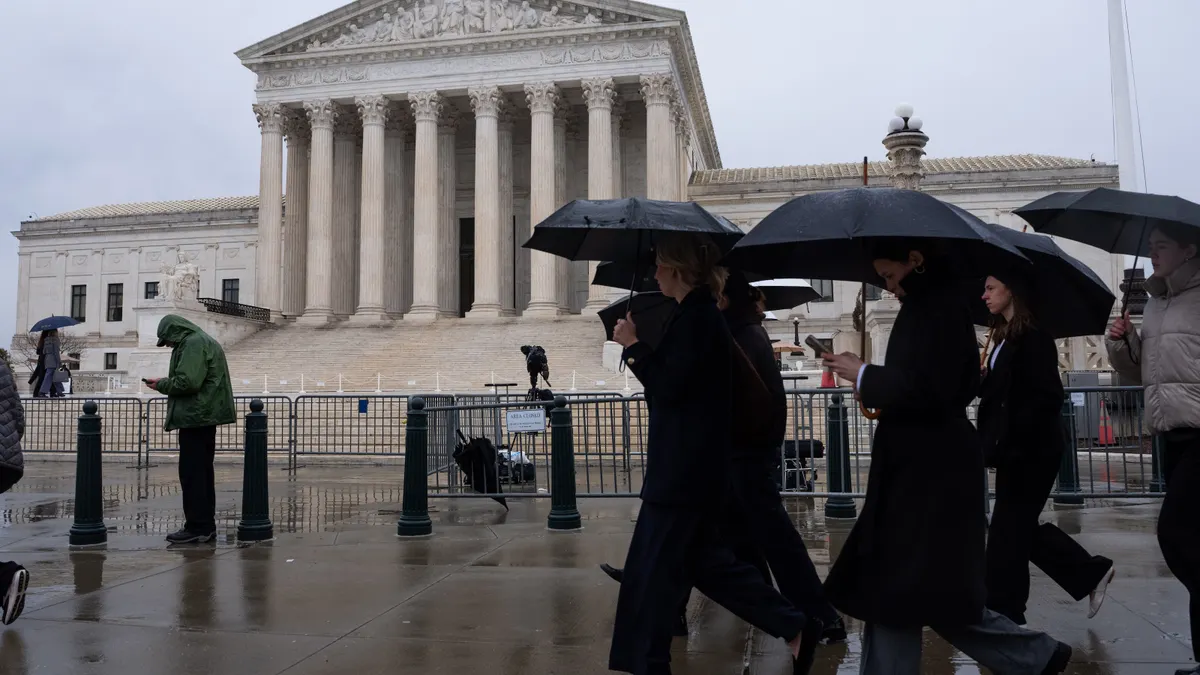
The U.S. Supreme Court is set to kick off its October 2026-27 term next week — and the justices have yet another round of controversial education cases lined up on their docket.
Decisions in recent years have shifted the education landscape on issues like publicly funded religious schools and transgender student athlete bans, and the high court is set to take up at least two key cases impacting K-12.
Before the court convenes on Oct. 5, here’s an overview of what to expect during the new term, from scheduled arguments to appeals that are in process.
Cases to be heard
The first education case on the Supreme Court’s docket is St. Mary Catholic Parish v. Roy on Nov. 3, one of many in recent years that have risen to the high court over the guardrails around school choice and the constitutional use of public funds.
This case comes out of Colorado, and the plaintiffs are two Catholic parishes and their associated preschools that are benefiting from public funding for universal preschool. The state required a nondiscrimination agreement in exchange for participating in the program.
However, the plaintiffs say that the nondiscrimination measure — which would require them to enroll children in the schools regardless of the sexual orientation or gender identity of their parents — violates their First Amendment rights.
The second case, Thomas Crowther v. Board of Regents of the University System of Georgia, is set to be heard at the end of November. It stems from complaints filed by two University System of Georgia employees who said the university discriminated against them on the basis of sex when it fired them.
One of the two employees was a women's basketball coach who was fired after filing an internal complaint alleging the university was discriminating against her and her program by not providing the same resources as the men's program. The other was an art professor whose contract was not renewed after a Title IX investigation was triggered by several student reports of alleged inappropriate conduct, including sexual harassment.
The two separately sued under Title IX and other laws, in addition to making reports to the U.S. Equal Employment Opportunity Commission.
At question in the case is whether employees who work for schools or colleges that receive federal funding can personally sue their employer for sex discrimination under Title IX, considering Title VII prohibits sex-based discrimination in employment settings.
Cases on appeal
Of the around 8,000 cases the justices receive for consideration each year, only about 80 are heard for oral arguments and decided. This year, like previous years, many of the petitions to the high court are related to education.
Two high-profile cases could decide the fate of the heavily-litigated Ten Commandments laws that have cropped up in some states. In two joint cases, Nathan v. Alamo Heights Independent School District and Cribbs Ringer v. Comal Independent School District, the justices were asked in August to consider whether Ten Commandments laws that require school districts to display versions of the religious directives are constitutional.
Special education, which has been heard less frequently than First Amendment education cases in recent years, is also in the pool of cases the justices are wading through.
In Hellman v. Craven, two Massachusetts families in July asked the Supreme Court to accept their challenge to a state regulation that allows their private school children to access public school special education services but only at a public school or a “neutral” location.
The families' children with disabilities attend Jewish day schools, and they said the state policy penalizes private school students who have a constitutional right to attend private schools but who want access to publicly funded special education services.
Public schools' admissions policies have also been repeatedly appealed to the high court in recent years, but petitioners have had slim luck in getting a definite answer as to whether public school diversity efforts violate the rights of Asian and White parents who say race or socioeconomic-conscious policies discriminate against them.
In July, one such petition against Maryland's Montgomery County Board of Education reached the Supreme Court, with parents challenging the admissions policies under the 14th Amendment.
None of the cases have been accepted for oral arguments by the court yet but are under review and could be accepted for an upcoming term.
Issues to watch
As Ten Commandments laws make their way before the high court and Title IX issues continue cropping up in recent cases, other hot-button topics remain to be considered by the court.
For example, lawsuits over curriculum restrictions that remove books or content related to LGBTQ+ issues and race have advanced. In September, an appellate court cleared the way for an Oklahoma divisive concepts law, saying the language in the statute was not "vague" and did not prohibit educators from discussing race-related, sexist or oppressive concepts “in the abstract or in connection with historical or popular figures.”
That state law is one of many nationwide seeking to prohibit “divisive concepts" that have gone on to be litigated.
Whether the Constitution allows the establishment of religious public charter schools is another question that may make its way back to the Supreme Court. Last year, a deadlocked high bench kept in place the Oklahoma Supreme Court’s block on St. Isidore of Seville Catholic Virtual School, which was set to be the nation's first religious public school.
A Jewish school is now seeking to do the same and scored a win in federal court in Oklahoma last month. That case could be appealed and ultimately reach the Supreme Court for a decision on whether public funds can be used for religious charter schools, a door left open by two previous decisions — Carson v. Makin in 2022 and Espinoza v. Montana Department of Revenue in 2020.