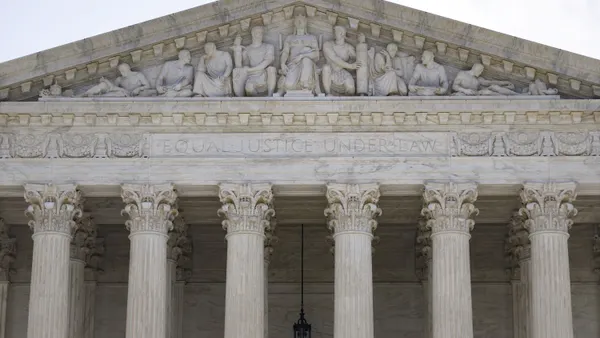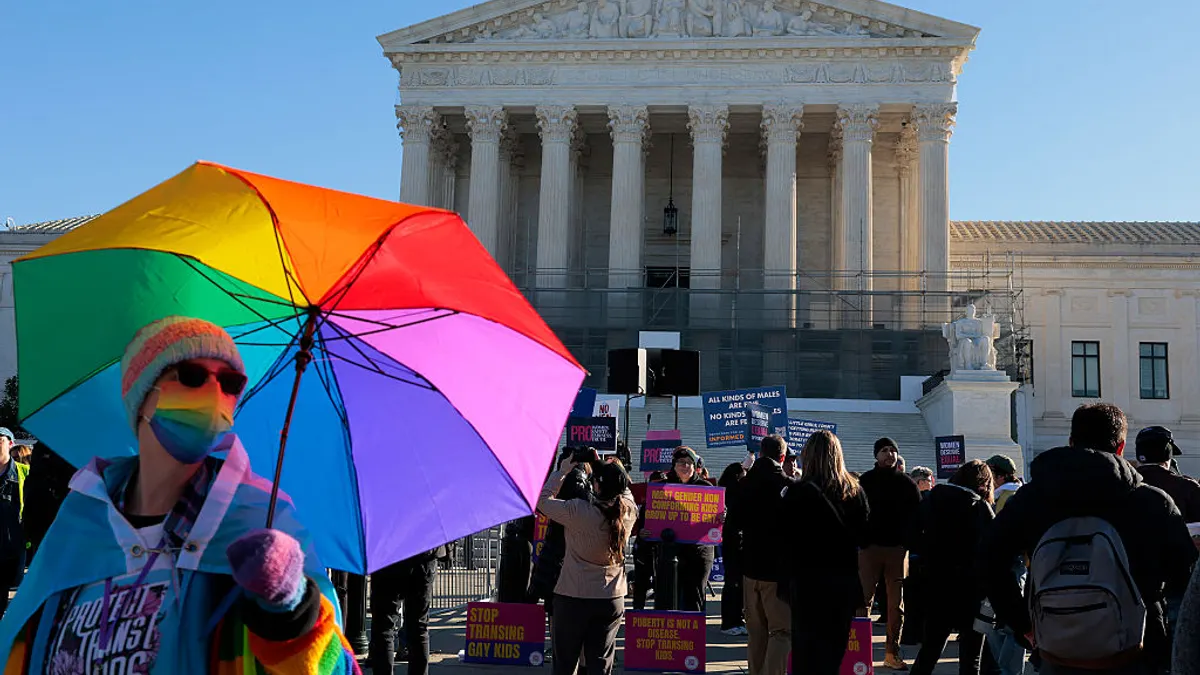
The U.S. Supreme Court agreed on Monday to hear a Colorado case questioning whether private schools that get public funding from a state universal preschool program must admit children of same-sex couples.
A nondiscrimination provision in the state program requires each school receiving public money to provide eligible children an equal opportunity to enroll, regardless of race, religious affiliation, sexual orientation, gender identity and other factors.
Plaintiffs in the case St. Mary Catholic Parish v. Roy — parents of preschool-age children, along with two religious parishes that have affiliated preschools — say the provision excludes religious preschools that, per their faith, will not enroll children of same-sex couples. They sued under the First Amendment's free exercise clause.
"Colorado created a universal preschool program that funds families to send children to the public or private preschool of their choice — but not the Archdiocese of Denver’s Catholic preschools," said The Becket Fund for Religious Liberty, the law firm representing the plaintiffs, in their November petition for high court review.
"Why the exclusion? Because, Colorado says, these preschools’ religious practice of admitting only families who support Catholic teachings, including on sex and gender, is 'discrimination,'" the petition said.
Under the universal preschool program, all Colorado families receive 15 hours of free preschool a week at the public or private preschool of their choice, a benefit worth about $6,000 per child, according to Becket.
At least one of the school plaintiffs, Wellspring Catholic Academy, had declined to admit an elementary school student because of their same-sex parents, according to court documents from the 10th U.S. Circuit Court of Appeals. The 10th circuit in September ruled against the plaintiffs, setting up their appeal to the Supreme Court.
The plaintiffs originally sued in 2023 after the state denied the Archdiocese of Denver's request for a religious accommodation from the nondiscrimination requirement.
The Supreme Court is expected to hear the case in the fall, said Becket.
Justice Department's 'substantial interest'
The case garnered attention from the Trump administration, which filed a friend-of-the-court brief in January.
The administration pointed to other exceptions the state had allowed from the nondiscrimination rule, including for preschools that reserved seats for students with disabilities or for low-income children enrolled in Head Start.
"The United States has a substantial interest in the preservation of the free exercise of religion," said the U.S. Department of Justice in its January filing. "It also has a substantial interest in the enforcement of rules prohibiting discrimination by government funding recipients."
The case builds on other First Amendment cases related to the religious use of public funds decided by the Supreme Court in recent years. That includes Espinoza v. Montana Department of Revenue and Carson v. Makin, in which the justices ruled that states cannot exclude religious schools from public funding because of their religious beliefs or practices.
Other LGBTQ+ cases
The same day the justices agreed to hear the Colorado case, they also denied to hear another case related to LGBTQ+ issues in the K-12 sphere. In the same order list on Monday, the Supreme Court rejected an appeal from Massachusetts parents who claimed that Ludlow Public Schools violated their rights with a policy requiring students’ consent to notify their parents that they preferred using a different name or pronouns at school.
Such policies have been enacted in some Democrat-leaning areas, with proponents saying they protect LGBTQ+ students from potentially abusive environments at home. But they stand in contrast to laws adopted by some Republican-led states in recent years requiring schools to notify parents of changes in students' name, pronoun or gender identity.
Meanwhile, the Supreme Court is expected in the coming weeks to issue a ruling in two separate but related LGBTQ+ cases, Little v. Hecox and West Virginia v. B.P.J, which the court heard in January. The B.P.J. case, which would decide whether transgender girls can play on girls' sports teams, is also expected to address the long-standing and thorny issue of whether Title IX, the anti-sex discrimination statute, protects LGBTQ+ students in education programs.