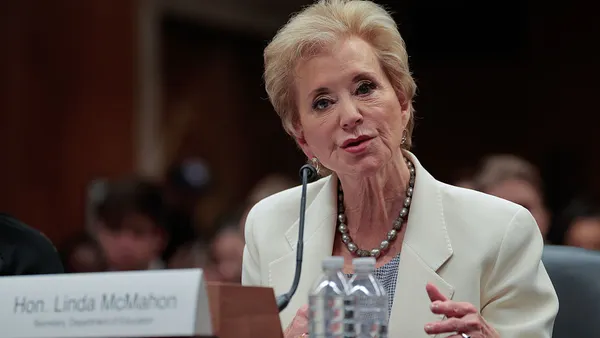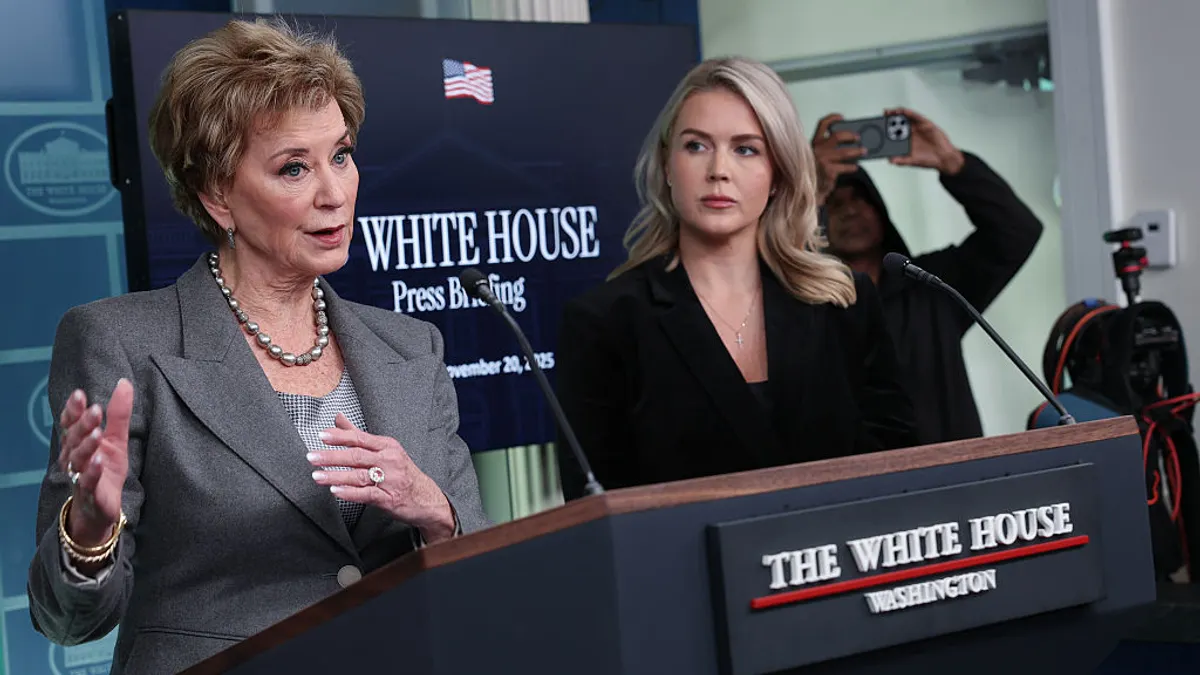
The U.S. Department of Education was sued Wednesday over its abrupt termination last year of 28 national professional development grants for teachers of English learners.
The department rescinded the grants in September due to "divisive ideology," according to the Southern Poverty Law Center, which filed the lawsuit alongside the National Education Association.
The lawsuit alleges that the cancellations violated the recipients' rights under the First Amendment and other federal laws, damaged teacher certification pipelines in at least a dozen states, halted coaching and credential pathways for thousands of teachers, and deprived EL students of qualified educators.
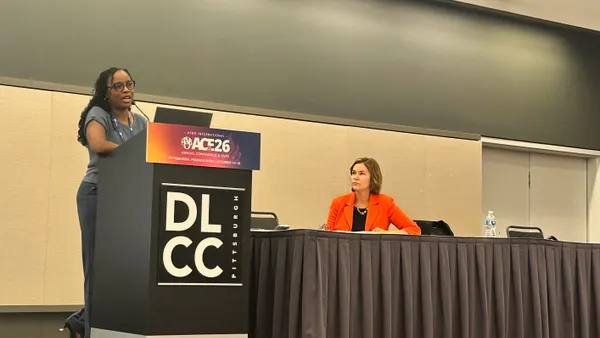
“Our NPD grant was designed to expand the bilingual teacher workforce by creating opportunities for future educators and strengthening partnerships between our university and local school districts across California’s Central Coast,” Tina Cheuk, associate professor at California Polytechnic State University and a plaintiff in the case, said in a statement.
“The sudden loss of this funding disrupted teacher preparation programs already in progress, cut off support for aspiring bilingual educators, and weakened regional efforts to address longstanding teacher shortages in rural and underserved communities,” Cheuk said.
The 28 cancellations related to English learner services last year were part of a broader slew of grants the Education Department canceled — totalling nearly $600 million — due to what it said were "divisive ideologies." The Supreme Court temporarily allowed those broader cancellations through last year.
The funds were granted under the Biden administration between 2021 and 2024, in accordance with previous agency guidance that directed applicants for the funding to develop bilingual education programs, improve instruction for English learners, and recruit diverse groups of educators to serve high-need schools, according to the lawsuit.
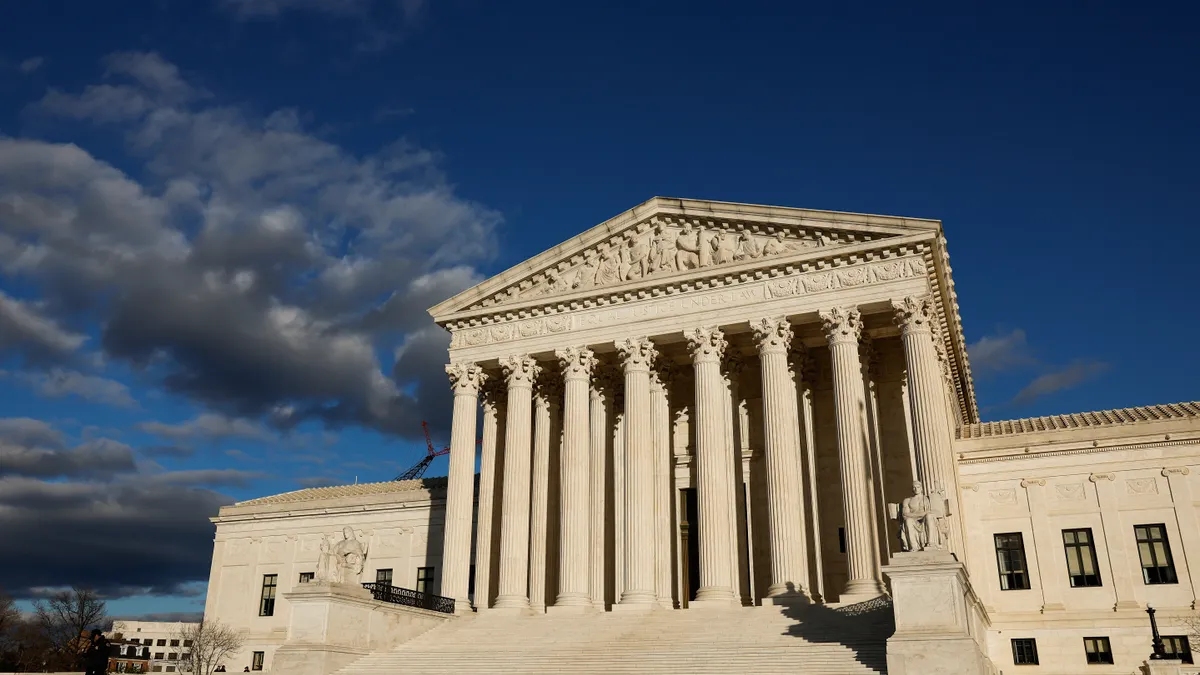
"Grantees were selected precisely because their proposed activities aligned with these agency-published priorities," the lawsuit, filed in the U.S. District Court for the District of Rhode Island, said.
The department used "mechanical keyword searches of grant applications for terms such as 'equity' and 'diversity,'" the lawsuit alleges, rather than typical hours-long deliberation over whether a grantee's funding should be discontinued, as was rarely done prior to the second Trump administration.
The department's decision to reverse grants in line with those priorities also “represents a reversal of the agency's own published standards without any intervening rulemaking," the lawsuit alleges.
Like other lawsuits in the last year challenging the department's funding and policy decisions, the lawsuit was also filed under the Administrative Procedure Act, which requires that major changes undergo a formal notice-and-comment period.
The claims made within the lawsuit are similar to another filed against the department by 16 states over the agency’s decision to terminate up to $1 billion in mental health grants — which was also chalked up to the recipients' applications not aligning with Trump administration priorities.
Some of the recipients’ original grant applications mentioned diversifying mental health providers and supports, for example, in accordance with priorities under the Biden administration. The current administration, however, has issued multiple directives to weed out diversity, equity and inclusion in schools and elsewhere.
Those states ultimately prevailed in Washington v. U.S. Department of Education in the 9th U.S. Circuit Court of Appeals this spring, following a permanent block issued by a lower district court.
The lower court had ruled in December that the department’s discontinuation notices to grantees in the 16 suing states were “arbitrary and capricious” because they did not explain the reason for the cancellations.
“Nothing in the existing regulatory scheme comports with the Department’s view that multi-year grants may be discontinued whenever the political will to do so arises,” the district court ruling said. “The Department makes no effort to analogize the discontinuation notices or the process by which the notices were issued to the cases they cite."