ORLANDO, Fla. — Choosing the right incentives to motivate students can make or break efforts to combat chronic absenteeism.
One common misstep school leaders make, for instance, is the promotion of perfect attendance awards, said Anne Vernon, an assistant principal at Myron J. Francis Elementary School in Rhode Island.
“Things are going to happen, and to say that we expect perfection is unrealistic,” Vernon said, adding that perfect attendance recognition on a yearly or even monthly basis can be punitive for students who tried to make an effort to be at school everyday but maybe had to take a sick day.
But, other incentives can still be a critical tool to tackle absenteeism, she added.
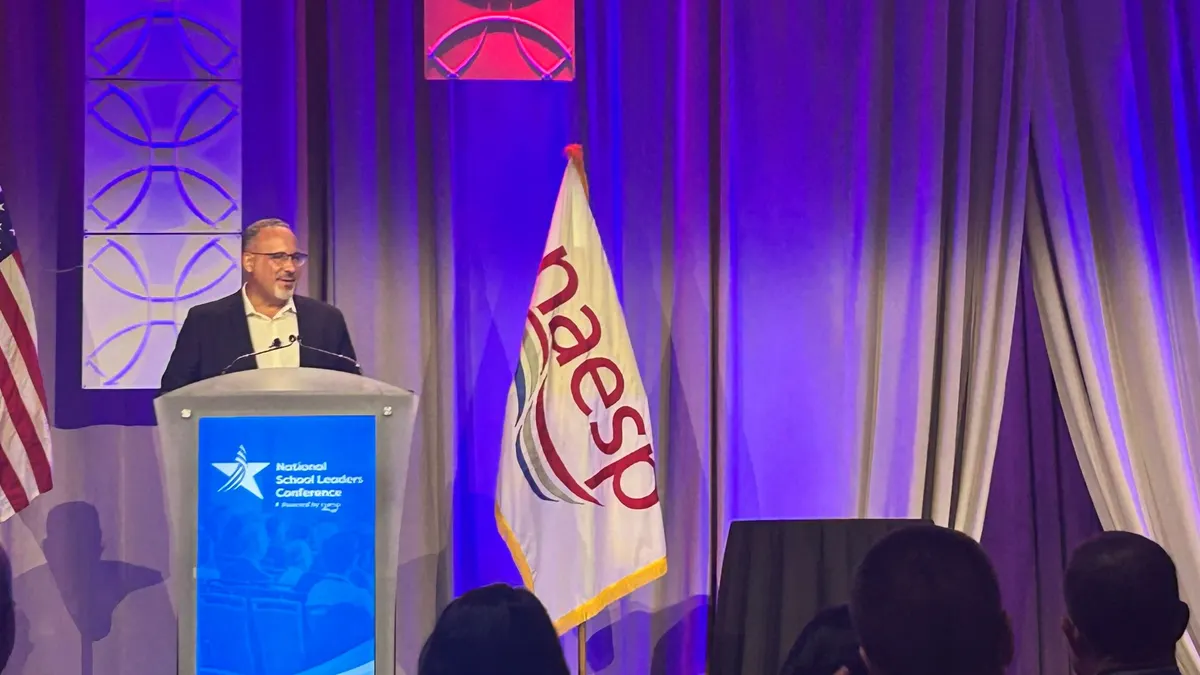
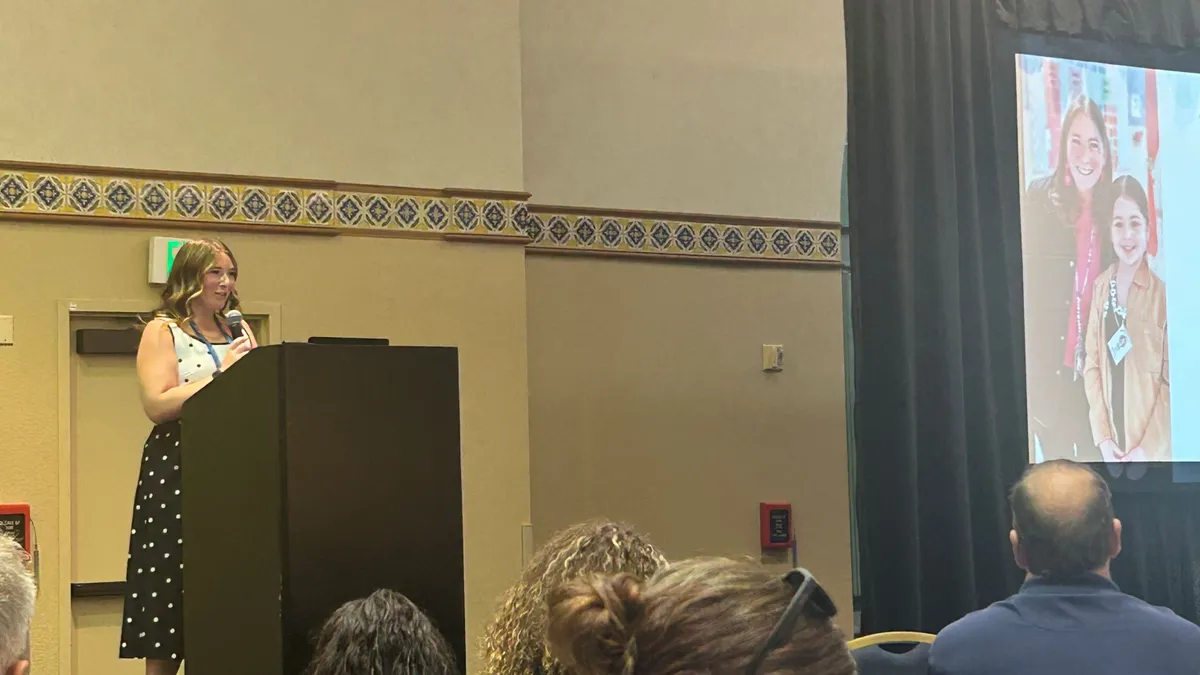
Vernon shared her research and experiences with using school-based incentives through the positive behavioral interventions and supports model to boost student attendance during a Monday session at the National Association of Elementary School Principals’ National School Leaders Conference.
The need to address absenteeism early
Research published in 2014 by nonprofit Attendance Works found 1 in 10 students are chronically absent in both kindergarten and 1st grade nationwide. Vernon said that younger students’ likelihood to read at grade level by the 3rd grade notably drops if they were chronically absent in their earliest school-age years.
“They say it takes 21 days to make or break a habit. And if that habit starts in kindergarten, and in your whole kindergarten year, you missed at least two days a month — now that’s just how you’re going to think school should be,” Vernon said. “And you’re not going to start coming to school more because that’s the habit you formed.”
As of the 2022-23 school year, the national chronic absenteeism rate was 28%, according to the U.S. Department of Education. Vernon said there have been trends indicating that schools are shifting back to pre-pandemic chronic absenteeism rates, which spiked during COVID-19.
Incentives can improve attendance
To determine whether a schoolwide PBIS incentive program could improve student attendance, Vernon conducted a study at her previous school — a small urban elementary school in Rhode Island. Almost 20% of the school’s student population was chronically absent, she said.
The study examined 225 students in grades 1-5 — of which 44 students were chronically absent. During the study, Vernon added a new incentive to the school’s existing PBIS incentive program, known as school bucks, which allowed students to purchase items from a school store.
Before the study, students received a $1 school buck for doing something kind or working hard in the classroom. For the study, Vernon awarded a higher amount of school bucks — worth $5 — to students who attended school for an entire instructional week.
That additional incentive reduced the whole student population’s average absences from 3.28 to 2.69 in a trimester. For the chronically absent student group, their average absences dropped from 8.83 to 5.32 absences.
Some of the key factors for the successful implementation of the attendance incentive included the school’s positive climate and strong student-teacher relationships, Vernon said. The incentive also made students more self-aware of attendance policies, including tardiness or leaving school early.
Additionally, the school involved families by sending positive letters home, newsletters and attendance updates.
How to effectively implement incentive programs
To help school leaders successfully implement an attendance incentive program, Vernon developed a framework adapted from the Education Department’s Institute of Education Sciences.
A key component to starting this work, she said, is that principals should make attendance a strategic priority and should be asking their school improvement teams questions about whether the school monitors weekly attendance, what is done with that data, and how the school celebrates student success and progress on attendance.
The implementation framework developed by Vernon includes the following five steps:
- Diagnose. Ask what is the underlying cause for a school’s attendance problem. Put together a team of key players to analyze and piece together the data to make the diagnosis the most accurate.
- Select incentives. Attendance incentives need to be age-appropriate, positive, and reinforcing, and also align with a school’s PBIS program and culture. It’s important to not start with a completely new incentive system, because it could confuse both students and teachers. Rather, schools should add onto their existing systems. Depending on the school’s absenteeism rates, incentives could be awarded on a weekly or monthly basis.
- Plan. Form an attendance team and develop a clear implementation timeline. Build a communication plan that includes a staff rollout on the new attendance incentive system as well as one for student and family messaging.
- Implement. Once the incentives are in place, schools need to consistently track attendance data and award the incentives on-schedule. Schools also need to maintain visibility and continuously talk about the incentives.
- Evaluate and Revise. Attendance incentives should be continuously improving based on outcome data and feedback from students and parents. This could mean a school later scraps an old system and brings in something new, makes a shift, or starts a new way to communicate the incentives to boost progress.
Vernon also stressed the importance of a positive school climate in successfully rolling out an attendance incentive program.
“For this type of intervention to produce the desired outcomes, it must be implemented in an environment with a positive school culture,” Vernon said. “Without this foundation … incentives cannot be meaningful.”