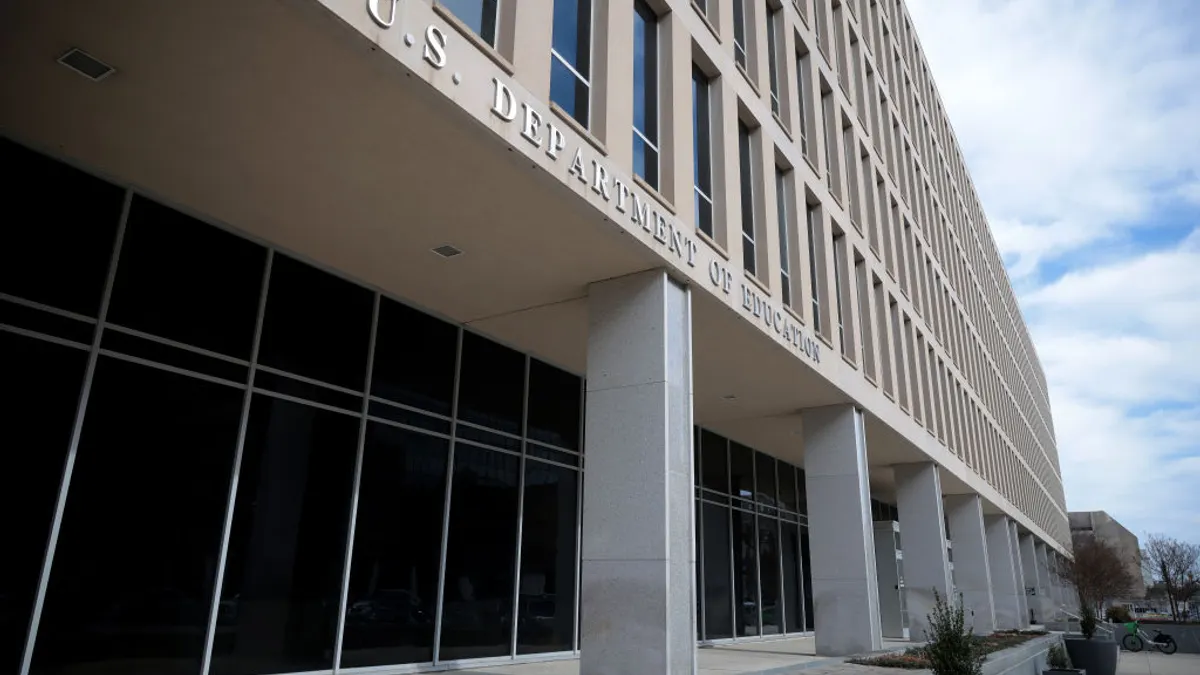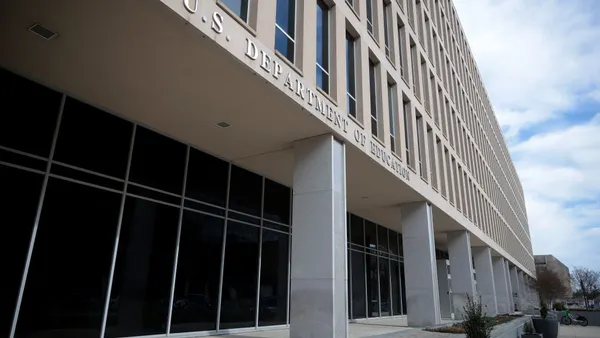
The U.S. Department of Education on Friday announced a new initiative meant to address the problem of schools "passing the trash," or allowing employees accused of sexual misconduct to jump from one school to another when allegations surface.
The department issued a Dear Colleague letter to states and districts reminding them of their responsibilities to protect students rather than engage in the practice, which it called "a troubling and recurring pattern in schools" nationwide.
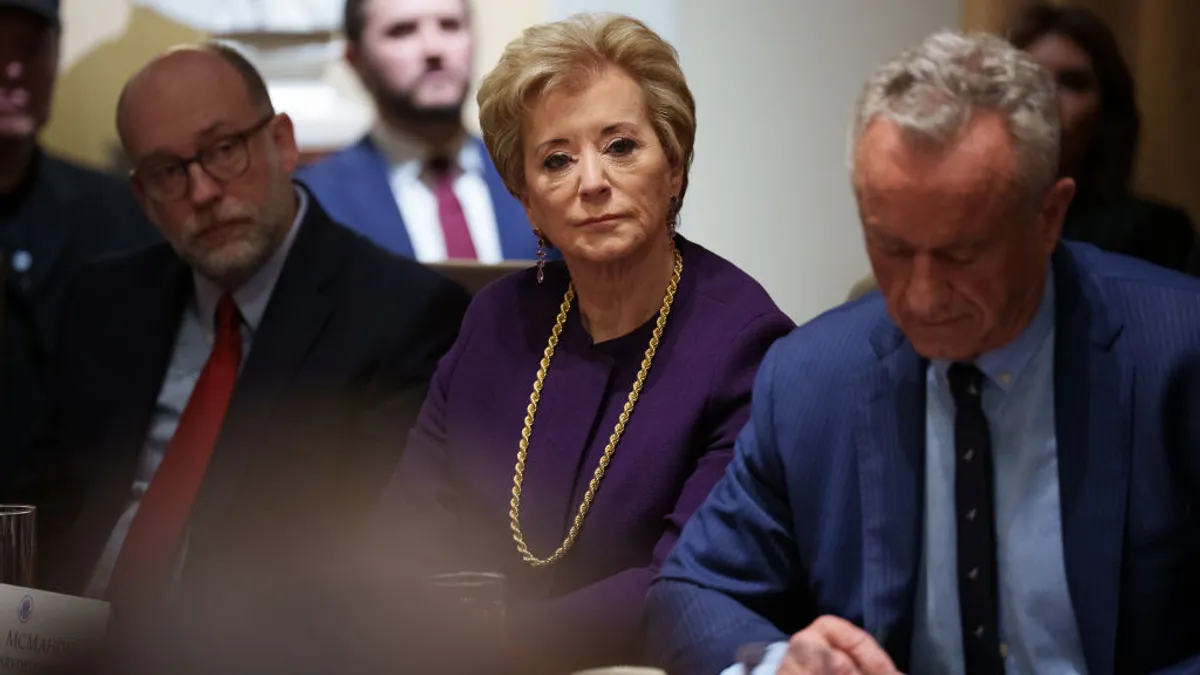
"Sexual predators who operate within the walls of American schools depend on institutional silence and complacency," U.S. Education Secretary Linda McMahon said in the July 10 letter. "Unfortunately, many administrators and State educational regulators have apparently preferred to sweep these incidents under the rug and have ‘pass[ed] the trash’ to another school."
The department on the same day announced it was opening 20 targeted investigations into schools that the department suspects of passing the trash based on their responses to the 2023-24 Civil Rights Data Collection.
The Education Department did not respond to K-12 Dive's request for additional information on which districts were under investigation. In addition, the Education Department under the second Trump administration has not updated the previously publicly available Office for Civil Rights open investigations list.
In May, the department launched an investigation into Los Angeles Unified School District, alleging an agreement between the district and its union appeared "to automatically reassign teachers accused of sexual misconduct with students, including engaging in exploitative ‘romantic relationships,’ to another school.”
The district disputed this allegation, saying the term "reassignment" had caused confusion. In this situation, reassignment typically means “an employee is directed to remain at home and away from students and schools during an investigation,” the district said in a statement to K-12 Dive in May.
What are states doing to combat the issue?
Friday’s Dear Colleague letter cited at least 67 cases in California where it said the state did not revoke educators' professional licenses even after school districts determined sexual harassment or other misconduct was involved. The letter also referenced district-union agreements, saying bargaining agreements "that prevent, delay, or condition the investigation of such an incident or the removal of an employee pending a Title IX investigation" can lead to loss of federal funding for districts.
In April, California Attorney General Rob Bonta issued a legal alert similarly reminding local districts of their responsibilities to protect students. Bonta said the state had paid up to $3 billion to student victims of sexual abuse by school employees between 2019 and 2023.
The Education Department in 2022 released a report showing that while all states require prospective employers to conduct criminal background checks on educators, only 27 states required employers to also check applicants’ employment history, eligibility and disciplinary status.
Of those 27 states, even fewer — 19 — required employers to request information like personnel files and employment history from applicants’ current and former employers, per the report. And only 11 of the 27 required applicants to share any history regarding investigations or disciplinary actions related to sexual abuse or misconduct.
Furthermore, 14 states required applicants to provide authorization for current and former employers to share information about their employment records, and 20 prohibited suppressing information on employee sexual misconduct, the report said. While some barred suppression through termination or resignation agreements, others limited confidentiality or nondisclosure agreements.
According to Friday's Dear Colleague letter, 35 states lacked laws banning the suppression of information regarding employee sexual misconduct in termination, resignation, and severance agreements as of 2022. And 40 states didn't prohibit expunging such information from personnel files.
However, some states have begun to make the information more public.
Texas, for example, last month launched an educator misconduct dashboard that includes breakdowns by offense, such as inappropriate sexual relationships and sexual abuse involving students. The state also publishes a "Do Not Hire" registry — a publicly searchable database of individuals ineligible for employment in Texas public schools because of "serious misconduct or criminal history," according to the Texas Education Agency.