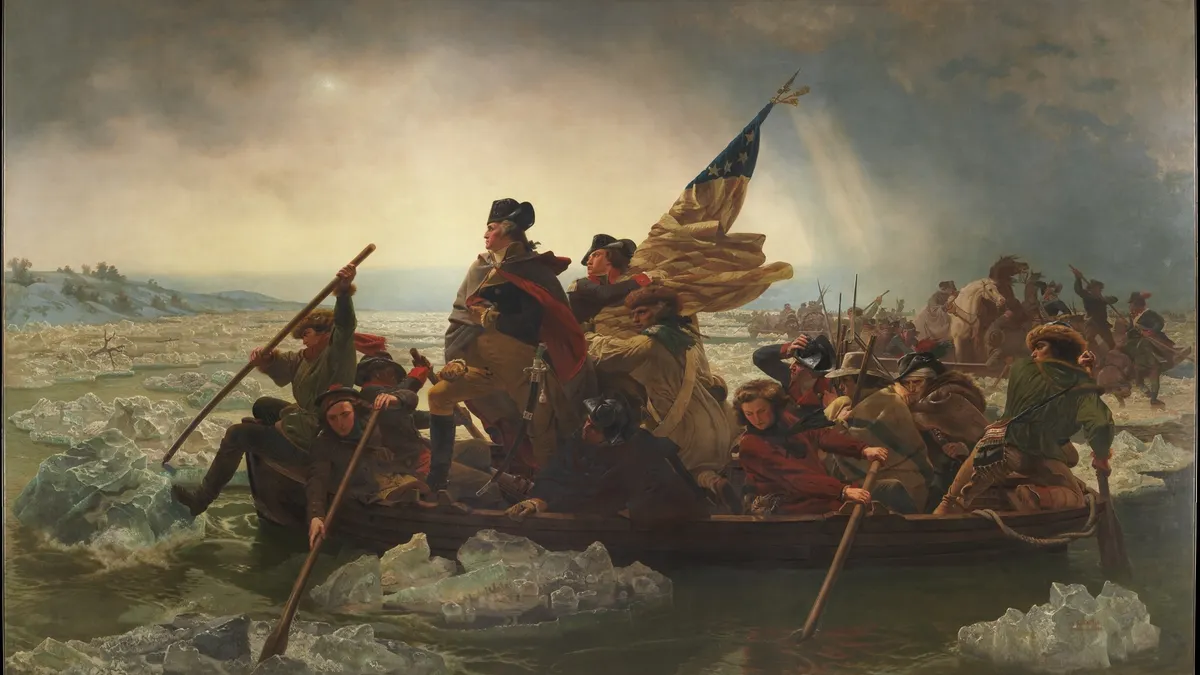
In a visual age in which teenagers often have short attention spans, fine art can be a hook to help them build analytical skills for literature — as they slow down and pay more than fleeting attention to something, according to Carol Jago, a veteran English educator.
“I always say to new teachers, run with your strengths,” said Jago, associate director of the California Reading and Literature Project at the University of California, Los Angeles, and a former middle- and high-school English teacher in Santa Monica, California.
“Because art was always a love of mine, I saw it as a perfect way to help students begin to take interpretive risks,” said Jago, who is also a former president of the National Council of Teachers of English. “That’s what they don’t do with complex texts. They give up: ‘It’s too hard. I don’t get it.’”
Instead, she suggests, educators can practice building students’ “reading muscles” by looking at a painting. “Two minutes is a long time for a teenager today,” she said.
But don’t just put up a painting and tell them to stare at it: Build a protocol, such as having them list eight things they notice about the painting, Jago said. Then, they can turn to a partner and share their thoughts before the class has a larger conversation.
“One of the things that every English teacher in America right now says is that kids don’t have the stamina for reading,” she added. “We need to build that stamina.”
Once students have become absorbed in such a scenario, educators should proactively make the connection to what students just accomplished, Jago said.
“Draw their attention to it, metacognitively,” she said. “‘Look at how much more you noticed. Let’s take this opening paragraph of a novel and give it that same kind of attention.’”
What this does, Jago said, is “bottle” those skills in a way “they feel less put-off by.”
“Today’s teenagers are good visual learners,” she said. “They’re surrounded by images. Help them take that strength and apply it to text.”
When possible, it can add another layer to the lesson if the educator draws upon a piece of art with cultural or temporal connections to the work of literature, Jago said. For example, Emanuel Leutze’s “Washington Crossing the Delaware” might have associations with historical fiction about the Revolutionary War era.
“There’s real power in understanding art,” she said. “It helps you understand the past. Ask students, ‘What do you notice about what people are wearing, what they’re eating, what tools they’re using? What’s different and what’s the same?’”
Finding parallels to the 21st century can help students realize that creations of the past, whether fine art or literature, are not “from outer space. They’re part of our world,” Jago said.
But teachers should also take care not to get so wrapped up in their own artistic interests that they lose the thread of what they’re trying to accomplish, she cautioned. “You want to set up a situation where they’re discovering things in a piece of art or piece of literature for themselves.”
And ultimately, teachers can’t introduce students to literature like they’re pushing vegetables. “‘It’s good for you, you’ll hate it now but thank me later.’ That never worked,” Jago said.
“At the same time, it can’t be, ‘Reading is fun,’” she said. “Pick up ‘The Aeneid.’ Pick up ‘The Odyssey.’ It’s not fun.”
Rather, she suggests the approach should be, “‘This is going to be hard. I’m here to help you. You’re going to find some things here you’re going to be interested in.’ And use that as an entry point to the world of intellectual life,” she said.
By being honest with students — and honest with themselves that few of today’s 14-year-olds are likely to naturally immerse themselves in literature — educators have a chance to break through the noise, Jago said.
“How can we help this generation of kids who are not OK?” she said. “Let’s be clear. They’re locked into a bell jar of social media and phones. How can we help them see that there’s more out there, and that their attention could be well-spent slowing down and looking at a few things closely rather than the endless feed of Instagram?”