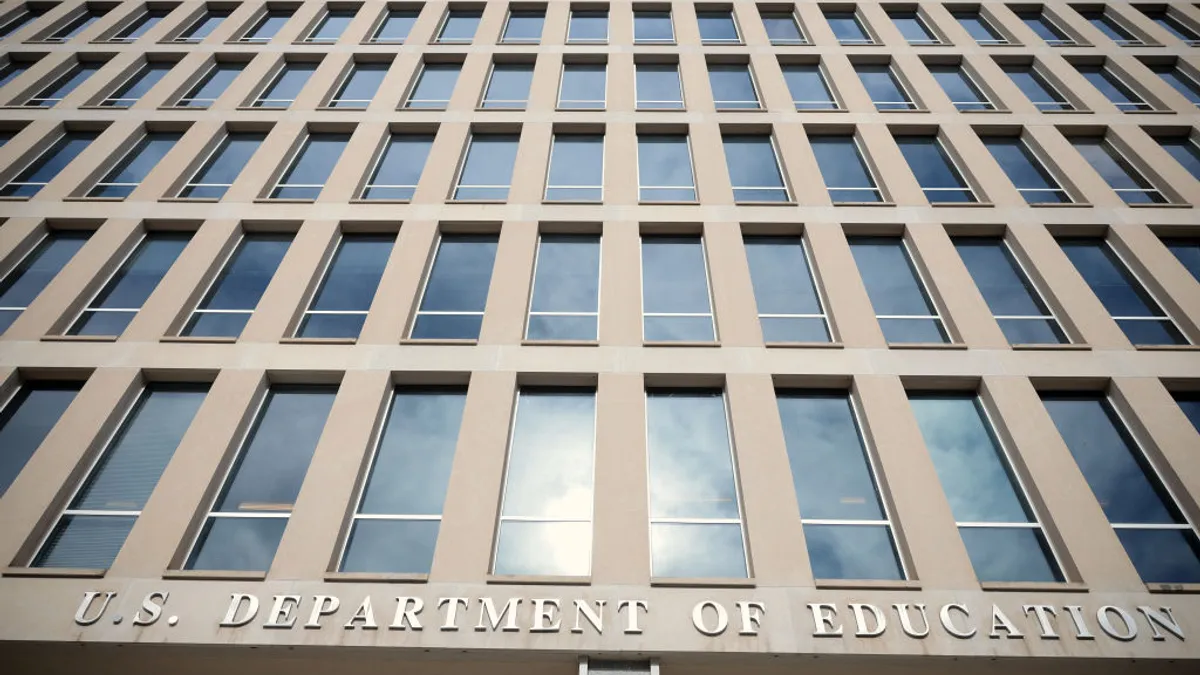
A senior official at the U.S. Department of Education said there are two myths about the agency’s recent partnership with the U.S. Department of Health and Human Services that need clarification.
Those “misconceptions” are that school districts will no longer manage students' individualized special education services and that students' individualized education program records will be transferred to HHS, said Kelly Rogers, acting assistant secretary of the Education Department's Office of Special Education and Rehabilitative Services.
"We do not have individual child records at the federal level. That is not our role," Rogers said.
As far as oversight of students with disabilities' individualized services, Rogers said that "those protections and the rights afforded to parents and children for placement decisions will continue to remain where they need to be, at the local level with teachers, with parents who know the needs and the goals best for each child."
She added, "Students will go back to school after the summer and still receive the services that they are entitled to that have been authorized, and that they are afforded to through federal law."
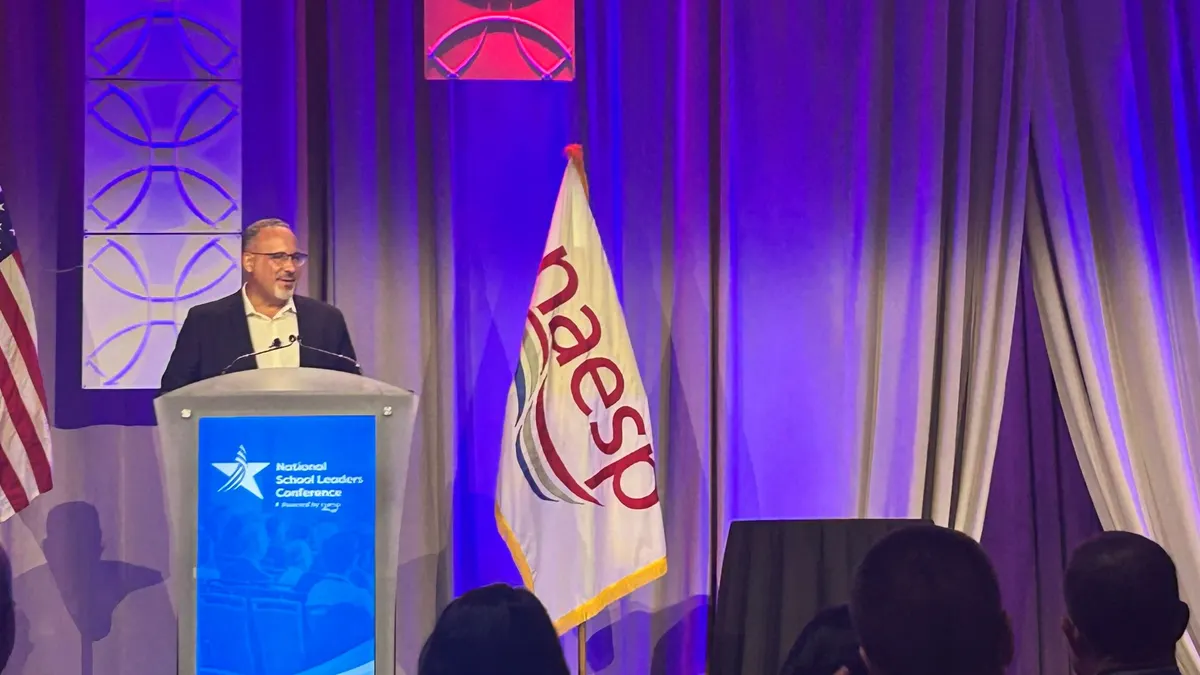
Rogers addressed these topics during a June 25 interview with K-12 Dive. The discussion was held about a week after the Education Department announced its interagency agreement with HHS for certain special education programs.
One of the federal special education activities being transferred to HHS is the management of formula and discretionary grant programs components for IDEA Part B, Part C and Part D. Although, federal fiscal year 2026 grants will still be coordinated by the Education Department.
On June 16, the Education Department also announced plans to move some civil rights activities housed under its Office for Civil Rights to the U.S. Department of Justice. The Education Department now has 14 interagency agreements with six other federal agencies, as the Trump administration aims to close the Education Department. Doing so, it has said, will reduce bureaucratic burdens on states and districts.
Although only Congress can officially eliminate the Education Department, the Trump administration maintains it is an unneeded and ineffective agency, saying it has failed to boost student achievement despite increased spending.
The push to keep OSERS at the Education Department
But while the Education Department maintains statutory responsibility for the functions being outsourced, there has been significant pushback for the special education and civil rights partnerships.
As of June 26, 731 civil rights and education organizations signed a letter to Congress urging lawmakers to halt the OSERS and OCR transfers, saying the moves threaten “decades of progress advancing educational, employment, and civil rights outcomes for students with disabilities."
Rep. Mark DeSaulnier, D-Calif., on June 24, introduced an amendment to the FY 2027 National Defense Authorization Act that would prevent the transfer of special education and civil rights activities out of the Education Department.
And there has been some bipartisan support in the Senate to block the OSERS-HHS partnership, with Sen Bill Cassidy, R-La., chair of the Senate Health, Education, Labor and Pensions Committee, agreeing with Sen. Tim Kaine, D-Va., to hold a vote on the matter in July.
An explanatory, non-binding statement accompanying the FY 2026 bill, passed in February by Congress, strongly condemned and discouraged the transfer of key programs out of the Education Department. However, the lawmakers’ statement didn't explicitly prohibit the Education Department from carrying out or entering into interagency agreements with other federal agencies.
Some organizations critical of the transfer of special education programs to HHS say it implicitly puts a medical or treatment focus on services for students with disabilities rather than an inclusive educational approach. The critics also point out that a separate interagency agreement moves many of the Education Department's elementary and secondary education activities to the U.S. Department of Labor.
Weadé James, senior director for K-12 Education Policy at the Center for American Progress, in a June 16 statement said moving OSERS' functions to HHS is "returning the focus to defining children by deficits rather than potential."
Laurie VanderPloeg, associate executive director for professional affairs at the Council for Exceptional Children, said during a webinar hosted by CEC Monday that there are concerns about the federal government’s ability to disperse funds and to monitor the implementation of IDEA in states and districts due to efforts by the Trump administration to downsize the Education Department through workforce reductions over the past year.
"Not having the capacity within staffing to really uphold that statutory and regulatory requirements that they have in front of them is concerning," said VanderPloeg, who served as director of the Office of Special Education Programs in OSERS during the first Trump administration.
VanderPloeg, along with a dozen other former federal special education officials sent a letter to Congress last year urging lawmakers to reject any efforts to move special education programming out of the Education Department.
Meanwhile, Rachel Gittleman, president of American Federation of Government Employees Local 252, which represents current and former Education Department employees, denounced in a Monday statement the beginning of transfers of about 60 employees from the Office of Elementary and Secondary Education to HHS and the U.S. Department of Labor.
"Students, families, and taxpayers are already paying the price: funding delays, confusion for both employees and the public, wasted taxpayer dollars, and no accountability or oversight," Gittleman said. "Shuffling education programs to other agencies doesn't make government work better — it breaks it.”
Regarding the OSERS-HHS partnership, supporters of the agreement said placing special education services in a healthcare agency will better align services that are now siloed that some families with children with disabilities rely on. That includes Medicaid health insurance for low-income families and Head Start early childhood education services provided by HHS and special education services at the Education Department.
There is a "morass of challenges" in accessing funds and services for students with disabilities at the Education Department, said Jeanne Allen, founder and CEO of the Center for Education Reform, adding that HHS would be better equipped to provide both disability and special education programming.
About 8.2 million students ages 3-21 qualified for IDEA Part B services in 2024. In the same year, IDEA’s Part C program served nearly 460,000 infants and toddlers with disabilities and developmental delays.
Rogers said the partnership with HHS will be focused on improving outcomes for students with disabilities. When asked how she would define success of the partnership three years from now, Rogers said it would be through increased graduation rates of students with disabilities earning regular high school diplomas, improved academic success, and stronger transition services for young adults with disabilities.
She added that as the interagency agreement with HHS matures, there will be more details on how the two agencies will work together to elevate academic achievement among students with disabilities.