ORLANDO, Fla. — Change often occurs very quickly when decisions are made on school closures and mergers — whether through an announcement or a school board vote, said Vicki Wilson, a school leadership consultant and former principal.
But what comes next — the transition phase — is what takes more time and involves the human part of that change, she said.
“The hardest part about organizational change isn’t what’s beginning. It’s what’s ending,” Wilson said. “That’s where that human piece is coming in, because there’s endings that are happening.”
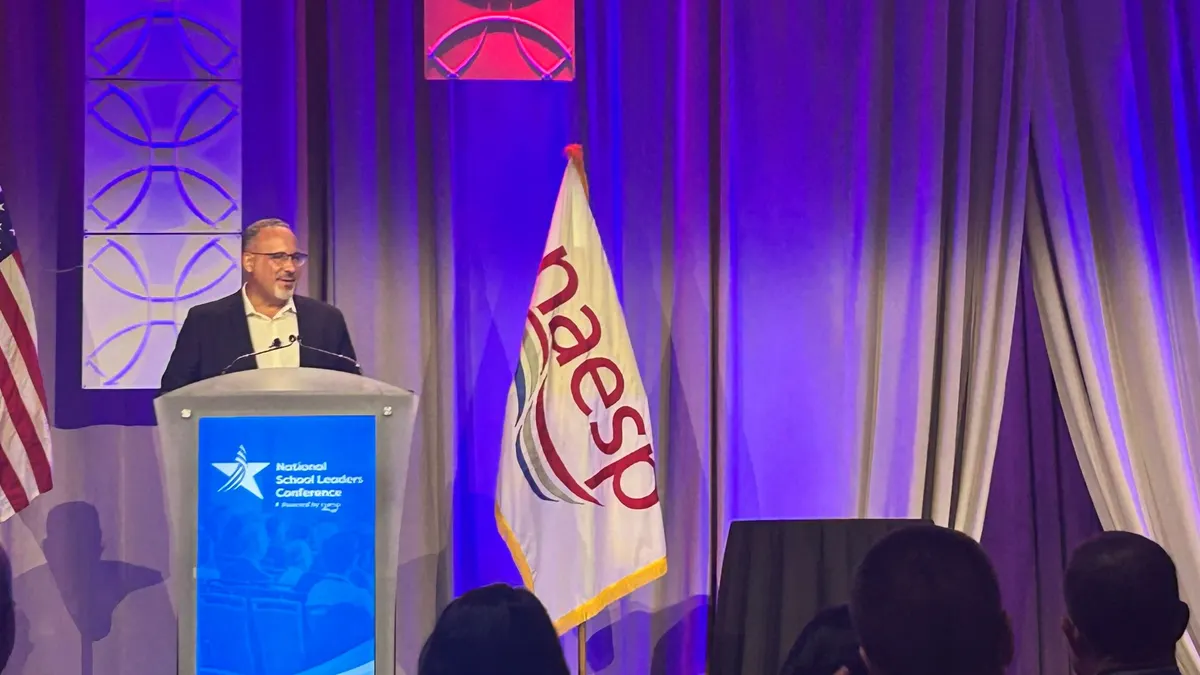
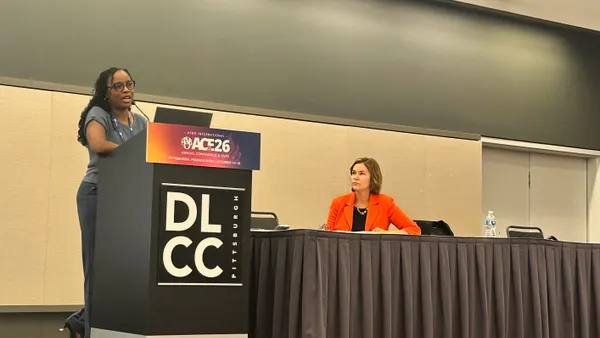
Wilson presented alongside Nicole Garza, principal of Grosse Ile Elementary School in Michigan, about how Garza navigated the transition phase of leading a school that was preparing to close and merge into another school. The two shared their advice as part of a Tuesday session at the National Association of Elementary School Principals’ National School Leaders Conference.
Referencing William Bridges’ transition model, as described in his book “Managing Transitions,” Wilson said the approach can also be applied to school closures. The model describes three phases that occur during a transition: the ending, the neutral zone and new beginnings.
When the end of something — like the closing of a school — is announced, Wilson said, it’s important during that phase to honor that upcoming loss to help people process the end and more easily move through the transition process.
The neutral zone phase is often where people spend the most time during a transition process, and it describes where people can feel lost between the old and the new during a significant change, Wilson said.
And then finally, she said, the new beginning phase is where people form new identities, values emerge, and energy returns.
Wilson, who advised Garza throughout her school’s closure and merger process, noted that Garza’s former school had a multi-year transition period between the initial announcement and the official merger into a new school with a new name, now known as Grosse Ile Elementary.
Helping staff grieve a school closure
After the district announced that its K-2 and 3-5 schools would merge into one K-5 building, Garza said, one of the two buildings’ principals was also stepping down. Garza was then responsible for leading both buildings for the year leading up to the official merger rollout.
Garza added that she and her leadership team had the entire 2024-25 school year to work on improving school climate and culture before the new school opened. That was crucial, she said, because the staff in both buildings didn’t want to work together or gather to do anything unifying, which made it feel like the merger could turn into “a disaster.”
During that ending phase, it was important for Garza’s school staff in both buildings to process their grief and say out loud what they were losing because of the school closure and merger, Wilson said, adding that “they felt better at the end of that.”
To help with that grieving process, Garza said, she dedicated an entire professional development day in August 2024 to allow the schools’ staff to grieve and talk about the closure process separately. School administrators also stepped away from those conversations, so staff “could truly explain how they were feeling without us even being present,” she said.
Uniting staff through Olympic games
Working with Wilson, Garza and her team developed a plan to help staff in both buildings bond over the course of the school year leading up to the official merger. That turned into the “Leaving Your Mark Olympics,” which launched during their back-to-school professional development.
As part of that initiative, the 44 staff members were split into six teams that each integrated teachers from different grade levels and buildings. Before the Olympic games took place, Garza also had each team create “collective resumes” so staff could discover how much total education experience and degrees they had all earned over the years.
This helped the staff get to know each other and understand what every person was “bringing to the table,” Garza said.
“It really was eye opening for our staff, and then we played Olympic games and had so much fun,” Garza said. “And this is the first time that they played together and laughed together.”
Some of the Olympic games employees played included “trashket ball,” balance beam walks, and a high jump where staff competed to see who could place a sticky note highest on a wall, Garza said. From those games, the staff got competitive as they began to earn points, she said.
To keep the momentum going, Garza created a point system for the remainder of the year among the same staff teams. Teachers could earn points for building positive school culture, she said, for example, by sending positive encouragement notes to a teammate in another building, sharing resources with each other, or by sending in a teammate from another building to help in a classroom.
Why was the transition process successful?
These were all “things that they would never have done before,” Garza said, adding that the point system worked as teachers began filling out the Google form and points were tallied. The winning team was announced during the end of year staff party, she said.
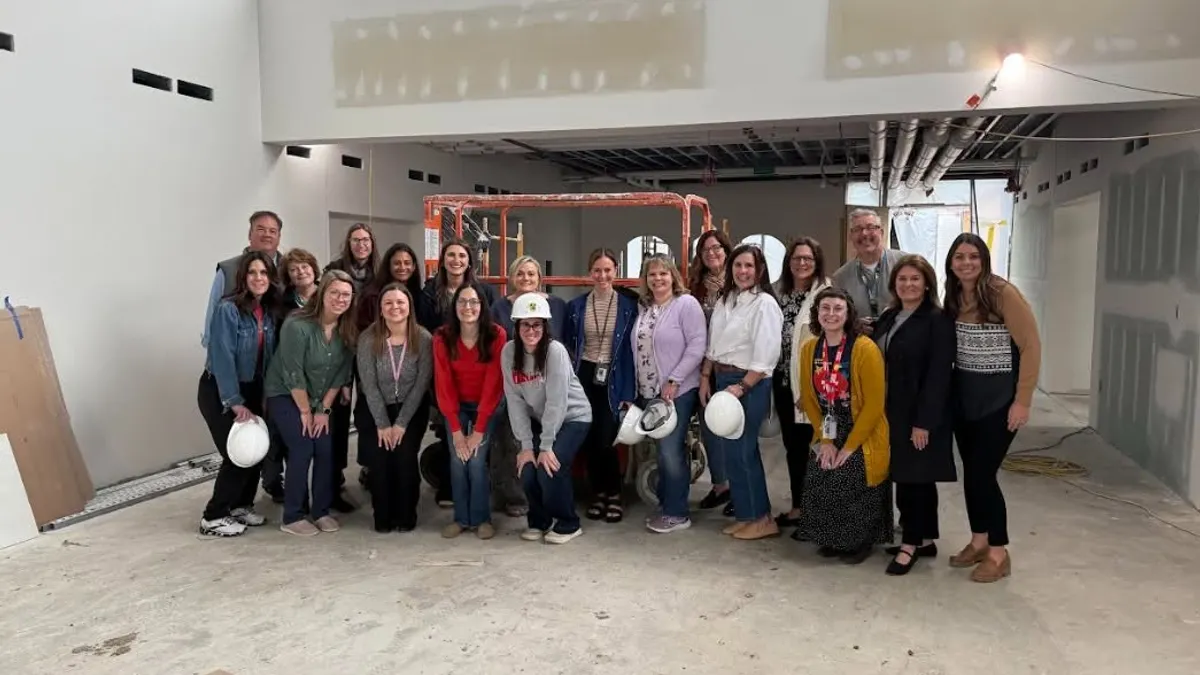
“And we finally merged last year, and the issue was the construction still going on, not the staff,” Garza said. “This seems so simple and silly, but it really did wonders for bringing two staff together.”
What made that transition process so successful, Wilson said, was that Garza “walked her people through that neutral zone with clear communication and clarity, information, empowering staff.” By also bringing in new opportunities to unite employees and build relationships, it helped teachers move through the difficult neutral transition phase and helped them move into the new beginning phase.
The ultimate way of knowing when a school merger is successful, Wilson said, is when staff have formed that new identity and finally begin to collectively say “this is our school.”