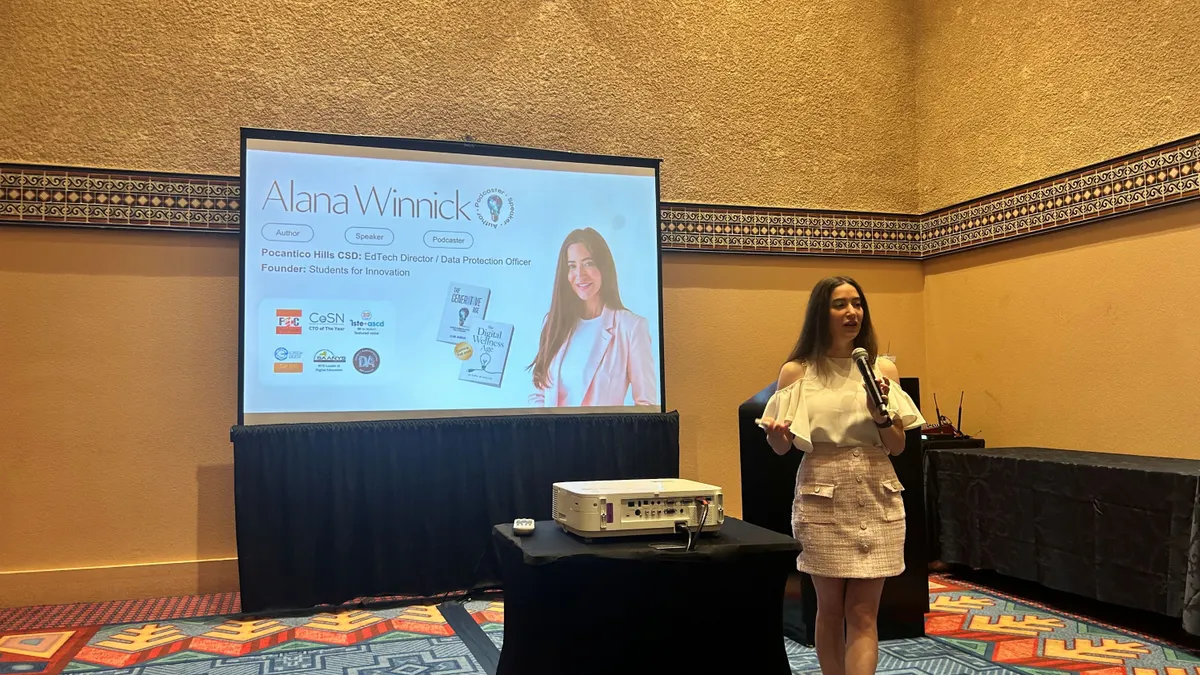
ORLANDO, Fla. — As school leaders navigate the movement to reduce screen time and devices in classrooms, some say K-12 policies that outright ban tech use are not always the best approach.
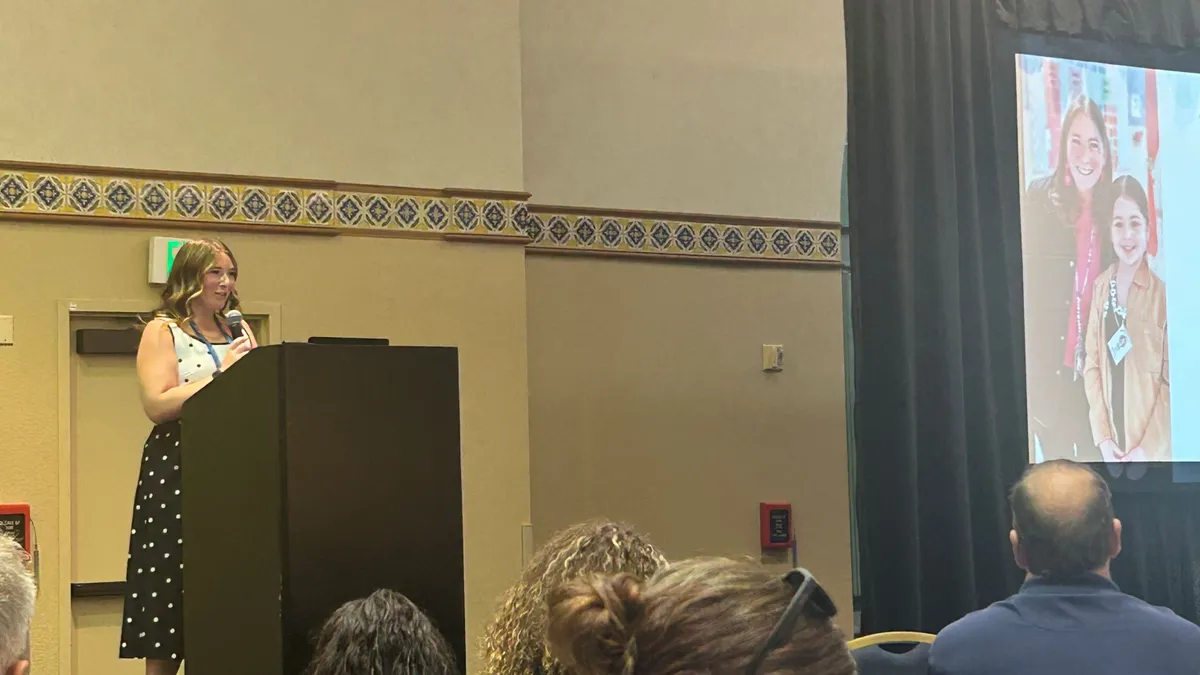
Alana Winnick, educational technology director at Pocantico Hills Community School District in New York, shared how principals can help students and staff improve their digital wellness instead of focusing on device bans altogether. Winnick's remarks came during a Tuesday session at the National Association of Elementary School Principals’ National School Leaders Conference.
Schools and districts nationwide are increasingly questioning their 1:1 device policies and implementing screen time limits, Winnick said.
That includes the nation’s second-largest school system, Los Angeles Unified School District, which approved a screen ban for students in early education, kindergarten and 1st grade. The policy, which takes effect in the 2026-27 school year, will also limit older students’ time using their school devices.
Are bans really the right answer?
Maryland’s Baltimore City Public Schools also recently announced it will implement a policy for students in grades pre-K-2 that will reduce screen time “and prioritize technology as a purposeful instructional tool rather than a primary focus” starting in the 2026-27 school year.
The district is moving away from 1:1 devices for its youngest students amid the growing research suggesting that early exposure to screens can harm brain development, Sedrick Smith, a former principal at Falstaff Elementary/Middle School in Baltimore City Public Schools, told K-12 Dive. Smith is now the principal at the district’s Baltimore City College high school.
Smith added that he has “mixed feelings” about the new policy for pre-K-2 students.
“I think we need to make sure that even our youngest learners are being exposed to the technology that's out there,” Smith said. “But I do think we were spending way too much time and becoming overly reliant on the technology.”
For instance, Smith said he’s witnessed young students screaming for over a month before getting acclimated to pre-K or kindergarten classrooms, because they wanted to be on an iPad or computer instead.
“It wasn’t enough stimulation,” Smith said, adding that the school had to eventually set boundaries with parents to enforce screen time limits at home.
During her session, Winnick said she believes that school device bans are the wrong answer to the student screen time issue.
While bans remove the problem, Winnick said, students still need to be taught skills on how to properly use devices. When students enter the workforce, she added, they will eventually have to use devices and be distracted.
“If we're not teaching them how to regulate themselves now, they will not be successful when they are older,” Winnick said.
Shifting the focus to digital wellness
It’s important to acknowledge that students aren’t the only ones struggling to have healthy relationships with cellphones and technology, Winnick said. Adults are spending too much time on their screens, as well.
That’s why school staff need to work on modeling good behaviors around personal device use in front of their students, Winnick said. For instance, principals can help their teachers create and respect boundaries for their own digital wellness by dedicating an hour of professional development time to set up their devices to encourage less screen time.
“Start with the adults in the room,” Winnick said. Doing so helps with getting buy-in for digital wellness initiatives schoolwide, she said, adding that parents can also benefit from school-led digital wellness lessons.
Both students and adults need to understand that not all screen time is equal, Winnick said. Binge-watching YouTube shorts, for instance, is different from creating YouTube shorts or using Google Maps, she said, adding that the amount of time spent on screens doesn’t tell the full story.
“Stop measuring screen time and start measuring screen purpose,” Winnick said. “What is technology adding? What is it replacing or displacing?” And when technology is used for instruction, she asked, is it bolstering learning?
How principals navigate ed tech pushback in schools
Tiffany Adams, a principal at Blount Elementary School in Montgomery, Alabama, told K-12 Dive it’s crucial that schools embrace technology — so long as social skills don’t suffer, it’s not used solely for entertainment, and it helps students grow. Adams’ school has a 1:1 device policy, but students can only take them home on an asynchronous day or if the teacher gives them an assignment.
Adams said she’s holding her teachers accountable for responsible technology use by encouraging them to make instructional activities more interactive and engaging for students, which can also help develop their social skills. When Adams and her leadership team notice a teacher is spending too much time using technology, she said, they speak with the teacher about any concerns they may have.
When parents come to Adams with concerns about their children’s technology use in the classroom, she said she reminds them of the benefits of classroom technology by showing student progress reports that help teachers individualize their learning.
Heather Thompson, a principal at Shelby-Rising City Elementary School in Shelby, Nebraska, told K-12 Dive that 1:1 device programs can be great, but teachers need proper training about how to use technology purposefully and enhance learning rather than just putting a student in front of a computer.
Technology bans are not the right approach, Thompson said, because children are going to be exposed to technology outside of school anyway. There are also effective digital curriculum tools that have contributed to student growth in her school, she said, asking “So why would we pigeonhole ourselves to only being able to use print if we have digital opportunities?”
One of Thompson’s approaches to combatting concerns around device use in schools is through student showcases from assignments that integrate technology.
For instance, a student could film themselves presenting a research project that’s cross-curricular with an arts class. That student could integrate a green screen into the video. Then, the video could be accessible to view through a QR code that’s posted in school hallways or even online for the community to see, Thompson said.
“So we’re using technology in multiple different ways and we’ve broadened the horizon for that student and made it cross-curricular,” Thompson said. Such public showcases of student technology use are important, “because if I’m not telling the story of the great things that we’re doing in our school, then nobody else is.”