Over a year after a deadlocked U.S. Supreme Court upheld a block on what would have been the nation's first religious public school, a federal court in Oklahoma cleared the way this week for a Jewish charter school.
The court decision marks a win for the school choice movement's ongoing attempts to establish religious public schools.
The order issued Sept. 24 was in a case filed by The National Ben Gamla Jewish Charter School Foundation, and it temporarily pauses the Oklahoma Statewide Charter School Board from enforcing a provision of the Oklahoma Charter Schools Act that requires a charter school to be “nonsectarian.”
The proposed Jewish virtual charter school — which was reportedly set to open for the 2027-28 school year — aims to provide “rigorous academic education” alongside “instruction in Jewish religion, culture, values, rituals, texts, holidays, and practices," according to court documents. The documents also show that "the transmission of Jewish religious beliefs and practices to children is a core aspect of Ben Gamla’s religious mission."
The charter school board in February unanimously rejected Ben Gamla's application to create a Jewish public charter school, citing an Oklahoma Supreme Court ruling in 2024 that struck down a similar bid by a Catholic organization.
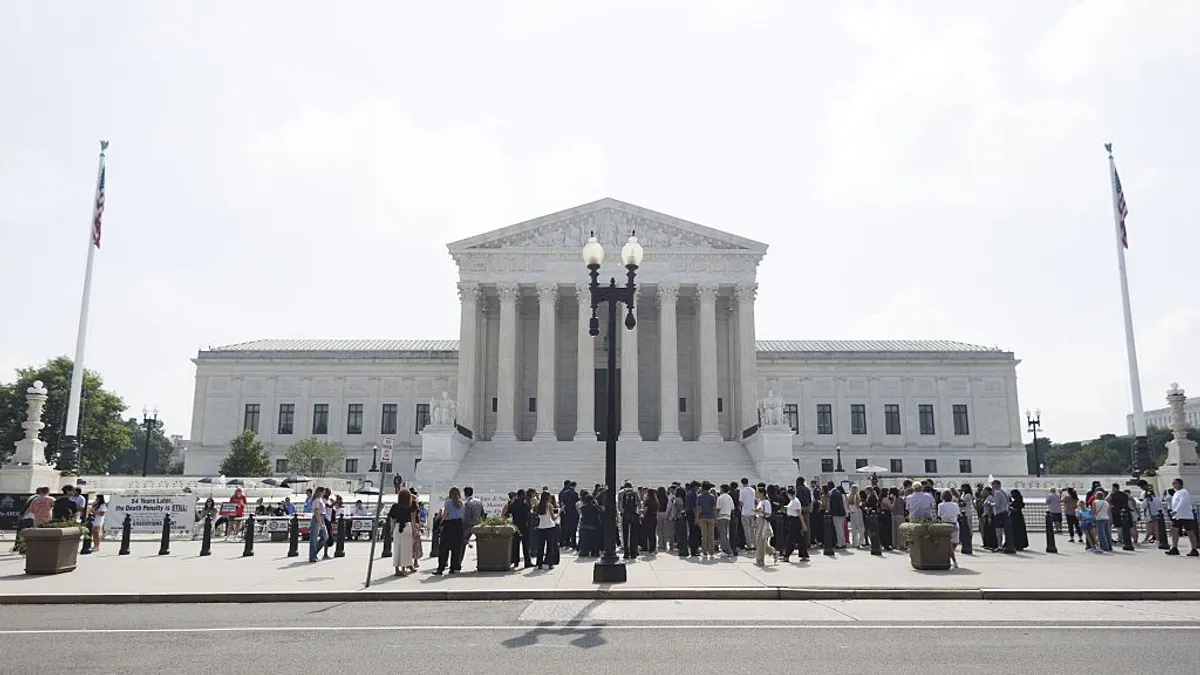
The application for the Catholic school, St. Isidore of Seville Catholic Virtual School, was narrowly approved by the board in 2023, and the school was set to open for the 2024-25 school year. However, the Oklahoma Supreme Court in 2024 found that its creation violated the state and federal constitutions, as well as the Oklahoma Charter Schools Act, in a ruling was appealed to the U.S. Supreme Court.
A deadlocked high court kept the state court decision in place.
Now, a lower court order from the U.S. District Court for the Western District of Oklahoma says the nonsectarian provision in the Oklahoma Charter Schools Act — which partly prevented the successful establishment of St. Isidore — "expressly discriminates against otherwise eligible recipients solely because of their religious character," and that, in doing so, it violates the First Amendment's Free Exercise Clause.
The decision to pause the state law's enforcement and allow the creation of the nation's first Jewish charter school to move forward was celebrated by school choice and religious freedom advocates, which have amplified their push for religious public schools since Supreme Court decisions kept the door open for such a possibility in the last few years.
The Supreme Court cases that enabled opportunities for the likes of Ben Gamla and St. Isidore — Carson v. Makin in 2022 and Espinoza v. Montana Department of Revenue in 2020 — gave private institutions access to public funding regardless of their religious use or status.
However, this week's decision to move Ben Gamla forward was lamented by civil rights groups and groups that advocate for church-state separation. The American Civil Liberties Union, Americans United for Separation of Church and State, and other groups have intervened in the Jewish school's case.
“The court’s conclusion that a public charter school can be religious opens the door to a dangerous sea change for our democracy," the groups said in a Sept. 24 statement. In a statement to K-12 Dive, Americans United Associate Vice President and Associate Legal Director Alex Luchenitser said they were discussing next steps with their clients and co counsel.
The defendant that the Jewish foundation filed the lawsuit against — the Oklahoma Statewide Charter School Board and its chairman — previously expressed support for religious public charters.
“I believe the Board was placed in a difficult position,” said the board's chair, Brian Shellem, in a February statement when rejecting Ben Gamla's application. “While we value innovation, parental choice, and high-quality educational opportunities for families, we are unfortunately bound by the Oklahoma Supreme Court ruling from 2024, even if we disagree with it.”
Oklahoma and the intervenors have 30 days to appeal to the U.S. 10th Circuit Court of Appeals, according to Becket Fund for Religious Liberty, which is representing plaintiffs in the case.