Dive Brief:
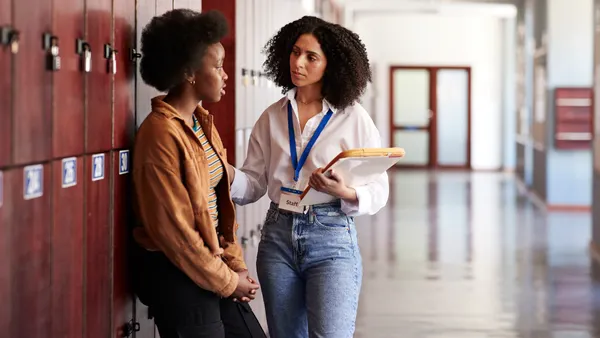
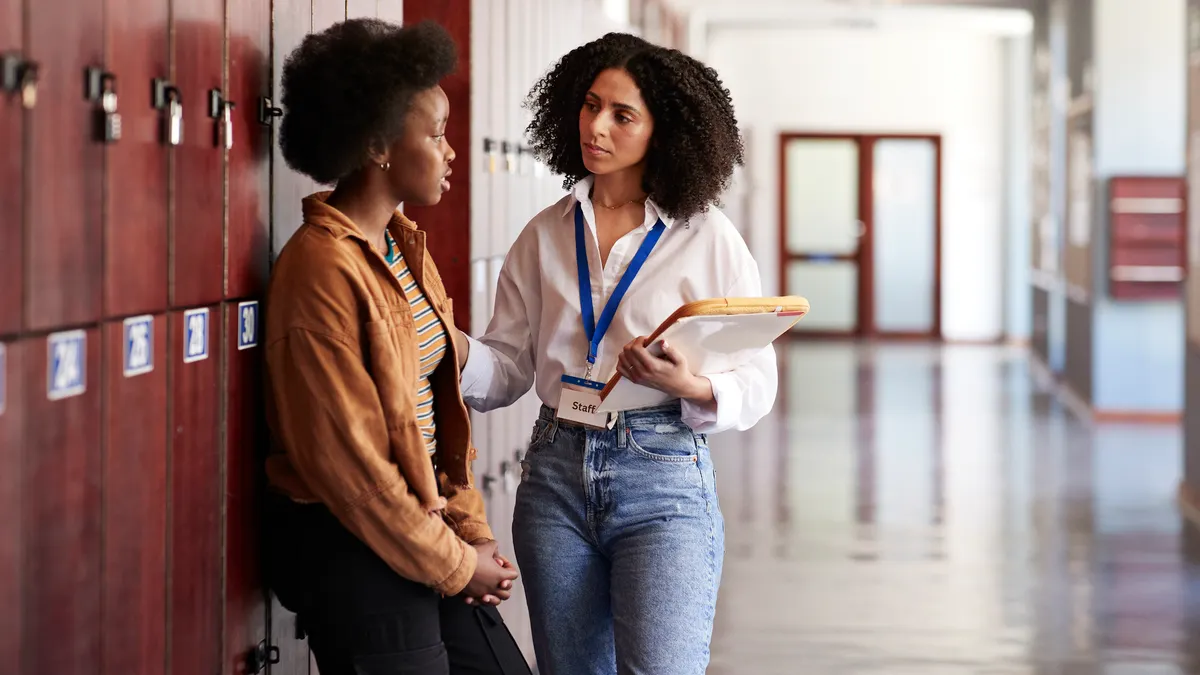
- Students who have a trusted adult at school were 10% to 20% more likely to take advanced coursework and have slightly higher GPAs on average, according to research by Equal Opportunity Schools and the Center for Trust and Transformation.
- About 77% of surveyed students reported having a trusted adult in at least one year between 2016 and 2020. Teachers were the most commonly named trusted adults in schools, followed by a range of other adults including counselors, coaches, school leaders, office staff and custodians.
- Trust between students and educators can have social, emotional and academic benefits for students, the report said. Schools can improve student outcomes by better aligning trusting relationships to student-centered decisions and opportunities, the organizations said.
Dive Insight:
The analysis showed that access to trusted relationships was not evenly distributed among students from different racial and ethnic groups.
Black, Indigenous, Latinx, and Hawaiian or Pacific Islander students consistently reported having a trusted adult at lower rates than their White and Asian peers. Students overall were also more likely to have a trusted adult who shared their racial or ethnic background.
It is not clear why these patterns exist, as trust-building can be complicated, the report said. It did suggest that schools use these relationships strategically by helping students connect to more opportunities. That could include training teachers on how to connect students to Advanced Placement courses or teaching a coach how to help a student who is disengaged.
Data from more than 1.8 million student records, 77,000 staff records, 1,404 schools and 450 districts from the Equal Opportunity Schools network were analyzed for the study.
Equal Opportunity Schools, a nonprofit, has worked with more than 900 schools in over 250 districts to identify and enroll more students in advanced courses. The Center for Trust and Transformation supports individuals and teams through coaching, consulting and research.
A separate but connected study involved the Learning Collider — a nonprofit research organization focused on human-centered artificial intelligence and technology.
That study analyzed more than 284,000 observations for 10th and 11th grade students from Equal Opportunity Schools who were not already enrolled in AP classes and had a GPA of at least 3.0. Among those students, about 45% did not receive a teacher recommendation for more rigorous coursework. About 24% of this population also did not receive a teacher recommendation and did not have a trusted adult connection.
That means that while there were opportunities for more advanced coursework and the students appeared ready for the challenge, "the connection between the two was far from automatic," a summary of the study said.
“These studies reinforce how much trusted relationships matter in schools," said AJ Gutierrez, CEO of Equal Opportunity Schools, in an email. He added that the next step is to explore how to turn trusted school-based relationships into opportunities for students.
"We still have more to learn about how schools can do that consistently and at scale," Gutierrez said. "With so many schools confronting disengagement and chronic absenteeism, understanding that connection has never been more important.”