New York is continuing its fight against Native American mascot imagery despite pressure from the Trump administration and local districts suing to keep their logos, which have in some cases been unsuccessful so far.
However, the state is backing down from implementing a portion of its ban that it put in place in 2023 amid those legal crosshairs, according to court documents.
The state in 2023 prohibited the use of Indigenous names, mascots and logos by public schools, saying in its proposal at the time that it was trying to "promote positive learning environments in schools" and that research has found such imagery could create a hostile environment for Indigenous students. Under the policy change, most districts were required to transition away from the prohibited mascots by 2025.
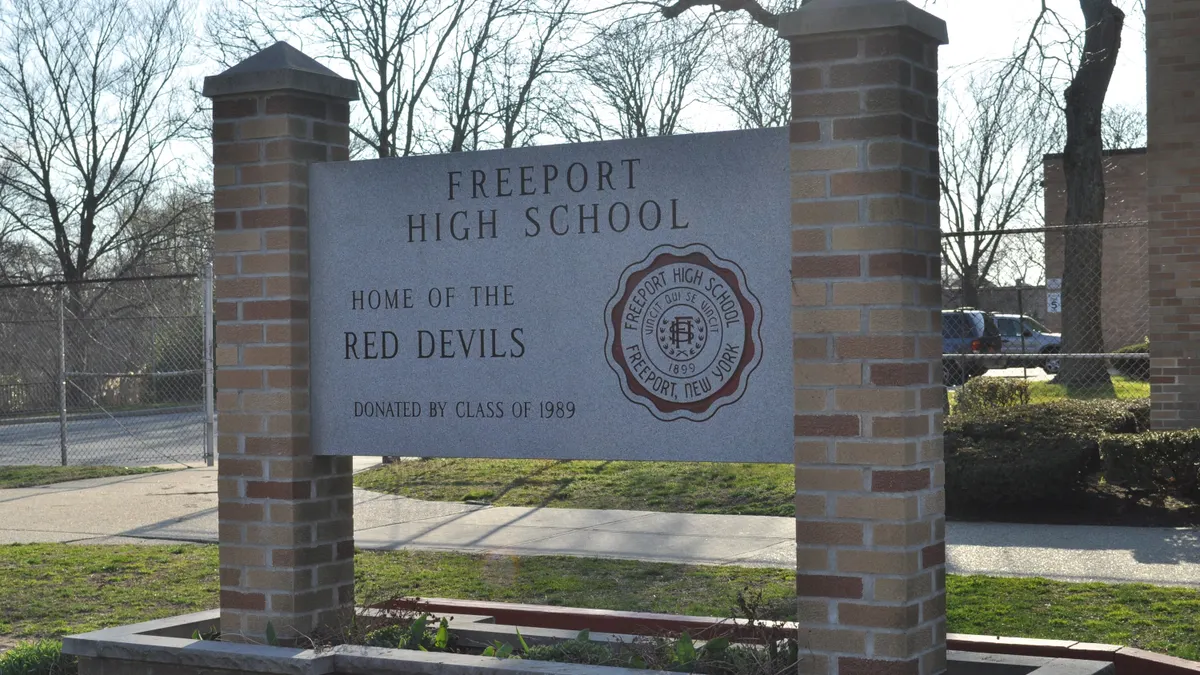
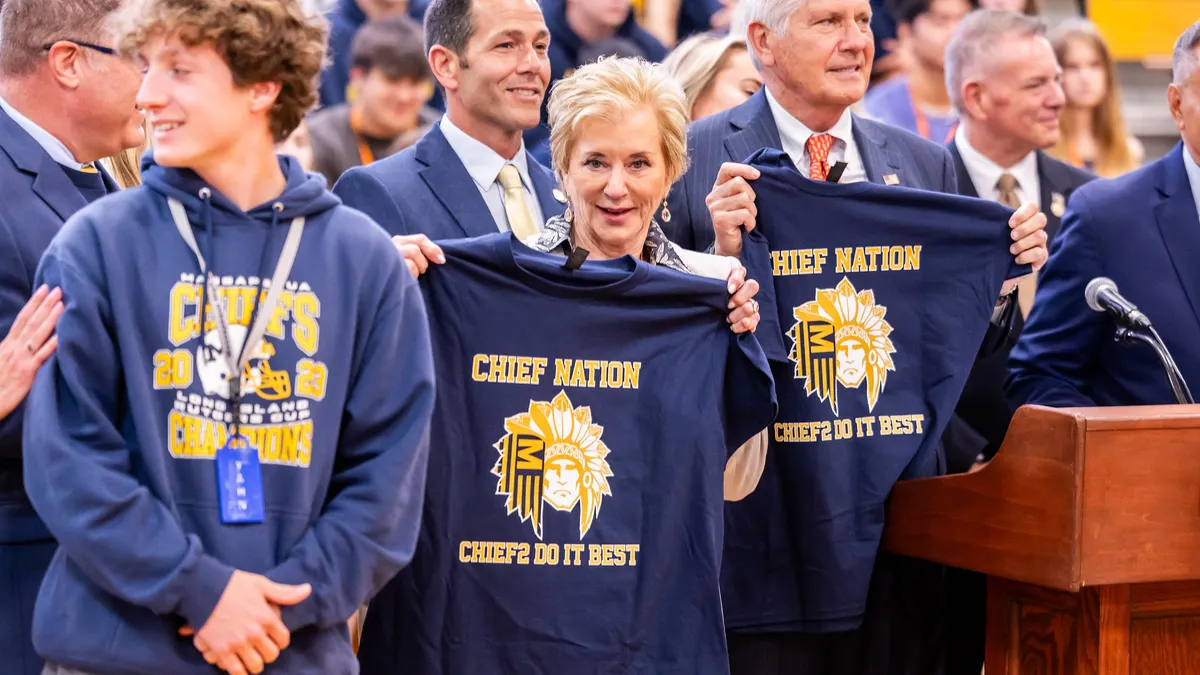
Some districts sued the state as early as 2023, with Massapequa Union Free School District saying in its lawsuit that its mascot references the "rich history" of its Long Island community and is "meant to honor the area's Native American roots." Changing mascots can also come with hefty price tags for school districts, with one Minnesota school district affected by policies similar to New York's estimating last year that the change could cost $1 million.
As part of Massapequa's and another district's lawsuit against the state, brought by Wantagh Union Free School District, the New York State Attorney General Letitia James’ office told the courts in an Oct. 16 update that it was repealing a section of the state mascot ban that prohibits school employees on school property or at school events from wearing or promoting any Indigenous names, logos or mascots.
However, the broader ban on Indigenous school mascots will remain, while some claims brought by the Wantagh school district lawsuit and others are still ongoing in the appeals circuit.
New York State Department of Education spokesperson JP O'Hare, in an Oct. 21 email to K-12 Dive, described legal challenges brought against the state by Long Island school boards as "unsuccessful.”
"As schools complete the transition away from stereotypical Indigenous mascots, the Department will recommend that the Board of Regents leave decisions regarding employee clothing, including apparel displaying offensive Indigenous imagery, to local school districts, consistent with how other employee attire and personnel decisions are handled," O'Hare said.
The Massapequa district celebrated the change as a positive step forward, but called on New York Gov. Kathy Hochul and the Board of Regents to repeal the entire ban.
"This is a significant victory for Massapequa and for the principle of local control. From the beginning, we have maintained that the state’s Native American mascot regulation represents an unconstitutional overreach," said the Massapequa School District Board of Education in an Oct. 23 statement to K-12 Dive. "The state’s recommendation to return authority over employee apparel to local school districts is an important acknowledgment that these decisions should be made locally, not dictated by Albany."
New York pushes back on federal pressure
New York's decision to walk back a portion of its mascot law while remaining staunch in its decision to prohibit Native American mascots comes despite pressure from the Trump administration, which has repeatedly backed the logos and said that prohibiting them is racial discrimination.
Last year, the U.S. Department of Education launched an investigation into the New York Department of Education for alleged Title VI violations. About a month later, the U.S. Education Department found the state agency in violation of the civil rights law protecting students from race-based discrimination.
“The U.S. Department of Education will not stand by as the state of New York attempts to rewrite history and deny the town of Massapequa the right to celebrate its heritage in its schools,” said U.S. Education Secretary Linda McMahon in an April 2025 statement. “While New York chooses to prioritize erasing Native Americans, their rich history, and their deep connection to the state, it is requiring schools to divert time and resources away from what really matters: educating our students.”
Within two months of the original investigation, the agency referred the case to the U.S. Department of Justice for enforcement proceedings, after the state refused to change its policies as requested by the administration. There has been no recent public update in that referral proceeding.
New York has been on the frontlines of the issue, joined by a handful of other states with similar restrictions. In 2019, Maine became one of the first to enact such a ban, according to Lutzker & Lutzker, which provides trademark and branding law services.
As of April 2023, more than 21 states had acted to or were working to address the use of Native mascots in their public schools, according to the firm.