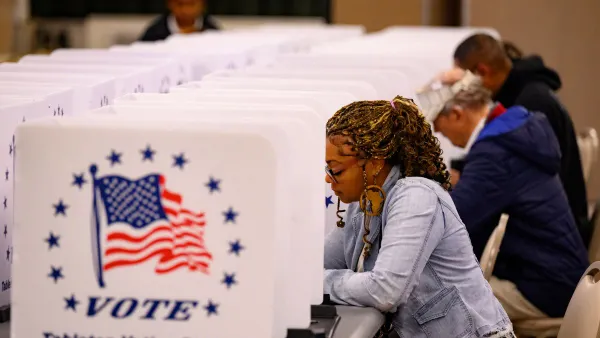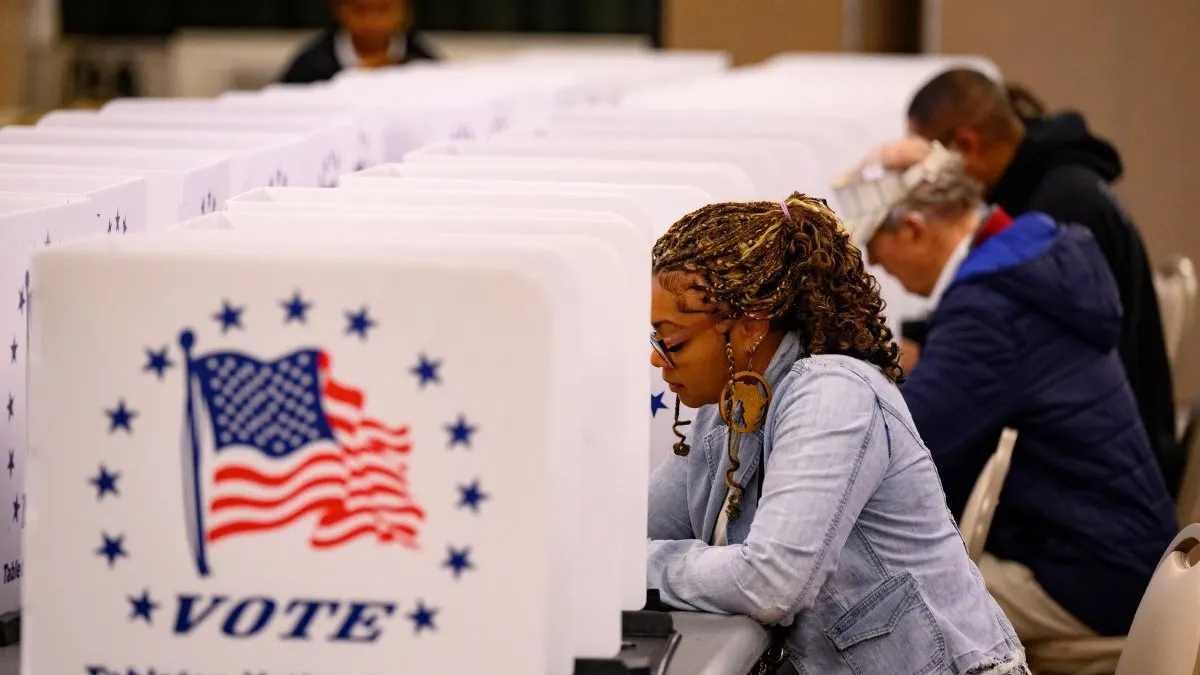
Democrats scored a historic win in the 2026 midterm elections — and, as part of the blue wave that gave Democrats control of Congress, voters also flipped governors' seats in Republican stronghold states and cast their ballots on key education issues.
The flip of Congress beginning in 2027 has already had an impact at the federal level, with Rep. Bobby Scott, D-Va., sending letters to heads of federal agencies, including to U.S. Secretary of Education Linda McMahon, warning them to preserve records and other information or risk facing "criminal penalties."
On the state level, voters flipped governors from Republican to Democrat in Georgia, Iowa, Nevada, Ohio and Texas, with potential implications for state education leadership and district takeovers.
Democrats also took control of several state legislative chambers — impacting education issues in those states — such as in Georgia, Minnesota, Michigan, North Carolina, Texas and Wisconsin.
Additionally, voters cast their ballots on issues related to school sports, early childhood issues, and public funding.
"Across the nation, most Americans want the same thing — a more affordable future, strong public schools and safer communities," said National Education Association President Princess Moss in a Nov. 3 statement. "Tonight, voters came together across race, place and gender and sent a clear message and mandate: put working families, students and educators first and deliver for our communities, not billionaires and corporations."
Here are key takeaways from the state races:
A loss for transgender student access
Although many state legislatures have set school policies related to transgender youth in recent years, those issues were on a handful of state ballots on election night.
In Arizona, voters approved Proposition 318, which requires schools and athletic associations to restrict sports participation and access to intimate facilities based on sex, preventing transgender students’ access to those programs and spaces.
A similar measure in Nebraska, Initiative 442, also overwhelmingly passed, as well as in Washington.
A win for early grades
Early childhood education issues were front and center for many of the gubernatorial races, according to a New America analysis.
In Georgia, Democratic Gov.-elect Keisha Lance Bottoms has pushed for mandatory kindergarten and universal preschool for 4-year-olds, per New America, a nonpartisan public policy think tank.
Democrat David Crowley, who is set to become Wisconsin's first Black governor, has proposed a plan for universal early childhood education for children ages 5 and younger.
And in New Mexico, Democrat Gov.-elect Deb Haaland has advocated to expand the universal child care already established under her Democratic predecessor Michelle Lujan Grisham.
Private school choice and public education funding at odds
The expansion of private school choice programs has been a major highlight for the Republican party in recent years, and the election of more Democrats likely means increased oversight of or changes to those programs.
Opponents say private school choice programs, paid for through taxpayer funds, fleece funds from public school systems and lack transparency for student outcomes, while supporters say they give families opportunities to pick schools that best serve their child's needs.
“In race after race, those who supported public schools and rejected private school vouchers triumphed — statewide in Texas, Iowa, Michigan and Ohio, and in countless congressional districts and school board races," said Randi Weingarten, president of the American Federation of Teachers, in a Nov. 3 statement.
Across the nation, Democratic candidates made strides in the 2026 election cycle by promising to bolster public education spending.
In Texas for example, Gov.-elect Gina Hinojosa, a former Austin Independent School District board member, nodded to the issue, saying she "believes in Texas public schools" and saw her "child's school under threat."
“The days of treating our public schools like they are for sale are over,” she said in her victory speech Tuesday night.
In Minnesota, voters approved a constitutional amendment to increase funding going to school districts without raising individual income or property taxes starting July 1, 2027. It will raise the contribution to school districts by approximately $33 per student. If the measure were in place for 2025, the Minneapolis Public School District, for example, would have received about $3 million in funding, rather than the $2 million it was appropriated.