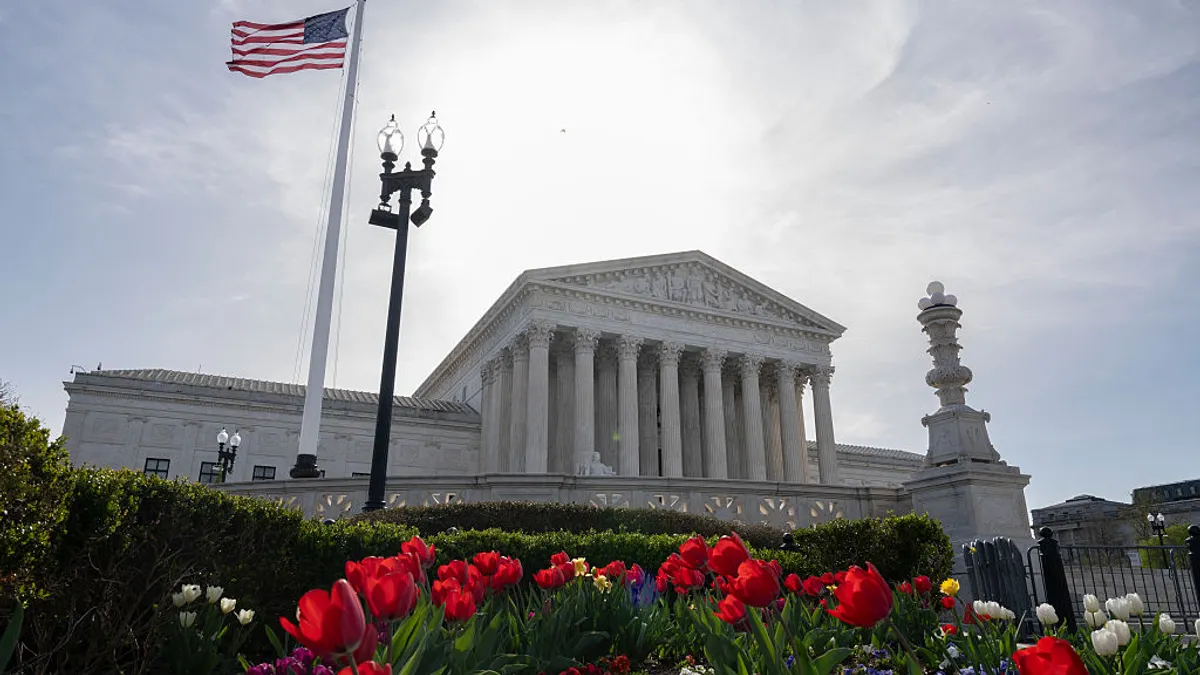
Do state educational benefits carry over to students attending private schools? That's the question the U.S. Supreme Court is being asked to review as they finalize their cases for the October 2026 term.
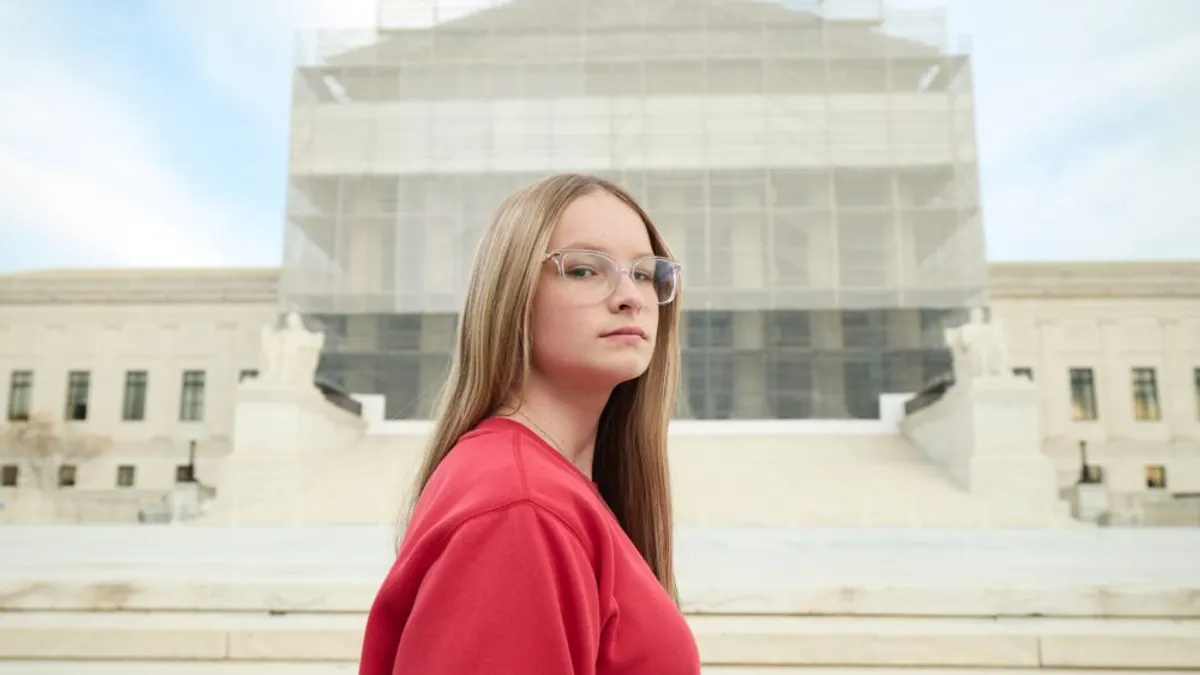
Two Massachusetts families are asking the Supreme Court to hear their challenge to a state regulation that allows their private school children to access public school special education services but only at a public school or a "neutral" location.
The families, whose children with disabilities attend Jewish day schools, said in their July 20 petition that the Massachusetts' policy penalizes private school students who have a constitutional right to attend private schools but who want access to publicly funded special education services.
They are asking the high court to determine whether its "unconstitutional conditions doctrine" means that governments generally may not make a benefit like special education services conditional on surrendering their constitutional right to attend private schools. The unconstitutional conditions doctrine is Supreme Court precedent that a government is forbidden from conditioning an otherwise available benefit on the surrender of a constitutional right.
The petitioners in Hellman v. Craven acknowledged that even if the Supreme Court agreed to hear the case and ruled in their favor, states other than Massachusetts would not be required to establish programs that provide private school students with full-service special education programs.
However, a decision in their favor would "prevent the further weaponizing of state no-aid provisions to deprive educational opportunities that state legislatures, in their discretion, have chosen to provide to children," the petition said.
In education, a state no-aid provision generally refers to a state's constitution that prohibits the direct or indirect use of public funds for religious or private education.
The Supreme Court could also settle a dispute among the lower courts, which the petition said are "sharply divided about whether states may do indirectly what they could never do directly." In this case, that's discouraging parents to choose a private school education so they can have access to an educational right, such as special education, through the public school system, according to the petition.
The case highlights the tension building between those supportive of private school choice programs that use taxpayer funds and those protective of publicly funded services staying in public schools. As more states establish or expand publicly funded private school choice options, litigation in lower courts increasingly questions whether state no-aid provisions prohibit public funding of private or religious schools.
Massachusetts special education provision
Under the federal Individuals with Disabilities Education Act, parents forgo their child's rights to special education services if they voluntarily and independently enroll their child with disabilities in a private school. Unlike public schools, private schools are not required to adhere to IDEA rules for student services and due process rights.
IDEA does require public school systems to provide a “proportionate share” of special education federal funds to services for private school students with disabilities, but that amount is a small portion of the overall funding and typically is set aside for teacher training, direct or indirect student services, and other programming.
However, a Massachusetts law gives parentally placed private school students an individual right to special education education services. But a state regulation bars those students from receiving special education services — paid for through state and local funds — at their private school campuses. Instead, students must travel to public schools or "neutral" locations to receive those services, causing "great time, disruption, and personal expense," the petition said.
"These children will always be spirited out of their schools and taken to 'special classes' or 'separate schools,' where they will be educated alone or alongside other disabled children — not because their disability demands it, but because their parents exercised a constitutional right," the petition said.
Earlier this year, the U.S. Court of Appeals for the First Circuit affirmed a lower court's dismissal of the case. The First Circuit ruling said that parents have a constitutional right to send their children to private schools, but in restricting the location of special education services, the state is adhering to its no-aid provision that prohibits providing direct aid to private schools.
In that decision, Judge Gustavo Gelpí wrote on behalf of the three-judge panel, "What the complaint alleges, at most, is an increased logistical burden… That is a consequence of how the state chooses to deliver public benefits — not a meaningful intrusion" on parents' rights to access private education.
Katherine Craven, the respondent in the Supreme Court case, is chair of the Massachusetts Board of Elementary and Secondary Education. Craven is being represented by the Massachusetts Attorney General's Office, and the parent petitioners are being represented by the Institute for Justice.
In its July 2024 motion to dismiss the original case in the U.S. District Court District of Massachusetts, the state assistant attorney general's office said there is no constitutional requirement that says states must give similar treatment to students who have been parentally placed in private schools and to students enrolled in a public school when it comes to the availability of public educational benefits and allocation of funds.
Additionally, the state argued "Plaintiffs have no federal constitutional right to state-funded special-educational benefits, much less to receive such benefits on-site at their private schools."
The private school choice connection
The case has caught the attention of private school choice supporters, including states. In an amicus brief, a coalition of 14 states, led by West Virginia and South Carolina, urged the high court to hear the case. The brief said that if states create and fund an educational benefit such as special education services for private school students, it may not make that right conditional on parents surrendering their right to educate their children in private schools.
"For opponents of school choice, that is the point — to leverage taxpayer dollars to coerce families into public schools by making private education the only setting in which benefits are forfeited," the states' brief said.
In another friend-of-the-court brief, the Council for American Private Education said the case can address the conflict between state anti-aid restrictions and state private school choice programs. CAPE, whose members collectively serve about 70% of the private school students nationwide, said in its brief, "Modern school-choice programs made scholarships, tuition assistance, and similar benefits available for private education, but conventional anti-aid provisions were invoked to withhold those benefits when families selected religious schools."
In a separate case filed this week, Nebraska families are making a First Amendment claim against the state's educational benefits provision, saying their free speech rights are being violated because in order to access a free education, they have to enroll their children in public schools that conflict with their viewpoints.
The Supreme Court will decide whether to hear oral arguments in the Massachusetts case for its 2026 term, which begins in October. The high court has asked Massachusetts to respond to the petition by Sept. 21.
Correction: In a previous version of this article, special education proportionate share activities were misidentified. The article has been updated.