Dive Brief:
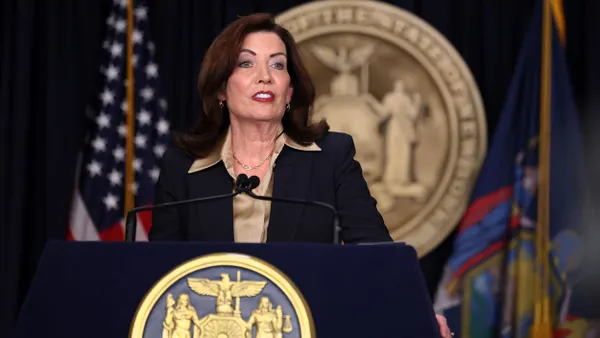
- New York has signaled it will opt into the first nationwide federal school choice tax credit program, becoming the 31st state to do so. "I’m not going to leave money on the table when it could help our kids," said Gov. Kathy Hochul in an Oct. 9 announcement.
- Hochul's announcement came a week after the federal government released proposed guidelines giving states a clearer picture of what implementation may look like.
- Despite the Education Freedom Tax Credit receiving pushback from public school advocates and eliciting caution from some Democratic leaders, some blue-leaning states have decided to participate once the program launches Jan. 1, 2027.
Dive Insight:
Under the tax credit program, taxpayers' cash contributions to select organizations — which in turn provide scholarships to students — are matched with a tax credit. The controversial program was championed by the Trump administration and enacted through 2025’s One Big Beautiful Bill driven by the Republican majority in Congress.
The U.S. Treasury Department and the IRS on Oct. 1 published a proposed rule to govern the program. Under the guidelines, families could use taxpayer-supported scholarships for private school tuition and public school expenses such as tutoring, services for students with disabilities, books, computers and other costs. Students at private — including religious — schools, as well as families with homeschooled children, could benefit from the program.
Private school choice advocates celebrated the guidelines' release, saying they would open up potentially billions of dollars in taxpayer donations. Critics, however, have argued that the proposed rule would lead to subsidizing private, religious education and harm public schools and their students.
Leaders who were hesitant to opt into the federal program had said they wanted to first review the forthcoming rules, but have said they don't want to leave potential dollars for public school students on the table.
"I’ve been clear from the start that New York would participate in the federal scholarship tax credit program if, and only if, all schools and students, including those in our public schools, could benefit," said Hochul. "After a careful review of the federal regulations, we believe this program has the potential to bring millions of additional dollars to New York students and families without taking a single dollar from public schools or our state or local budgets."
According to a report released in July by the American Federation for Children, 9 in 10 students will be eligible for the program, or 51.7 million out of 56.4 million public and private school students.
Around the time of the report's release, 30.9 million — or almost 60% of the nation’s eligible student population — lived in a state that had opted into the program.
States must opt into the program by Jan. 1, 2027. Participating states will then have until Feb. 15, 2027, to submit their lists of qualifying scholarship-granting organizations.