Private school choice advocates are celebrating the U.S. Department of Treasury's Thursday release of the proposed rule for the first school choice tax credit program available nationwide.
Supporters say the draft rule opens the potential for billions of dollars in taxpayer donations to flow toward students attending either private or public schools. But critics say the proposed rule would further the program's potential to subsidize private, religious education and financially harm public schools and their students.
Also on Thursday the Treasury Department issued a temporary rule that applies to the first year of the massive Education Freedom Tax Credit (see sidebar) program that launches Jan. 1, 2027.
Reactions to proposed and temporary regulations were broad. Some focused on expanded educational choice, concerns about public school funding, as well as lingering questions about accountability, equitable access and allowable educational expenses. Many are still digesting the proposed and temporary rules.
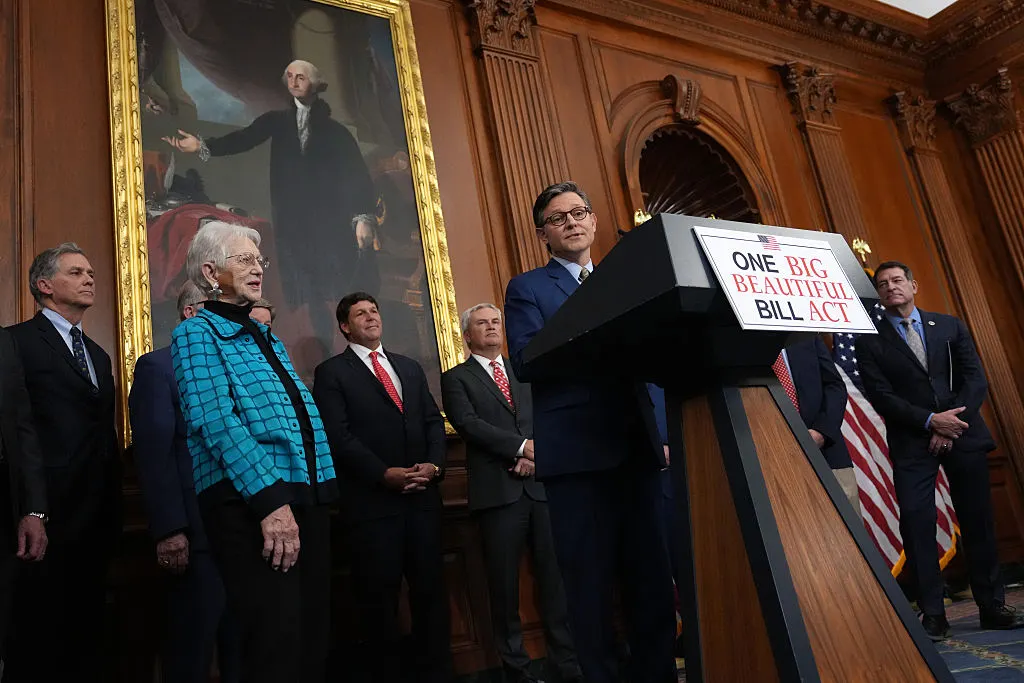
As such, many of the immediate comments focused on reactions to the program itself as established by the 2025 One Big Beautiful Bill Act and to be administered by the Treasury Department and the IRS.
"The new national voucher scheme will funnel billions of taxpayer dollars into private, mostly religious schools to pay tuition for families who already can afford to send their kids to private schools."

Rachel Laser
President and CEO of Americans United for Separation of Church and State
Opponents decried that the Republican-led effort, which has been promoted by the Trump administration, would destabilize public school funding and muddy the separation between public and private, religious education.
“Public funds belong in public schools, which are open to all and educate 90% of America’s students," said Rachel Laser, president and CEO of Americans United for Separation of Church and State. "The new national voucher scheme will funnel billions of taxpayer dollars into private, mostly religious schools to pay tuition for families who already can afford to send their kids to private schools."
The National Catholic Educational Association, a membership organization that represents nearly 140,000 educators serving 1.6 million students in Catholic education, applauded the program for including scholarship eligibility for both private and public school student expenses.
"Most Catholic children attend public schools, and their educational needs matter deeply to us as well," said Steven Cheeseman, NCEA's president and CEO, in a statement.
Federal income taxpayers would be able to make donations to any scholarship-granting organization that will manage and disburse the student scholarships, according to the proposed rule and temporary rule.
Proponents noted that the proposed rule allows for individual taxpayers to donate up to $1,700 annually toward SGO-managed student scholarships — or for married couples filing jointly to contribute up to $3,400. The program is estimated to generate $26 billion annually for both private and public school expenses from taxpayer-supported donations by 2030.
"Most Catholic children attend public schools, and their educational needs matter deeply to us as well."
Steven Cheeseman
President and CEO of the National Catholic Educational Association.
Several supporters also said the temporary rule — which taxpayers, states and organizations can refer to while the proposal goes through the rulemaking process — gives clarity to those who want to form scholarship-granting organizations to manage the scholarships and to solicit donations from individual taxpayers.
Public school systems considering participating, however, are already at a disadvantage since established SGOs have traditionally funneled scholarship funding to private school students, opponents said.
"We definitely think that these regulations demonstrate that the private school sector is really set up to benefit most from this program," said Qubilah Huddleston, policy lead for EdTrust.
Critics call for more public school investments
Public school advocates and civil rights organizations slammed the rules, saying the federal government should prioritize public school funding, particularly for low-income communities and students who need extra supports.
The National Education Association, the country's largest teachers union, said in a statement that the Education Freedom Tax Credit was "robbing students of access to great public schools across the United States."
The rules, NEA said, "ensures the program will contain all the most damaging features of existing state-funded voucher programs, while limiting states' ability to protect students or ensure meaningful benefits for public schools."
Jessica Levin, director of the Public Funds Public School campaign, criticized the proposed rule in an Oct. 2 webinar hosted by PFPS, a project led by the Education Law Center.
Levin said the program prohibits states that opt into the program from placing additional requirements on SGOs, and that includes the type of school that scholarship recipients may attend or the types of qualified education expenses scholarships may fund.
"States won't be permitted to create or maintain safeguards that would be more robust to prevent waste, fraud, and abuse," Levin said. "They won't be able to ensure that students using vouchers get high-quality services or make academic progress, and they won't be able to impose civil rights protections or rights for students with disabilities."
States would need to opt in to participate, and only students residing in participating states would be eligible to receive scholarships. Thirty states have already indicated they want to participate.
"Public school kids stand to be among the program’s biggest beneficiaries."
Democrats for Education Reform
Politicians weighed in mostly along party lines with Republicans praising the proposed rule and Democrats dismissive of the program.
"Today’s announcement is another major step toward putting parents back in the driver’s seat and putting students — not Washington bureaucrats — first," said House Education and Workforce Committee Chair Tim Walberg, R-Mich., in a statement.
But Rep. Bobby Scott, D-Va., and ranking member of the Education and Workforce Committee, condemned the proposal and said taxpayer funding should prioritize public schools.
"When federal dollars go to public schools, schools are required to use that money to serve all students equally without discrimination," Scott said in a statement. "By funneling these dollars into private schools, taxpayers are unwittingly paying for schools that neglect underprivileged communities, are permitted to ignore civil rights laws, and can freely discriminate against students without accountability."
But there are some differences on this issue within Scott's party. Democrats for Education Reform said in a statement that every dollar generated by the new federal school choice program is in addition to existing school funding. "Public school kids stand to be among the program’s biggest beneficiaries," the organization said.
Unanswered questions
Still, some stakeholders had more questions than the proposed rule answered. Narric Rome, managing director of government relations for Accelerate, a nonprofit that supports high-impact tutoring in public schools, said in a statement that while he was "encouraged" that the draft rule considers academic tutoring a qualified educational expense, the proposal doesn't define what eligible tutoring programs should look like in terms of frequency and student group size.
The rule should be defined with more specificity and applied to every student receiving tutoring through an SGO, he said.
The Afterschool Alliance wants the Treasury Department to clarify that scholarships can be used for after-school and summer learning activities, including those that are school-based, community-based and faith-based and hosted at schools, libraries, museums and other locations.
"The answer can't come soon enough," as SGOs are preparing for the Jan. 1, 2027, launch, said Jodi Grant, Afterschool Alliance's executive director, in a statement.
Jackie Guglielmo, vice president of services for ACE Scholarships, a long-established SGO that works in multiple states, said the organization is waiting on more details about which education expenses will be allowable. While the proposed rule did emphasize that eligible expenses would be tied to a student's enrollment in a public or private school, "there's a lot left to unpack there," she said.
The Treasury Department said it plans to issue guidance regarding allowable expenses, calling the issue "high priority."
Additionally, some were seeking more details on how students who attend preschool or homeschool could participate.
EdTrust's Huddleston said the proposed rule is missing checks and balances for students' academic outcomes.
"This is an education program, and the fact that a multi-billion dollar program does not have any academic accountability, and the limited oversight that they are requiring of states is also not around academic accountability — that is a huge red flag," she said.
SGOs would be required to report annually that they meet the criteria and requirements of being an SGO, along with other reporting mandates.
The public comment period for the proposed rule closes Dec. 1. Additionally, the Treasury Department is to hold a public hearing Dec. 15 in Washington, D.C. People who want to speak or attend the hearing must register in advance at [email protected].
Timeline of the federal Education Freedom Tax Credit
-
July 4, 2025The Education Freedom Tax Credit, also known as the Federal Scholarship Tax Credit, is enacted through the One Big Beautiful Bill Act signed by President Donald Trump.
-
Oct. 1, 2026Proposed and temporary rules for the Education Freedom Tax Credit are released. Public comment periods opens for 60 days, or until Dec. 1.
-
Dec. 15, 2027The Treasury Department will host a public hearing at 10 a.m. at the auditorium at the Internal Revenue Building, 1111 Constitution Avenue, NW., Washington, D.C. People who want to speak or attend must register in advance at [email protected].
-
On or before Jan. 1, 2027Deadline for states to submit their advanced participation in the federal school choice program.
-
Feb. 15, 2027Deadline for states to finalize its participation in the program by submitting their list of eligible scholarship-granting organizations to the IRS.
-
Jan. 1, 2027Individual taxpayers can begin donating up to $1,700 for contributions to eligible SGOs.
-
Tax Day 2028Deadline for taxpayers to apply to the IRS for income tax credits for donations made to SGOs in 2027.