As students return for the 2026-27 school year, immigration enforcement on or near school properties remains a concern for educators and equity advocates.
"As students head back into classrooms this year, they're doing so under the weight of converging threats," said Adaku Onyeka-Crawford, an attorney and director for the Opportunity to Learn Program at the Advancement Project, a national racial justice organization, in a press briefing last week. "Immigration enforcement is showing up closer to school doors than ever before."
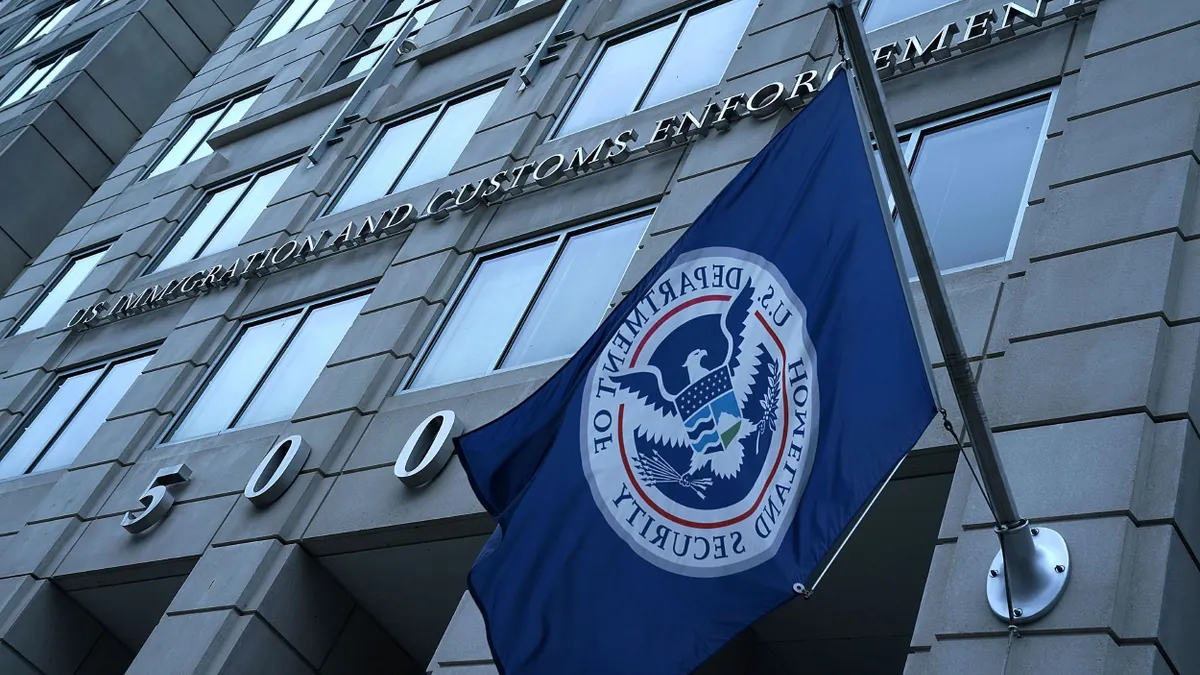
In 2025 and 2026, there were at least 17 documented incidents of Immigration and Customs Enforcement activity on school properties, with many additional locally reported incidents off school grounds like at bus stops or outside of schools during student transportation times.
"Last year was one of the hardest and most heartbreaking school years we faced, especially for Black and brown students," said Moira Kaleida during the press briefing. Kaleida is national coalition director for the Alliance to Reclaim Our Schools, which is a network of varying educational equity groups and unions, including the American Federation of Teachers.
"In Minneapolis, Illinois and Connecticut, we saw ICE invade school property and we watched them abduct Black and brown children off the street and right outside of school buildings,” Kaleida said. “Cities from Columbus to San Antonio to Pittsburgh — where I live — faced threats of mass school closures in predominantly minority neighborhoods."
The Trump administration allowed such activity by undoing sensitive location protections for schools, which were in place under previous administrations, as part of what it has promoted as a crackdown on illegal immigration. ICE activity on or near school grounds, however, has prompted varying responses from states and elicited lawsuits that are still making headway in the court system.
According to a count by the U.S. Department of Justice last year, 13 states and several major cities are identified as sanctuary jurisdictions, meaning they limit their local police and employees from collaborating with ICE.
Since then, ICE activity has prompted other states to adopt measures, too — in some cases, specifically putting guardrails around ICE enforcement on school grounds.
On Aug. 5, Massachusetts Gov. Maura Healey signed into law the PROTECT Act, a measure that prevents warrantless immigrant arrests at schools and childcare centers, along with other sensitive locations.
“The PROTECT Act is the strongest law in the country to protect people from ICE, because no one should be afraid to send their child to school, seek medical care or fear reporting a crime or appearing in court," said Healey in an Aug. 5 statement. "It makes us all less safe."
Elsewhere, in Los Angeles, volunteer teachers affiliated with United Teachers Los Angeles are coordinating with Unión del Barrio, a grassroots organization, to patrol for and document federal immigration enforcement vehicles. The grassroots organization has been training teachers and other community members on how to help students and others reach school without ICE interference, and provide a rapid response in case of ICE officers' presence.
"It makes me hopeful because I know that there are more of us in LA who want students just to be able to go to school safely," said Julie Van Winkle, vice president of UTLA, during an Aug. 6 press conference outside of the Los Angeles Unified School District administration headquarters. "Right now we are playing defense."
In Baltimore, following a June ICE arrest that occurred on school grounds in front of students, a July proposal seeks to expand the city’s Safe Passage Program to protect students against ICE enforcement as they travel to and from schools.
"We need to expand this program to the schools where we believe more ICE action may take place," said Baltimore Councilwoman Odette Ramos, representing the city's District 14, in a July 27 video recapping her proposal.
By contrast, at least six states in 2025 introduced legislation that would monitor children lacking permanent legal status or exclude them from public education, according to the Niskanen Center, a formerly libertarian and now nonpartisan think tank. None of these efforts have succeeded so far.
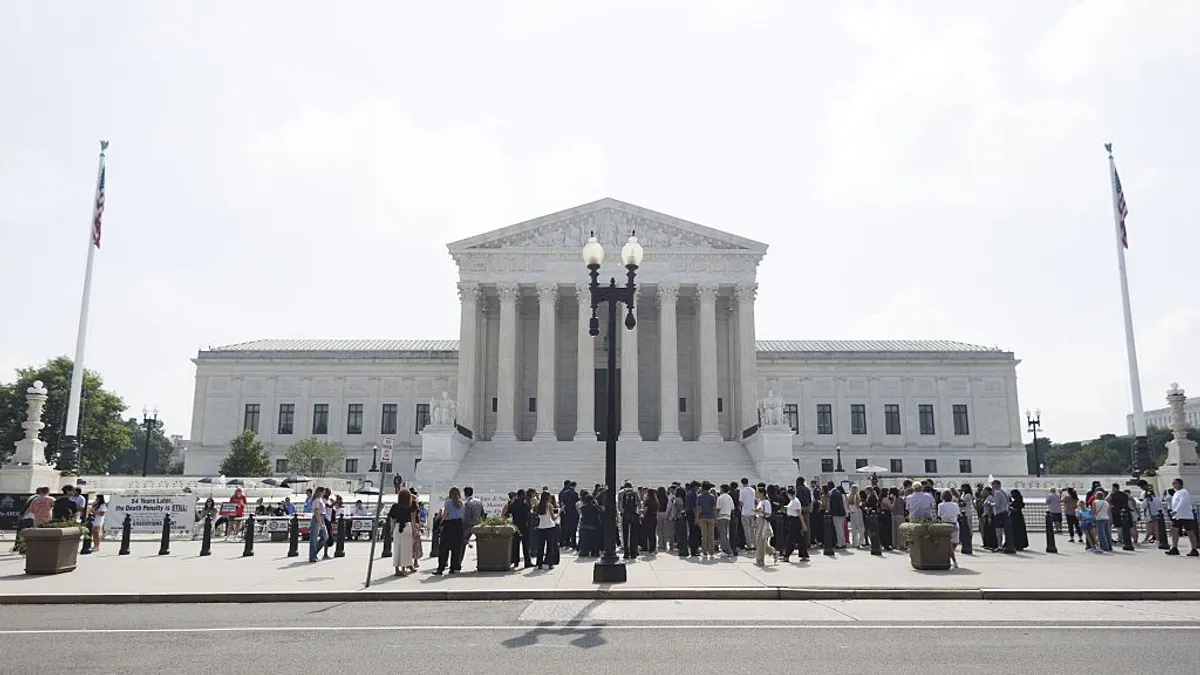
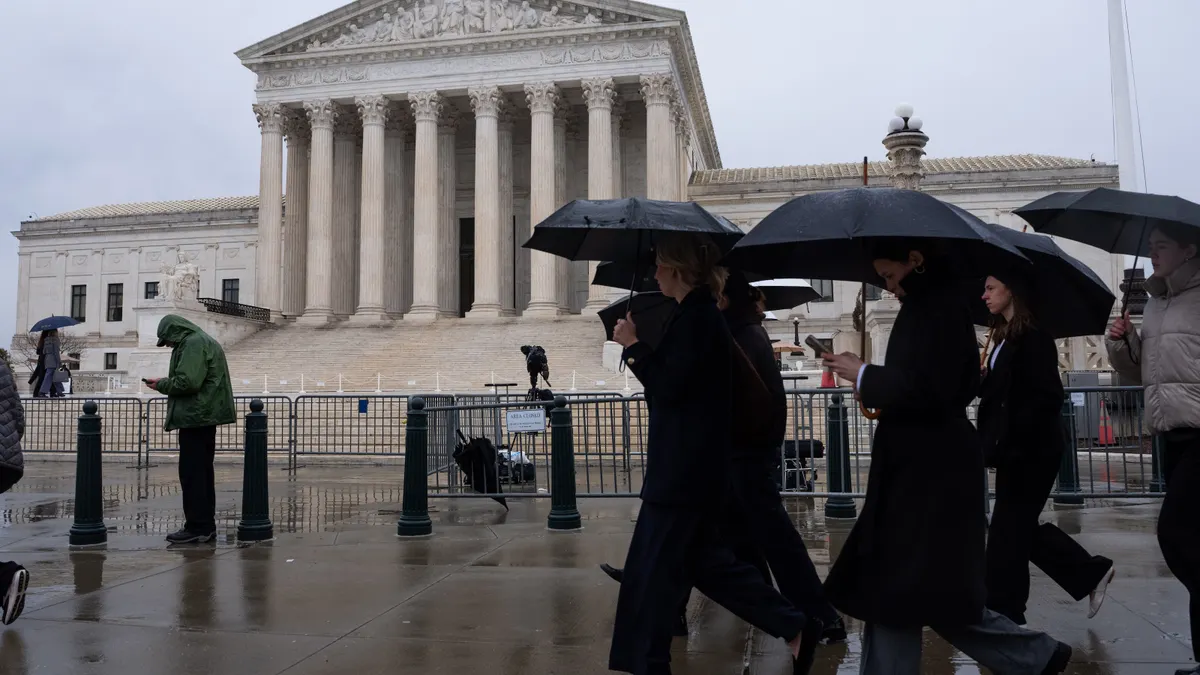
But, it's an issue that could reach the U.S. Supreme Court, thus revisiting Plyler v. Doe, the center said.
Earlier this year, Republican lawmakers pushed to overturn Plyler v. Doe, a 44-year-old landmark Supreme Court ruling that ensures all children have access to a public education regardless of their immigration status.
Lawsuits make headway
Educators' activism and policy measures to protect students and families from ICE prior to the start of the new school year come as lawsuits hoping to stop Trump's change in immigration enforcement policy advance despite hitting roadblocks.
In May, a judge denied a request from two Minnesota school districts to temporarily stop ICE activity on school grounds — a hiccup for a lawsuit that was hoping to ultimately overturn the Trump administration's policy nationwide.
Last week, the two school districts — Fridley Public Schools and Duluth Public Schools — asked the U.S. District Court for the District of Minnesota to make a decision in their case.
"In school districts across the state, armed immigration agents regularly arrested parents, students, and educators at bus stops and outside elementary schools, staged operations in school parking lots and adjacent streets, and surveilled students and staff at drop-off and pick-up," the districts said in their motion for summary judgment filed Aug. 14. "Students asked their teachers if ICE would come for them as they were leaving school or waiting for the bus."
The districts say they have had to divert considerable time and resources — including increasing transportation costs — to keep students safe from ICE operations near schools and bus stops, and the lawsuit and others filed elsewhere have also noted drops in student attendance.
"As we begin a new school year, our focus is on creating a welcoming, positive environment where every student can learn, grow and thrive," said John Magas, superintendent of Duluth Public Schools, in an Aug. 17 statement. "We also have a responsibility to ensure that our schools remain safe and supportive places for all students and families."
The earlier loss in Fridley and Duluth's case — a denial of preliminary injunction — affected another case similar to it, Pineros Y Campesinos Unidos Del Noreste v. Noem, this one joined by the National Education Association and AFT.
In that case joined by the national teachers unions, the government in May used the Minnesota school districts' loss to argue that the unions' lawsuit against DHS should be dismissed.
Final decisions in the two high-profile cases are still pending.