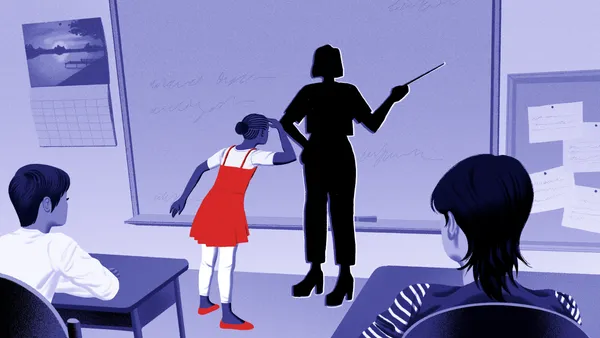
A Texas high school student sued her school district Oct. 26 after administrators told her she couldn't play the part of a traditionally male lead — despite being chosen for the theater role after auditions — due to a parental rights state law banning schools from diversity, equity and inclusion practices.
Instead of allowing the student, Ana Mota, to play the role of Seymour in "Little Shop of Horrors," Grand Prairie Independent School District first offered the student a shared role as the female character in the play and then ultimately chose to replace the show entirely with "Frozen."
An attorney representing Mota and her parents, who supported Mota's casting in the original play, sued the district saying the district's decision discriminated against Mota under Title IX, which protects students from sex-based discrimination.
The lawsuit specifies that Mota is "not transgender" and "was not engaged in any personal gender transition."
"Ana has participated in theater throughout her middle-school and high-school years, portraying both female and male roles," the lawsuit states. "She was portraying a scripted fictional character in an official school theatrical production — a centuries-old theatrical tradition."
In removing Mota from the play's lead role, district-level administrators cited Senate Bill 12, which was signed into law last year. Among other restrictions, the law prohibits school employees from "engaging in diversity, equity, and inclusion duties" including “developing or implementing policies, procedures, trainings, activities, or programs that reference race, color, ethnicity, gender identity, or sexual orientation.”
“Recently, a casting decision was made to place a female student in the role of a male character in the school musical. In the musical, a romantic relationship develops between the two main characters," the district said in an Oct. 13 statement to local media publications, according to court documents.
"When District leadership learned of this issue and in consideration of themes in the musical involving an abusive relationship, a decision was made to pull that production and find something more appropriate," the statement said. "This decision was made in light of the District’s ongoing effort to ensure its programs remain consistent with Senate Bill 12 and all applicable law.”
The district declined to comment to K-12 Dive due to the ongoing litigation.
Mota's lawsuit claims the district "intentionally excluded Ana from the role of Seymour and denied her the benefits of participation in the GPISD educational theater program because she is female" — which it says violates Title IX.
And if the district's decision was to comply with Senate Bill 12, the federal Title IX law supersedes state law, the lawsuit argues.
Among other remedies, the lawsuit seeks to resume the production of "Little Shop of Horrors," and allow Mota to play the lead role. A hearing in the case, filed in the U.S. District Court for the Northern District of Texas, is scheduled for Nov. 6.
The lawsuit is one example of how DEI and curriculum restrictions have changed the trajectory of school decisionmaking on issues related to race and gender, and in some cases led to what free speech advocates are describing as overcompliance.
In another Texas district, for example, Canyon Independent School District temporarily removed the full text of the Bible due to another law that restricts "harmful" or "sexually explicit" library books, according to various news reports.
Since 2023, 18 states have passed legislation restricting DEI initiatives, according to a 2025 count by the MOST Policy Initiative, a nonpartisan Missouri group that aims to connect science and policy.