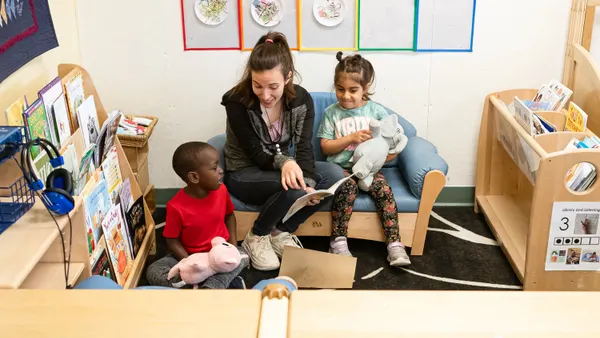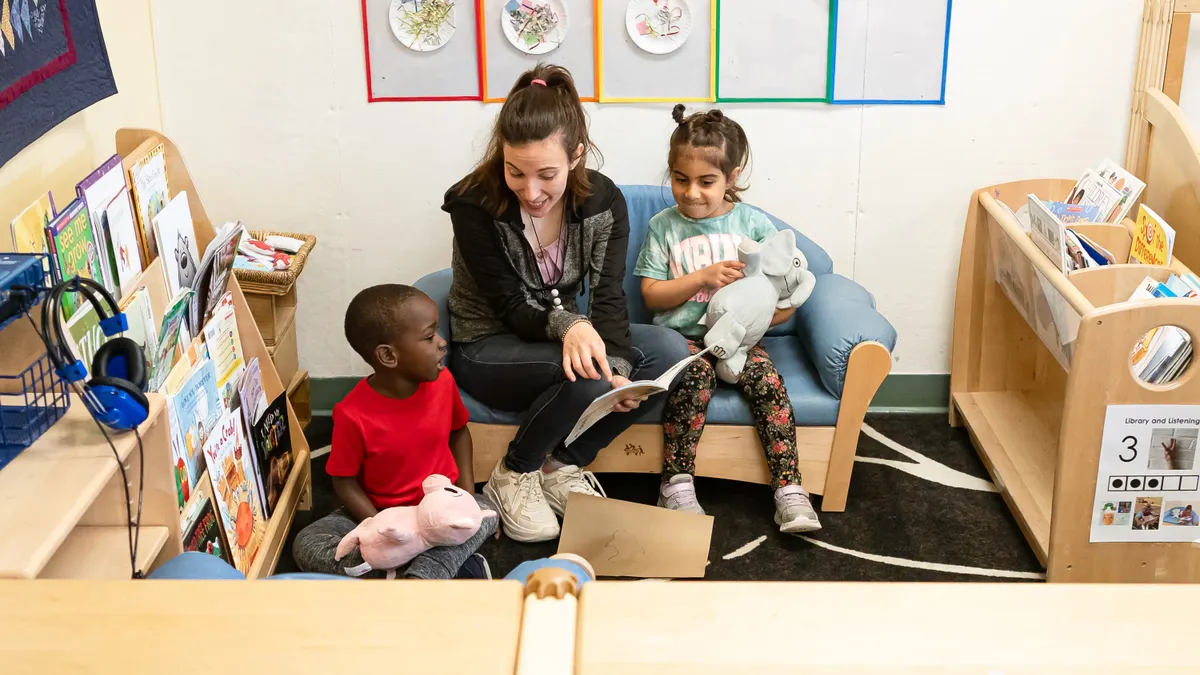
School districts often treat kindergarten as the education starting point. But they can better support young students — and strengthen family relationships — by building connections with early childhood programs and community partners before students reach kindergarten, according to David Jacobson, director of First 10, an Education Development Center initiative supportive of early childhood school-community partnerships.
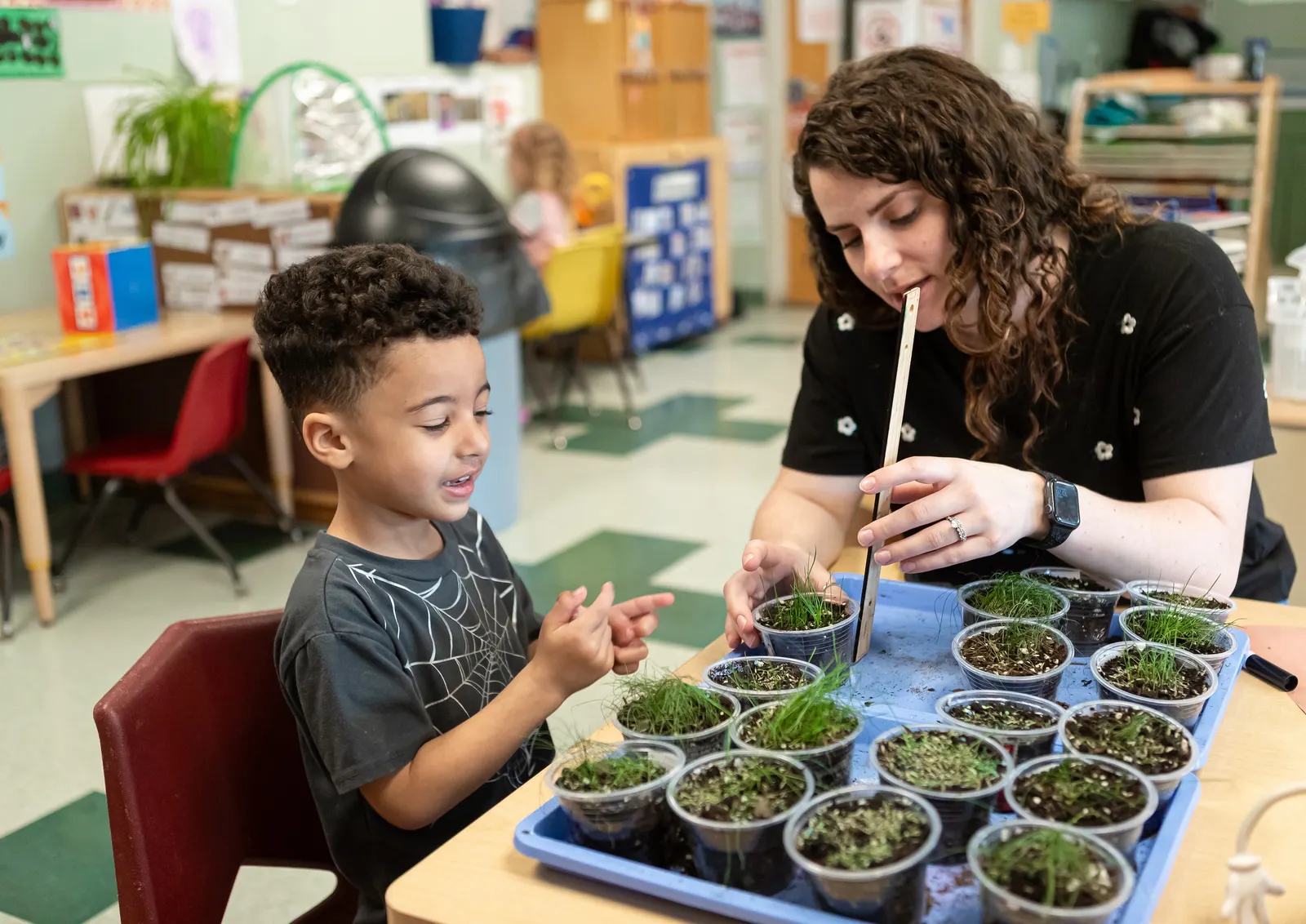
Children, their families and teachers benefit when their experiences connect across settings and years. For example, pre-K and kindergarten teachers might share information about instructional practices, understand each other’s standards, and build on students' familiar routines and learning styles so there is some continuity as the students transition from pre-K, Jacobson said.
This proactive relationship building, he said, can also benefit school systems that are eager to enroll and retain more students but face declining enrollments due to falling birthrates, school choice competition, changes in immigration policies and other factors.
"Instead of waiting for children to arrive in kindergarten and then trying to persuade families to stay, districts can work with early childhood providers, libraries and family-serving organizations to build trust, to support transitions, to align practice and address barriers to attendance," Jacobson said.
Developing 'zones' and 'hubs'
Jacobson, in a paper published this fall through the Stanford Center on Early Childhood, said that a child's years from birth through elementary school "represent a uniquely important developmental window." However, early childhood programs, elementary schools, health providers and family-serving agencies often operate in isolation of each other, he said.
To build better alignments, Jacobson suggests school-early education "zones" and "hubs" that have a shared geographical area and shared responsibility for children and families in their areas.
A school-early childhood zone consists of multiple elementary schools, early childhood programs and community partners within a defined geographical area. A hub includes similar work around just one elementary school. Individual schools can be part of both a zone and hub.
High-quality programs alone “don't fully take advantage of the opportunity we have to support children and families, and so all of those organizations can be much more effective working together than working individually,” Jacobson said.
He acknowledges that this work can be challenging, especially as school systems and early childhood education programs strive to improve their own practices and outcomes. But, Jacobson explained, a zone or a hub can be a "feasible, practical, realistic structure that encourage school districts to shift their mindsets to see younger children as soon-to-be students, and to see early childhood programs as essential partners."
Building alignment between early education programs and elementary schools is the "final vertical leap" in education, he said.
Other levels of education, for instance, have vertical approaches: When a district notices its 9th graders are struggling, it may examine the 8th grade experience. And community colleges often adjust their course offerings to align with career pathways offered at feeder high schools.
But principals and district leaders may be less familiar with the broad array and operation of early education programs, including Head Start, community-based programs and family-run centers, according to the Stanford paper.
"Districts need to adopt a broader set of strategies to engage and support families early, and they need coordinated early childhood partnerships," Jacobson said. "That's what zones and hubs are: coordinated early childhood partnerships that help them build these relationships and help them build familiarity, trust and continuity."
Putting zones and hubs into practice
Several communities across the country have already implemented zones and hubs with the help of First 10, which has supported 50 communities across six states with aligning school-early education approaches.
First 10, for instance, worked to develop and strengthen a zone for Maine's Sheepscot Valley Regional School Unit 12, a rural district that includes seven towns and five elementary schools. The work revealed gaps between pre-K and kindergarten instructional alignment and in communication about rising kindergarten students. As a result, the First 10 team expanded the use of transition meetings from serving only students with disabilities to serving all the pre-K children advancing to kindergarten.
In addition to those transition conversations, pre-K and kindergarten teachers visited each others' classrooms, "leading to a broader effort to incorporate Pre-K more holistically into the leadership structures and general systems of the elementary schools," the Stanford paper said.
In the hub community of Russellville, Alabama, one veteran pre-K teacher had never visited a kindergarten classroom and never had a kindergarten teacher visit her classroom. But in 2022, the pre-K and kindergarten teachers began annual reciprocal visits, which led to ongoing joint professional learning for community-based preschool, Head Start, district pre-K and kindergarten educators.
"For the first time, teachers across settings analyzed standards together, identified teaching challenges, and aligned strategies across grade levels," according to the Stanford paper.
First 10 zones and hubs often orient their work by introducing The Basics to early childhood educators and early grade teachers. The Basics is a public health approach organized around five evidence-based parenting principles:
- Maximize love and manage stress.
- Talk, sing and point.
- Count, group and compare.
- Explore through movement and play.
- Read and discuss stories.
In the zone community of Woonsocket, Rhode Island, the First 10 team and the city’s primary pediatric practice partnered to share information about The Basics with parents during children's wellness visits and also included the messages into “Welcome to Kindergarten” events.
Some First 10 communities celebrate the pre-K to kindergarten transition with a series of activities that bridge pre-K and kindergarten rather than just one event. In Pennsylvania's Conestoga Valley School District, the zone community created a “Kindergarten Express,” a coordinated train-themed series of transition “stops” with a kick-off, showcase, screening, summer meet-and-greet, camp and orientation to ease student and parent anxiety about the transition.
"We want safe, stable, and predictable experiences across the day, across years and across settings," Jacobson said. "So what children experience in Head Start or pre-K should connect with what they experience in kindergarten. What they learn in one year should prepare them for and be built upon in the next year. And when experiences like this are connected, children are more comfortable, learning is reinforced, and families experience a system that makes sense.”