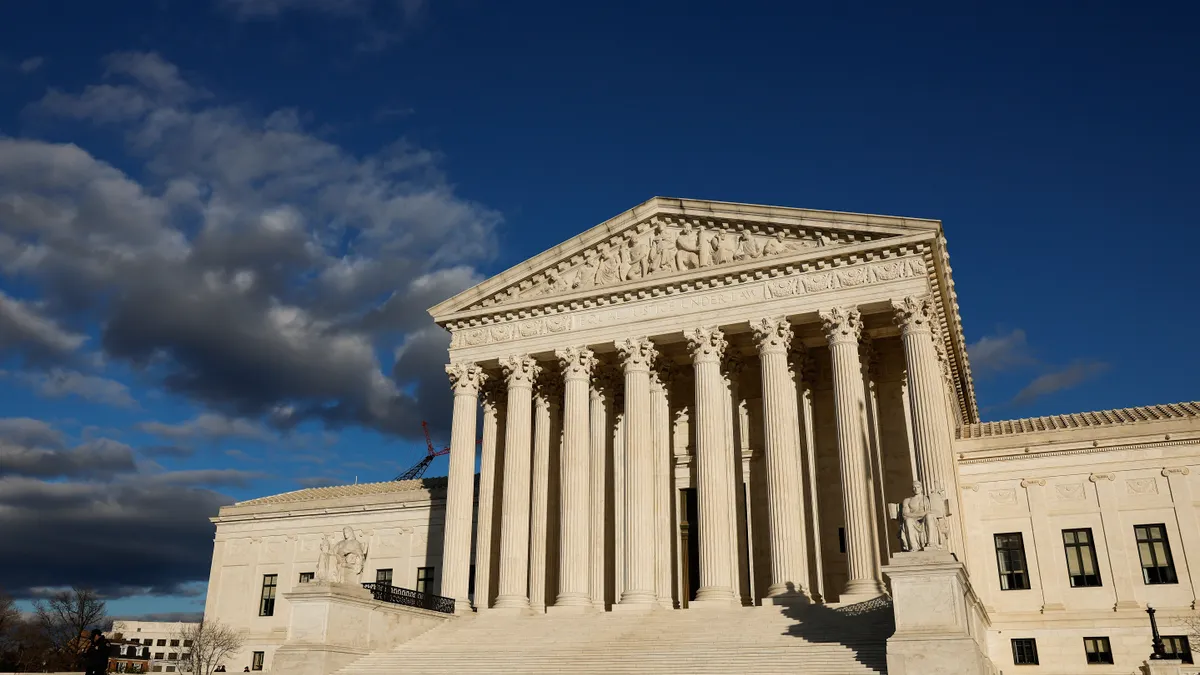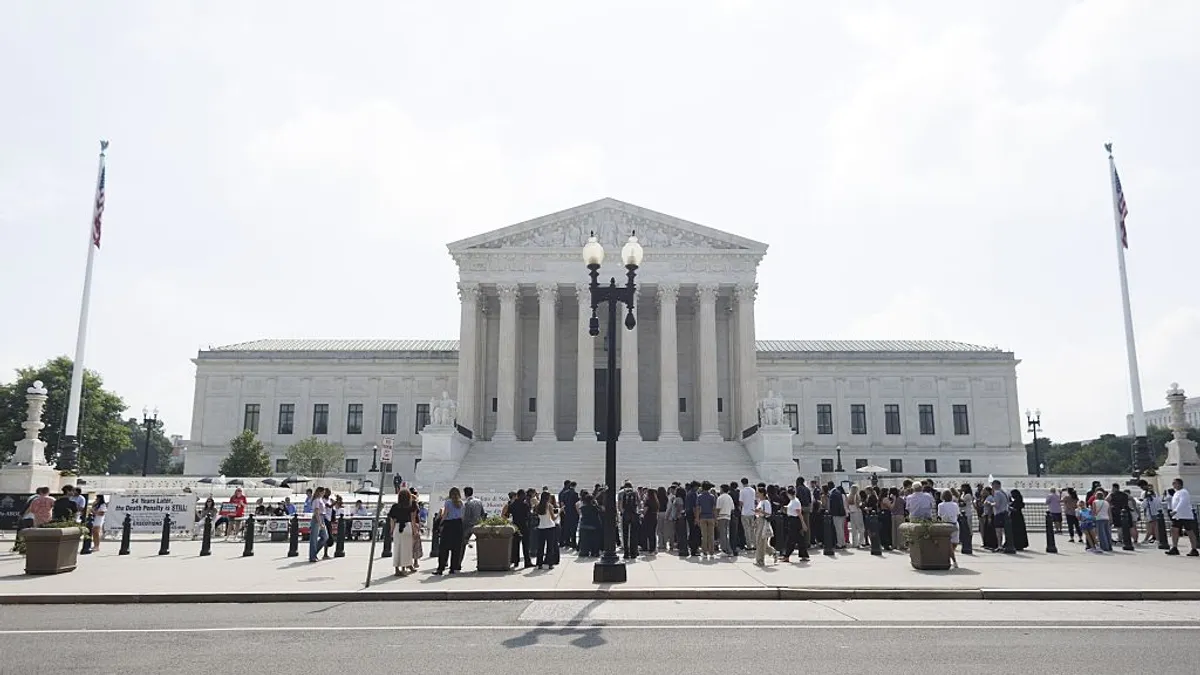
The U.S. Supreme Court will hear oral arguments Tuesday in a Colorado case questioning whether private schools that get public funding from a universal state preschool program can reject children of gay parents.
The case, St. Mary Catholic Parish v. Roy, originated as a result of a universal preschool program which allows Colorado families 15 hours of free preschool a week at the public or private preschool of their choice, a benefit worth about $6,000 per child, according to the suing party.
A nondiscrimination provision requires all schools receiving public money under the program to provide qualifying children an equal opportunity to enroll, regardless of race, religious affiliation, sexual orientation, gender identity and other factors.
However, the case’s plaintiffs — who are parents of preschool-age children, along with two religious parishes that have affiliated preschools — say the provision excludes religious preschools that, based on their faith, will not enroll children of same-sex couples. They sued under the First Amendment’s free exercise clause, saying the provision preventing them from discriminating against children violates their religious freedom rights.
At least one of the school plaintiffs, Wellspring Catholic Academy, rejected an elementary student from admission because of their same-sex parents, according to court documents from the 10th U.S. Circuit Court of Appeals. The 10th Circuit in September 2025 ruled against the plaintiffs, allowing for an appeal to the Supreme Court.
"Why the exclusion? Because, Colorado says, these preschools’ religious practice of admitting only families who support Catholic teachings, including on sex and gender, is 'discrimination,'" plaintiffs, represented by The Becket Fund for Religious Liberty, said in their appeal to the high court in November 2025. "And far from facilitating 'universal' preschool, Colorado’s exclusion of Catholic preschools reduces access, pushing parents and children toward preschools that share the government’s views on these issues and penalizing the religious schools and families who disagree."
The plaintiffs also claimed that Colorado has permitted many "exemptions," such as for schools that are aimed toward low-income families or children with disabilities.
"But Colorado excludes Catholic preschools because they admit only families who support Catholic beliefs, including on sex and gender," the petitioners said.
However, the state points out that its priorities for low-income students and children with disabilities do not deny equal opportunity to students, but rather protect students based on their characteristics.
"No publicly-funded preschool, however, can turn away children and families based on their protected class status," Colorado's response, filed in March, said. "This ensures that all Colorado parents — including Catholic parents and same-sex parents — know their children will not be excluded, because of their protected-class status, from the publicly-funded preschool that best meets their families’ needs.”
The case hinges partly on prior precedent, a 1990 Supreme Court ruling in Employment Division v. Smith, which found that neutral laws that are generally applied — and not designed to target particular religious beliefs — do not violate the free exercise clause of the First Amendment even if they are opposed to a group’s religious beliefs.
The Colorado case's decision may also clarify whether the 2022 ruling in Carson v. Makin — which found that states cannot exclude religious schools from publicly funded tuition assistance programs based on their “sectarian” nature — violates the precedent set by Employment Division v. Smith.
Colorado is also asking that justices consider whether the First Amendment allows the state to require that preschoolers have equal opportunity to enroll in and receive publicly-funded preschool services regardless of their parents' identity.
A decision in the case is expected before the justices take their summer recess.
The case is one of a handful related to school choice that have risen to the Supreme Court in past years, and one of three education cases already set to be heard this term.
At the end of November, the court will hear a Title IX case, Thomas Crowther v. Board of Regents of the University System of Georgia. That case will examine whether school employees can sue schools under Title IX, an education civil rights law preventing students and employees from sex-based discrimination in education programs — when Title VII, an employment civil rights law, prohibits sex-based discrimination in employment settings.
Later in the term, which extends into 2027, the court will also hear a case related to K-12 school admissions policies crafted to diversify the student body. In Association for Education Fairness v. Montgomery County Board of Education, the justices could decide what legal standards suing parents have to meet in order to show that the Maryland district’s efforts were racially discriminatory toward students' whose representation decreased in the student body.