Dive Brief:
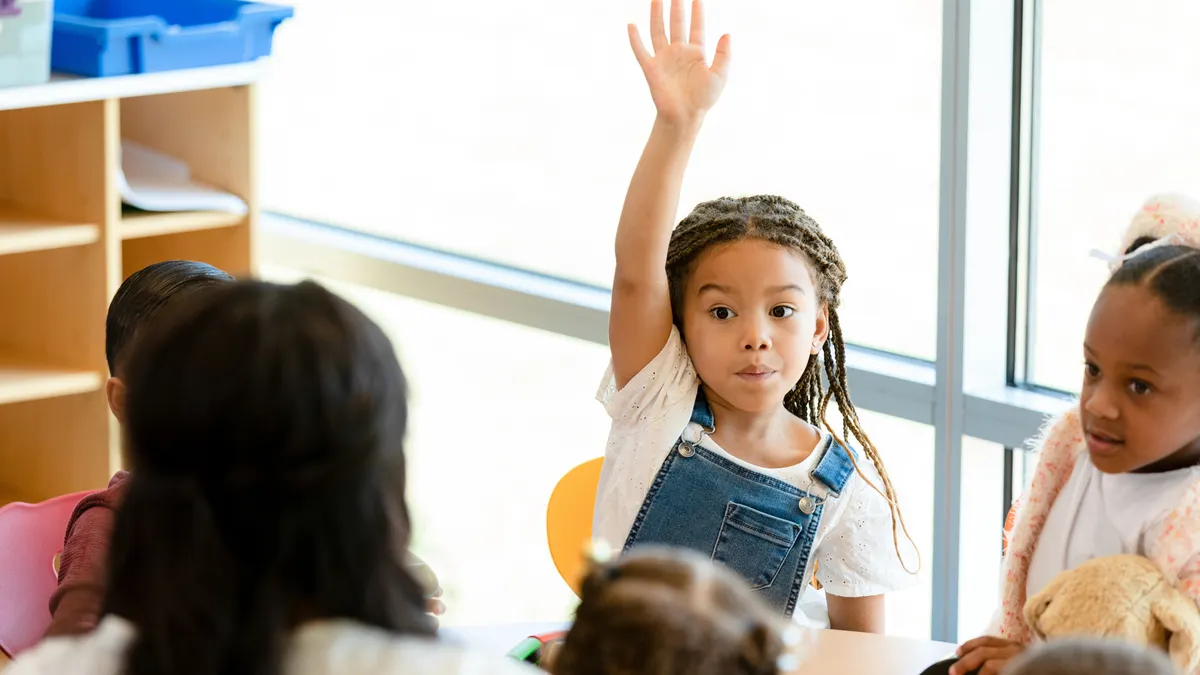
- Fewer than half of students in five selected states were ready for kindergarten in the 2023-24 or 2024-25 school years, according to a new analysis of kindergarten entry assessment data by the U.S. Government Accountability Office.
- Youngsters who were Asian, White or not economically disadvantaged generally showed the highest readiness rates. On the other hand, English learners and students with disabilities had the lowest rates of readiness.
- Attending publicly funded preschool school, in general, was linked to kindergarten readiness in literacy, math or both, according to a GAO review of 11 studies. Many states in recent years have been launching or expanding preschool funding and access to help better prepare children for K-12 success.
Dive Insight:
Positive factors associated with kindergarten readiness include parenting, home environment and students' learning-related skills and social behaviors. Negative factors may include health, socioeconomic status, gender, and race or ethnicity, the Nov. 12 report said.
GAO's analysis of seven of the 11 studies found that public preschool programs had different impacts on varying student demographic groups when compared to students who didn't attend such programs. For instance, in one Georgia district, a publicly funded preschool program led to "persistently positive effects" for children from lower-income families.
The five states studied — Connecticut, Florida, Kentucky, Maryland and Ohio — also showed variation in kindergarten readiness rates. That may be due in part to how the states measure readiness, administer their kindergarten entry assessments, or report the assessment results, GAO said.
Among the five states, kindergarten readiness rates also differed by district type. Suburban districts were generally closer to their state's average for kindergarten readiness, while rural and urban districts varied more.
Also at the local level, the analysis found better kindergarten readiness rates among school districts in Connecticut, Kentucky and Ohio that had higher rates of students enrolled in public or private preschool. But there was no statistically significant association in that regard in Florida or Maryland.
This month's GAO report follows a 2024 report from the government watchdog agency on how states and teachers use kindergarten readiness data.
The 2024-25 school year saw record highs in enrollment and funding for state-supported preschool nationwide, according to The State of Preschool 2025, a report released earlier this year by the National Institute for Early Education Research. However, the rate of enrollment growth slowed compared to the 2023-24 school year, and many states still were not back to pre-pandemic preschool enrollment rates, the NIEER report said.