Dive Brief:
- By 2031, 29 states will require a semester-long course in personal finance in high school — up from three states 13 years ago — while 73% of public high school graduates will live in a state that does so, according to a report published by the National Endowment for Financial Education.
- Ten states earned an “A” grade in the sixth edition of the report for requiring standalone personal finance courses, and only 14% of states received a “C” or below. By 2031,19 more states will receive an “A,” and only two will get an “F,” the report predicts.
- According to a spring 2025 national survey by NEFE, 83% of adults believe their state should require a semester or year-long personal finance course for graduation, and 82% of survey respondents said they wished they had been required to take a personal finance course in high school.
Dive Insight:
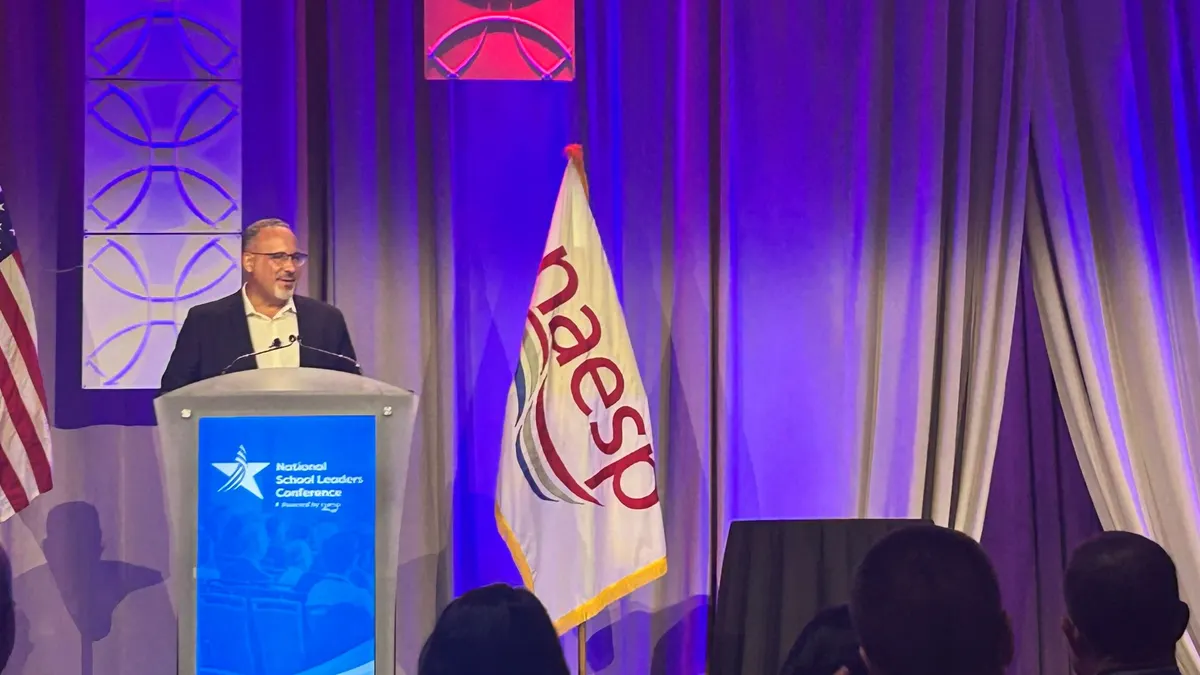
“We’re excited about the progress this year’s report shows,” said Taylor Stanek, managing director of policy and advocacy for NEFE. “There is momentum and movement behind the effort to create a national expectation that students receive financial education in high school.”
The center's research involved reviews of each states' approach to personal finance education in high schools, state academic standards on the topic, and related laws, guidelines and regulations.
Broadly speaking, states with an “A” grade have shown they are implementing financial education with fidelity, while those receiving a “B” or “C” offer some level of financial education but short of a full semester course. These states also may have some degree of requirements in statewide academic standards.
States receiving a “D” or “F” have little or nothing to offer at the moment, Stanek said, expressing optimism that all 50 states will receive an “A” eventually.
“There are a few things we are keeping a close eye on as states move forward,” he said. “Implementation is key; passing one of these requirements is just a start."
The states also need to make sure schools are offering the courses as expected, as a standalone commitment, with teachers who have been trained, and have curricular materials available to meet the needs of specific students, Stanek said.
"This is an opportunity for every state … to make sure they’re evaluating the effectiveness of these programs and maximizing their benefit and impact,” Stanek said. Each state takes a somewhat different approach based on their unique range of needs, he added.
Utah implemented the first semester-long financial education requirement in 2008 and conducts statewide audits on programs, while Missouri was the second state in 2010, Stanek said. Even states with “C” grades or lower have seen progress in certain localities, with Denver Public Schools adopting this ahead of the state of Colorado, for example, he said.
“In the majority of other states, there’s at least something in place,” he added. “It’s ensuring that it’s offered across the board — requiring it to make sure every student receives it. When it’s an elective, students of color, low-income students and female students are less likely to take it.”
The figures from the 2025 national opinion poll underscore why the momentum has grown, especially at a time of economic uncertainty, Stanek said. “There’s a recognition that people need extra support to be [financially] successful,” he said.
“This is no longer a niche side topic. Folks are saying this is something worthy of being a core academic discipline in our K-12 system.”
The previous five editions of the report were published by the Center for Financial Literacy at Champlain College in Burlington, Vt.