Dive Brief:
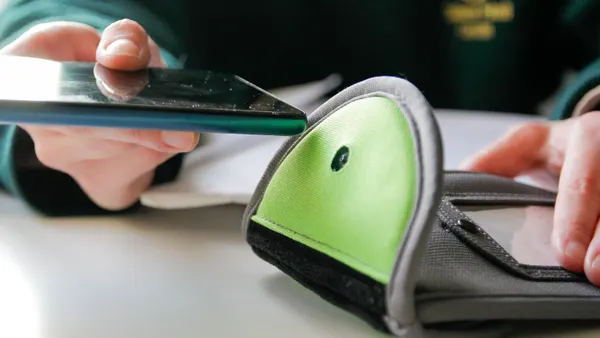
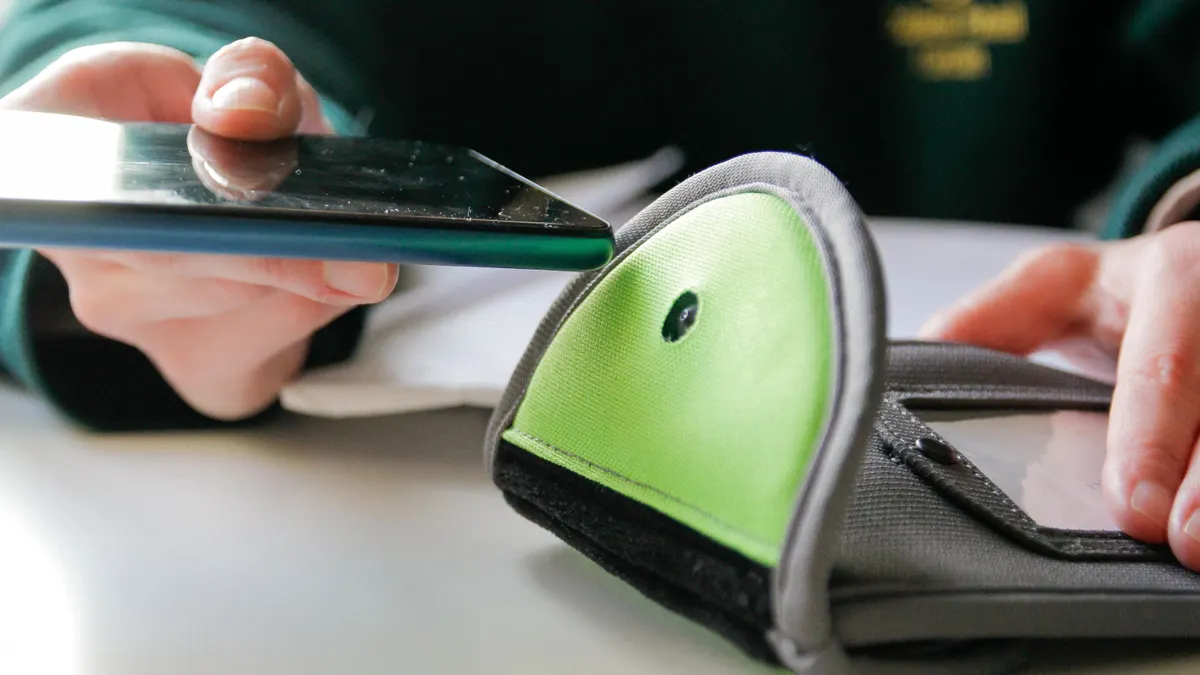
- Strict school cellphone bans that use lockable pouches can be a “cost-effective way” to boost student math and reading gains equivalent to an additional one to two weeks of instruction per year, according to a study released Tuesday by the Center for Education Policy Research at Harvard University in partnership with researchers at NWEA and Dartmouth College.
- The researchers added that the annual academic gains found from cellphone bans were equivalent to roughly half of the annual learning loss before the pandemic. The study analyzed NWEA MAP Growth assessment data of more than 3.3 million students across 4,600 schools between the 2021-22 and 2025-26 school years.
- Though that annual growth is small — by 0.01 standard deviations — the study said, there is some evidence that the positive impacts of cellphone bans on student achievement could continue to improve. That steady increase could make a difference over time, just as incremental declines in student achievement have over the last decade, researchers noted.
Dive Insight:
Expanded access to broadband cellphones appeared to occur around the same time student achievement began a slow but steady long-term decline beginning in 2013, the Harvard study said.
For teens, the research noted that access to cellphones grew quickly, from 23% of 13- to 17-year-olds having smartphones in 2011 to 95% by 2018.
Every year since about 2013, U.S. students have lost two to three weeks of learning, said Tom Kane, a Harvard professor and one of the leading authors of the study, in a Tuesday statement.
“It’s been a slow leak that, over time, has put U.S. 8th graders almost a year behind. Strict cell phone bans seem to plug about half of that leak,” Kane said.
This research comes as states increasingly adopt policies to restrict cellphone use in schools and as student test scores on the National Assessment of Educational Progress continue to disappoint, particularly since the COVID-19 pandemic. Twenty-two states require bell-to-bell cellphone bans as of Oct. 29, according to a tracker by the National Council of School Safety Directors.
The Harvard study’s findings differ from another key report by the National Bureau of Economic Research released earlier this year on the impact of cellphone pouches.
That NBER study said there was little effect on academic achievement three years after schools adopted cellphone pouches. Researchers, however, found an 80% drop in students’ reported cellphone use once personal device pouch policies were in place. Part of the NBER study included an analysis of GPS “pings” on cellphones from 40,542 schools between January 2019 and January 2026.
At the same time, a survey shared by The Brookings Institution in September reported that nearly half of teens ages 13-17 said their teachers' enforcement of cellphone restrictions waned over the course of the 2025-26 school year. Researchers from the Center for Applied Research in Education — part of the University of Southern California’s Center for Economic and Social Research — who analyzed the survey findings concluded that bell-to-bell policies may be more durable to implement in schools versus less-strict cellphone policies.