Dive Brief:
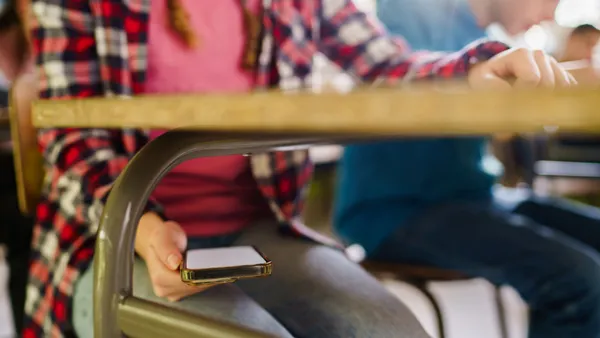
- Despite widespread cellphone restrictions in place, phone usage by teens during the school day increased from 28% at the start of 2025-26 school year to 42% by its end. Nearly half of teens ages 13-17 reported their teachers became less strict about enforcing cellphone policies over the year, according to a nationally representative survey of teens by Brookings Institution.
- However, adults did not perceive a decrease in phone policy enforcement, with 60% saying there was no change over the year, Brookings found. Just 13% reported that enforcement became less strict.
- This suggests that students may have learned to work around obstacles — such as pouches and locker requirements — and teachers may have become less vigilant over the school year, the researchers concluded. Bell-to-bell policies may also be more durable over time compared to less strict cellphone policies, the researchers said.
Dive Insight:
Another survey released by Brookings in January showed that nearly all teens attend schools with cellphone restrictions. This trend comes as more districts across school types and community political leanings are adopting policies limiting technology use.
Nearly half of states have passed "bell-to-bell" cellphone bans that restrict students from using their cellphones during the entire school day, according to the Harvard Kennedy School. Other states have more flexible laws that allow school districts to adopt policies, but don't require it. Different types of bans restrict cellphone use during instruction time, for example.
According to the newest Brookings survey, released on Thursday, 56% of teens reported attending a school with a bell-to-bell ban, and the remaining 44% attended schools with less strict policies.
"This is not a controversial issue along partisan lines," Paul Peterson, professor of public policy at Harvard University and senior editor of the research journal Education Next, said in a June 6 Harvard Kennedy School interview on cellphone restrictions. "There is widespread consensus that this is something that should be done, given the decline in student performance in our educational system over the last 15 years or so."
Results from the Programme for International Student Assessment released last week showed there were global declines in math and reading scores. Technology use and the rise of artificial intelligence in schools could be possible explanations for the significant decreases in performance, researchers said.
Brookings found in its September research that bell-to-bell bans persist across the year better than more flexible policies allowing some cellphone use.
Under bell-to-bell policies, there was a 10 percentage point increase over the course of the school year in the share of students who said they used their phones during core classes — from 25% to 35%. In contrast, schools with more flexible cellphone policies saw an 18 percentage point increase in students saying the same — from 32% to over 50% by the end of the year.
The October 2025 and May 2026 survey results were based on a nationally representative sample of teens attending public, private and charter schools.
"On balance, our survey findings support continued implementation and enforcement of phone restrictions, including strong bell-to-bell bans," said researchers Dan Silver, Amie Rapaport, and Morgan Polikoff in their Sept. 10 analysis. "Students used their phones less and reported greater policy enforcement at schools with such policies, and although teens weren’t exactly thrilled about phone restrictions at any point, they were less negative about them by the end of the year than at the beginning.”