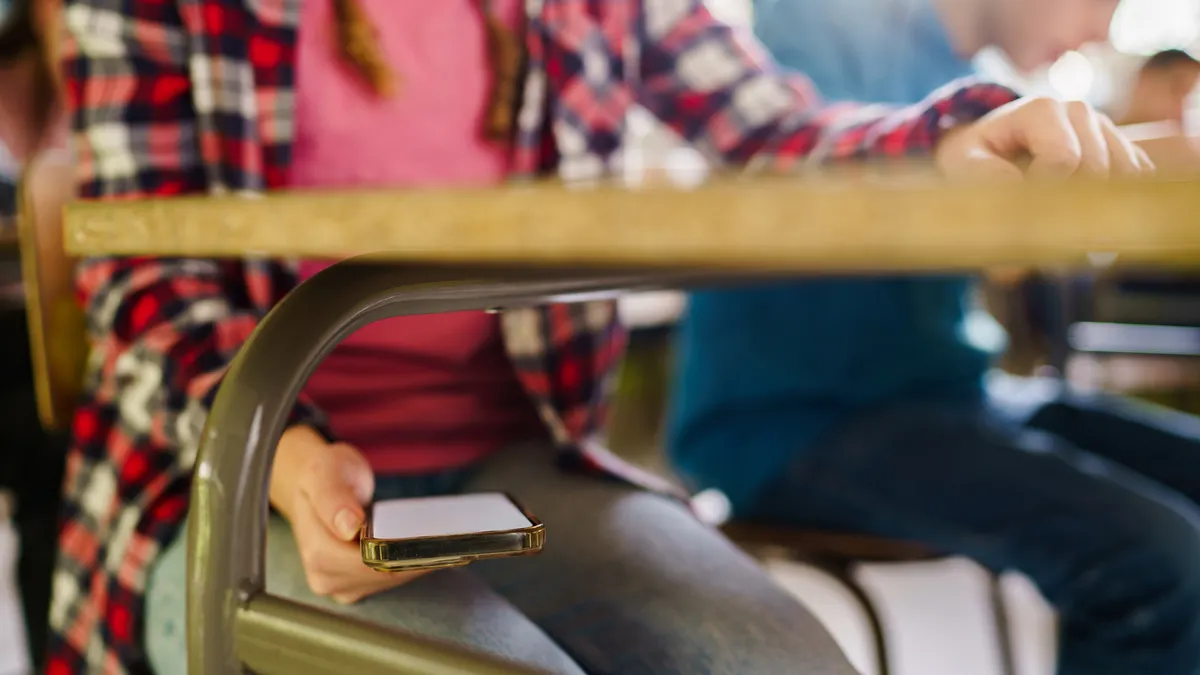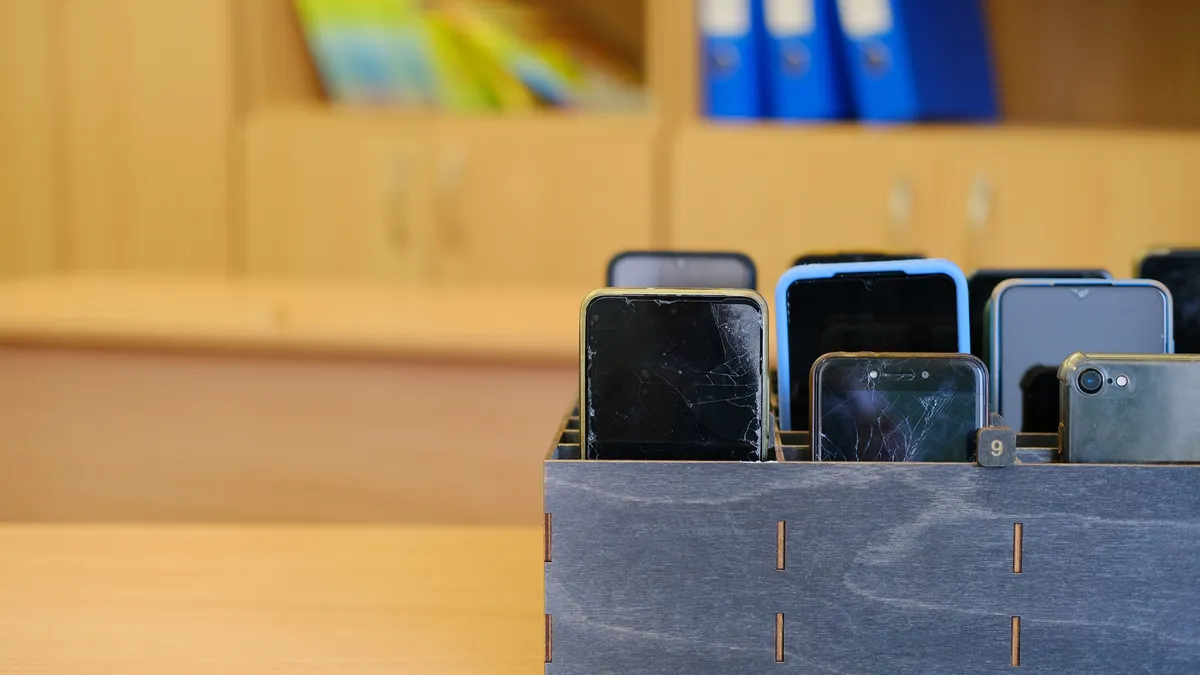
Schools that required students to keep their cellphones in lockable pouches during the school day saw an uptick in suspension rates and a decrease in student well-being in the first year the cellphone policies were implemented. However, those negative effects dissipate in subsequent years, according to new research from the National Bureau of Economic Research.
The 108-page study — which the authors say is the first in the U.S. to analyze the impact of student cellphone bans on a national scale — looks specifically at middle and high schools that use Yondr, a provider of lockable phone pouches. The research found an 80% decline in students' reported personal cellphone use in classrooms following adoption of Yondr cellphone storage policies.
But while discipline challenges eventually decreased after cellphone bans were in place, the study found little effect on academic achievement in the three years following cellphone pouch adoption. There were modest positive effects in high schools, particularly in math, but also small negative effects in middle schools.
In regard to attendance, self-reported classroom attention and perceived online bullying, researchers found little evidence that cellphone restrictions had a positive impact in these areas.
As part of the study, researchers used data from GPS "pings" from 40,542 schools, from January 2019 to January 2026. That data showed a 30% decline in total GPS pings by the third year after school adoption.
The study calls this a "substantial" trend for student cellphone use. But the research notes that this data includes GPS pings on adults' cellphones and that student cellphones in lockable pouches can be pinged when on but not in use.
The study also draws on school administrative records and surveys, including student survey data from Panorama Education, an education technology company. Researchers from Duke University, Stanford University, University of Michigan and University of Pennsylvania contributed to the study.
'Stay in the fight'
There are 34 states that ban or limit cellphones in classrooms. Florida was the first to set statewide restrictions in 2023, according to Ballotpedia. Supporters say the devices are distracting to learning in the classroom and contribute to overuse of social media. However, polling by Pew Research Center released earlier this year found that only 41% of middle and high schoolers supported classroom cellphone bans.
Thomas Dee, co-author of the NBER study and the Barnett Family Professor at Stanford University’s Graduate School of Education, said the study shows "early evidence" that cellphone bans can drive down cellphone use in the schools.
But he's concerned that the nationally mixed results on student academic achievement and other indicators may lead school leaders to prematurely scrap cellphone restrictions.
"This is such an important issue. There are some encouraging results in this early national study that I think should motivate us to stay in the fight and figure out how to get it right," Dee said.
Polling from the National Parents Union in February 2024 found that 56% of 1,506 parents surveyed said students should be able to use their phones at certain times of the school day, such as during lunch and for teacher-approved academic purposes.
“We were not asking for chaos in classrooms,” said Keri Rodrigues, co-founder and founding president of NPU, in a Substack post Tuesday. “We were asking for two things: don’t shut down the line of communication between a parent and a child during a school shooting, and use professional classroom management instead of treating phones like contraband.”
Additionally, disability rights advocates have been concerned that cellphone restrictions in schools will limit students with disabilities’ access to devices that are allowed under their Section 504 plans or individualized education programs.
Regarding the NBER study’s finding that there was an increase in disciplinary actions in the year cellphone bans were implemented, Dee said that could be attributed to resistance by students who refuse to comply with the bans, as well as student behavior worsening as they experience cellphone withdrawals.
Dee said the study's outcomes point to a need for more research into this area, including at the school building level to better understand how cellphone bans are impacting each community. Those analyses may point to a need to adjust the logistics of restrictions or for more teacher training in classroom management.
To get ahead of student behavioral issues, schools can be more proactive in communicating the anticipated positive impacts on student learning as a result of a cellphone ban, Dee said.
"I think real change happens at the grassroots level, and principals and teachers are going to understand the character of the challenge in their building and in their classrooms in ways I can't see in district, state and national data," Dee said.
Rather than abandon cellphone bans, Dee recommends that educators and policymakers look at effective ways schools are restricting cellphone use and supporting classroom teachers.
"This challenge — how to educate students in a digital age — is arguably the major challenge in child development," Dee said. "So we should bring to it our best and most sustained attention.”