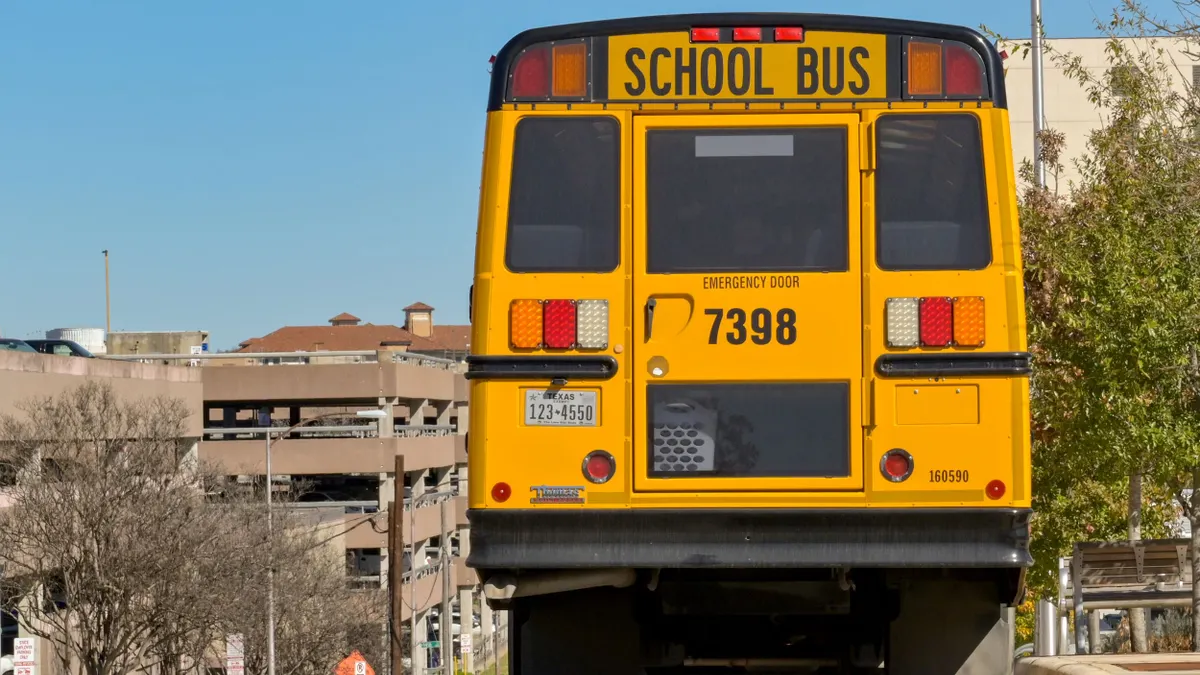
Surging diesel fuel costs are adding financial pressure to school districts, forcing them to dip into their reserves, alter transportation routes, limit field trips, negotiate vendor contracts, or adjust their budgets to keep up.
"Many districts first try to absorb costs within their current transportation budget; however, some may have no choice but to transfer funds from other programs, tap reserves, or reduce staff and programs altogether to cover rising fuel costs," said Elleka Yost, director of advocacy and research for the Association of School Business Officials International, in an Oct. 14 email.
Between July and early October, Texas' North East Independent School District had already spent about $1.1 million out of its $1.6 million budget for fuel for the entire school year, according to an Oct. 8 district announcement.
The district purchases 7,000 to 8,000 gallons of diesel a week for buses that travel an average of 16,500 to 17,000 miles a day. As such, the San Antonio district said it expected to exceed the year's fuel budget in six to seven weeks if the high prices of the time continued.
“We’ve got to get creative,” said Bill Harrison, executive director of transportation, in an Oct. 8 statement. “We transport about 15,500 students a day, so they count on our buses to get to school.”
In Texas, diesel prices reached an average of $5.77 as of Oct. 19, according to AAA. That's up from an average $3.11 one year ago. Prices have risen similarly nationwide, with the current average diesel price at $6.32 compared to last year's $3.63.
With cooler weather arriving, NEISD is implementing cost-cutting measures like reducing idling time and waiting until the bell rings to start their engines, instead of cooling off the buses before dismissal.
Districts implement workarounds
According to a survey of school district leaders, 56% of respondents said they exceeded their approved or final budget for diesel to some extent in the 2025-26 school year. The survey was administered in May by three groups: ASBO International; AASA, the School Superintendents Association; and the National Association for Pupil Transportation.
In response to rising fuel prices, 40% reported consolidating bus routes, 27% enforcing anti-idling measures, 25% reducing the number of routes, and 20% limiting nonrequired travel like field trips.
Most of the district leaders said they were absorbing extra costs within their current transportation budget or transferring funding from other district programs, but 19% said they were using district reserves/rainy day funds.
"There was no anticipatory reality in the budget," said Noelle Ellerson Ng, chief advocacy and governance officer at AASA.
"And while school district budgets can plan to absorb cuts or can brace in some flexibility if they can anticipate a new variable, rising cost of diesel is not something you can delay," Ellerson Ng said. "You have to absorb it in real time, and that was the biggest disruption in the [20]25-26 school year because you can't not pay diesel."
For the 2026-27 school year, school districts are in a better position to absorb the costs because they've had time to plan, said Ellerson Ng.
In the May survey, a third of respondents said they were looking to build a contingency or reserve for fuel volatility for the 2026-27 school year. However, 37% still said they would have to dip into their rainy day funds, 30% said extracurriculars or athletic activities might face cuts, and over 20% said other categories — such as facilities, non-instructional staffing, professional development or technology — could be affected.
The unanswered question, of course, is what the future will bring as the country faces exponentially rising fuel costs from inflation and the war conflict in Iran.
According to Yost, "Tapping reserves for a temporary unanticipated cost increase isn’t a concern, but sustained reliance on reserves to pay for recurring obligations if fuel costs stay high may signal deeper financial challenges within a district."
State funding pressures bring changes
The high diesel costs pushing districts to sometimes dip into their reserves are coming at a time when district budgets are already stressed from declining enrollments and various funding changes. For instance, declines at the state level in Medicaid and SNAP have a trickle down effect on districts' qualifications for Title I funds. These changes will also affect what's available in general state budgets, said Ellerson Ng.
"The two biggest drivers of state budgets are health and education," she said. "So it's really likely we're going to see downward trends on state spending in education, particularly starting for the [20]27-28 school year."
Inflation overall is also chipping away at district funding, as rising food, healthcare and labor costs are all thrown into the mix.
"Rising transportation costs are only one aspect of the broader inflationary challenges facing districts," said Yost.
Two-thirds of district leaders said their state doesn’t provide dedicated transportation funding that rises with fuel prices, according to the survey.
"When more funds must be spent on fuel and transportation, it is a huge opportunity cost, as fewer dollars go to students and classrooms," said Yost. "Supplemental state funding for transportation would certainly help districts that are feeling the squeeze on their budgets."