Dive Brief:
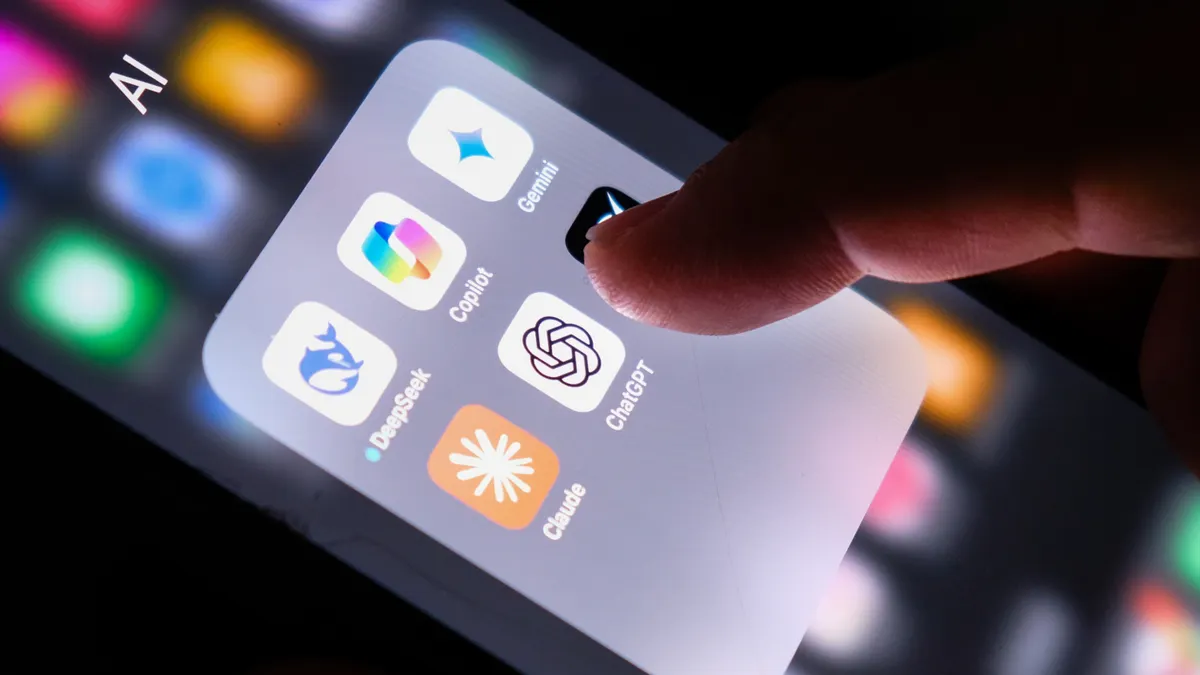
- Nearly 3 in 5 educators said they used artificial intelligence tools for their work last school year, according to a Walton Family Foundation and Gallup survey released Oct. 14. Nearly two-thirds of those who used AI said it freed up time for them to do parts of the job that matter most to them, such as interacting with students.
- The educators who reported using AI said they used tools like chatbots, adaptive learning systems and other interactive AI platforms during the 2025-26 school year. The technology, they said, helped with creating learning and assignment materials, grading, providing feedback, or doing administrative tasks.
- AI use ranked highest among educators ages 40 to 49, at 67%, followed by those ages 50 to 59, at 63%. Rates for those younger than 40 were closer to the overall average of about 60%, and a lower share — 46%— of teachers 60 or older also used the technology.
Dive Insight:
Of the educators who said they used AI tools in the 2025-26 school year, 51% said the technology freed up "somewhat more time" for the parts of teaching that matter most to them. Teachers value helping a student work through something they find difficult, seeing students perform well academically, and giving students individual feedback on their work.
Completing administrative or required paperwork ranked lowest among teachers' preferred activities.
The survey was based on responses collected between the end of July and middle of August from more than 1,900 educators.
The findings come as more teachers and students alike seem to be embracing AI, and also as leaders set restrictions and guardrails around the technology’s use.
A survey released in July by Instructure, an ed tech company, showed that AI was becoming more commonplace in schools, with 68% of educators reporting its use at least occasionally and 73% of parents saying their children used it at least occasionally.
That compares to just two years ago, when a 2024 Rand Corp. survey found only 18% of teachers saying they used AI tools in their classrooms.
Despite the reported uptick in teacher usage, districts have been considering or implementing restrictions on AI when it comes to students.
New York City, for example, announced in September what it called the nation’s “most expansive” artificial intelligence moratorium for students. The one-year moratorium prohibits student-facing AI tools for New York City Public Schools students in its preschool program for 2-year-olds through its 8th grade classrooms during the 2026-27 school year.
The temporary AI ban will affect 600,000 students — or two-thirds of NYC’s public school enrollment.
No similar restrictions have been announced for teachers, however. And as teachers increasingly use the technology, professional development may be lagging.
A separate survey released in May by Gallup and the Walton Family Foundation found that over 60% of teachers report receiving no guidance on how to apply artificial intelligence to parts of their jobs, such as analyzing patterns in student learning, tutoring, one-on-one instruction.
Another nearly 60% said they lacked any guidance on how to use AI to grade or provide student feedback, or to supplement instruction. And just under 50% reported receiving no guidance on how to use AI to create assignments and other class materials, or how to modify materials to meet students’ needs.