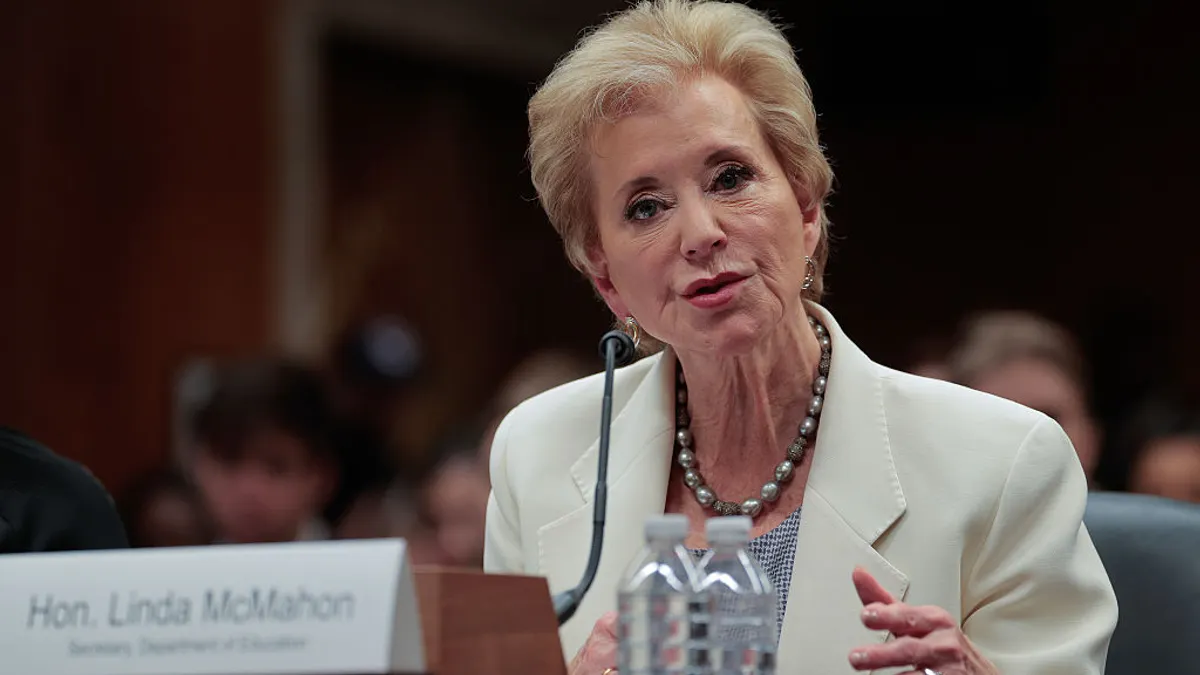
Democratic lawmakers on Tuesday accused the U.S. Department of Education of "frontloading" grants — or making multiyear funding available in one lump sum ahead of time rather than funding a larger number of grants over time, as is typical.
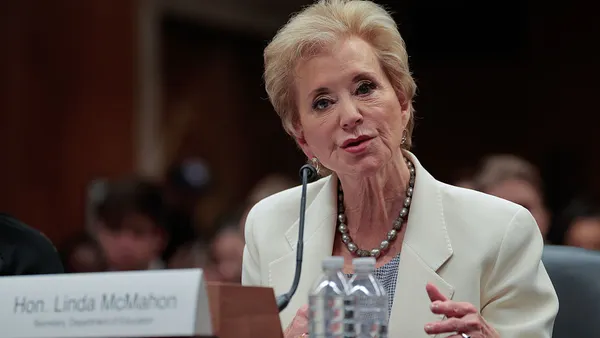
This approach has led to the withholding of approximately $630 million in appropriated resources across approximately 35 grant programs, according to a letter sent to U.S. Secretary of Education Linda McMahon by lawmakers from the Senate Appropriations Committee.
"In implementing this policy, the Department is intentionally and sharply limiting the number of new grants it will award, by concentrating funds into fewer grants and withholding significant portions of appropriated resources for use in future budget periods," said U.S. Senators Patty Murray, D-Wash., and Tammy Baldwin, D-Wisc, in the Oct. 13 letter.
Murray is vice chair of the Senate Committee on Appropriations, and Baldwin is a ranking member of the Appropriations Subcommittee on Labor, Health and Human Services, Education, and Related Agencies.
If the Education Department had stuck with its traditional approach of funding on an annual basis, the agency could have awarded more than 1,000 grants this year across areas including evidence-based student literacy programs, student mental health supports, education research, and recruiting and preparing teachers, the lawmakers said.
In one example cited, the lawmakers said the department frontloaded grants in the Innovative Approaches to Literacy program. Though the agency announced it would make up to 35 awards using the $30 million in funds earmarked in the fiscal year 2026 appropriations law, it issued only four new awards and set aside $13 million for future years for those grants, Baldwin and Murray said.
“The better question is why would an Administration dedicated to improving literacy outcomes and supporting child care for low-income student parents continue the failed approach of previous Administrations?” said Ellen Keast, communications director for the undersecretary at the Education Department, in an Oct. 14 email to K-12 Dive. “Yes, we are returning education to the states and have furthered that effort by funding the highest-quality grantees that will help kids learn to read and support parents in college.”
However, Baldwin and Murray said the Education Department's new funding approach runs counter to Congressional directives and claimed the department had adopted it to further a goal of eliminating the department and some programs.
The lawmakers' concern over the department's changed funding distribution method comes amid ongoing turbulence over the Trump administration's grant funding cancellations. Many such decisions have been tied to grant recipients' use of diversity, equity and inclusion practices. Multiple lawsuits have stemmed from those cancellations, with judges sometimes ruling them unlawful and requiring the department to backpedal even after the department had already issued new grant funding priorities and awards.
It also comes as the Education Department is trying to codify its controversial approach to terminating grant funding even after those approaches landed the agency in legal hot water. In August, the department proposed a rule that would give itself broad authority to end grants, including "for convenience."
Under the changes, the department could abruptly terminate, discontinue or withhold discretionary funding based on a retroactive review of applications — and whether those applications align with an administration’s changing policies.
If this and other proposed changes from the government go through, Baldwin and Murray said in their Oct. 13 letter, "this means the Department could easily terminate all these frontloaded funds, effectively terminating a large swath of FY2026 funds that Congress appropriated on a bipartisan basis."