PITTSBURGH — In Michigan’s Livingston Educational Service Agency, the budgeting process doesn’t fall solely on the school system’s finance office, administrators say.
Instead, Livingston ESA prioritizes developing relationships across departments within its leadership cabinet to build trust as they craft their own budget spending, said Stephanie Weese, the district’s deputy superintendent.
This relationship-building allows the 28,000-student district to better understand departmental needs and also be more transparent within its leadership team, she said.
The process has helped the district forecast and create a very accurate budget for the upcoming school year, Weese said. That success is because the district is “talking to people and figuring out what’s needed and what works and what doesn’t work,” she said, and it’s “not just making the numbers more accurate by looking at trends.”
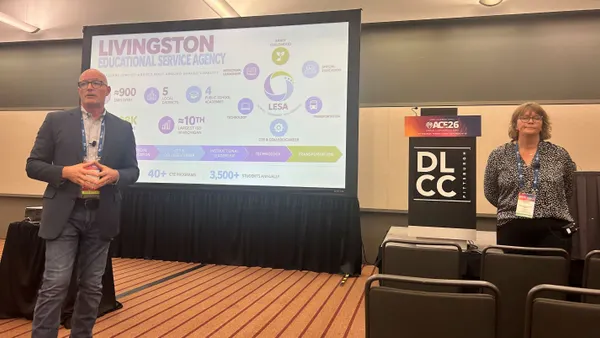
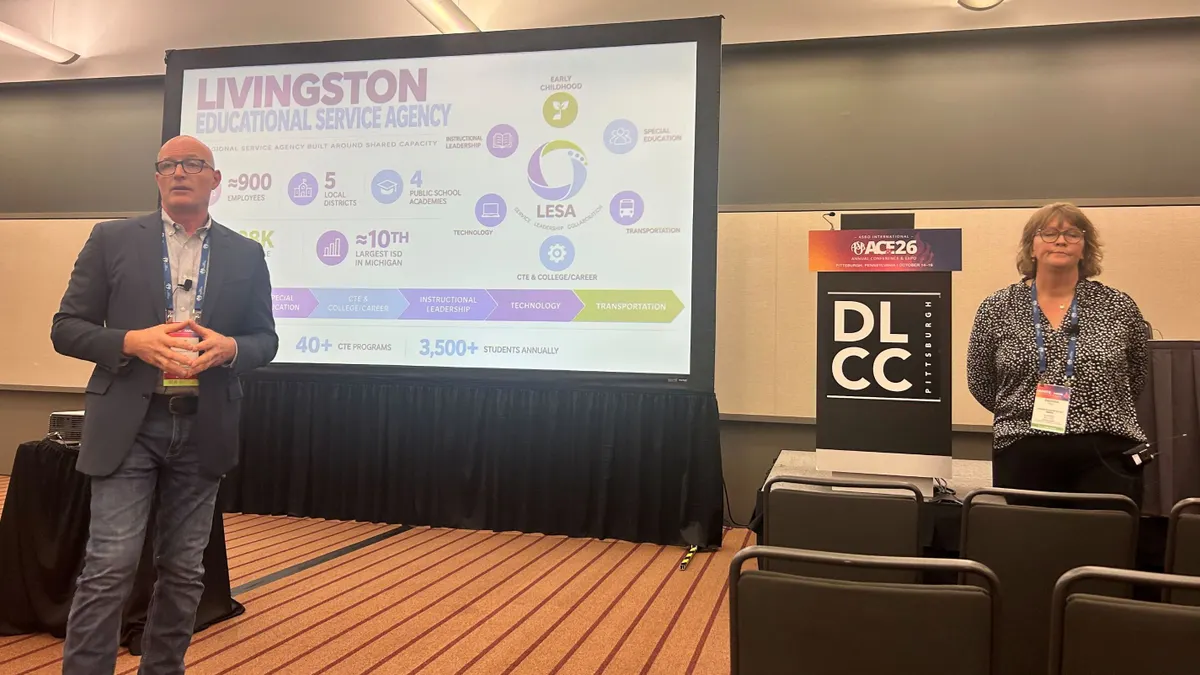
During a Wednesday presentation at the Association of School Business Officials International’s 2026 Annual Conference & Expo in Pittsburgh, Weese and Livingston ESA Superintendent Michael Hubert shared how the district taps into relationship-building to ultimately improve its budgeting process.
Ensure cabinet leaders know what’s happening across departments
Livingston ESA’s leadership team typically meets twice per month, and the budget director also attends to provide timely updates on the district’s finances, Weese said.
During those meetings, each person shares — at most — three key, short updates from their departments, Hubert said. This approach is something he describes as “connect the dots.”
Simple updates like this are important, Hubert said, because they provide every leader with more context about what’s happening across the district. If the district were to enter a stressful financial period that would require budget cuts, he said, that additional information becomes even more useful for department leaders to engage with each other on any difficult decision-making down the line.
Before district leaders “connect the dots” during the meeting, they also share their appreciation and check in with each other, Hubert said. Ahead of the meeting, each member of the leadership team also fills out a pre-check-in short form that Hubert reviews so he can understand what issues need more discussion.
“How we build the trust is by respecting each other and engaging and listening to who they are, how they're engaging in their work, [and] what's going on,” Hubert said.
Practice budgeting exercises together
Even though Livingston ESA has not had to make budget cuts as of late, Hubert said, it’s important that his leadership team knows how to make reductions if necessary.
To build on those skills, the cabinet collectively engages in a cost-cutting exercise where each member closely examines their individual budgets. While the exercise allowed leaders to look at their budgets in detail, Weese said one con was that the practice “really didn’t feel real.”
That’s because some leaders whose departments are fully funded through grants would push back that they don’t need to make cuts and would point to another department that could make cuts more easily, she said.
When the budget director provides updates to the leadership team with the district’s financial outlook for the next year, the director will also identify the status of that budget projection as a red, yellow or green light, Weese said. Green signifies steady or increased funding, yellow means the district should be cautious about adding new expenses, and red signals that the district should consider making budget cuts.
That model extends to mid-year budget reviews. If the district has extra funds available in its budget after adjustments are made, the cabinet would propose and review additional line items for their respective departments. Hubert would then approve, discuss or reject a proposal with similar green, yellow or red light language.
Weese said that exercise helped improve engagement across the leadership team, though it was a time-consuming effort that requires advance planning.
“They all had the opportunity to add their wants, their needs, and we then talked about it as an entire cabinet,” Weese said.