New York City announced Wednesday that it is implementing the nation’s “most expansive” artificial intelligence moratorium for students in the nation’s largest public school system.
The one-year moratorium prohibits student-facing AI tools for New York City Public Schools students in 2-K, a preschool program for 2-year-olds, through 8th grade during the 2026-27 school year. The temporary AI ban will reach 600,000 students — or two-thirds of NYC’s public school enrollment.
Additionally, the system said it will set restricted 1:1 screen time policies for students in 2nd grade and lower. Screen limits will also extend to students in 3rd through 5th grade with recommended caps of 30 minutes per day, as well as 45-minute daily caps for students in grades 6-8.
The change comes as districts nationwide grapple with concerns about student screen time — and now AI use — in classrooms. NYC Public Schools’ AI moratorium follows after the system faced increased public pressure to adopt AI guardrails from city council members, community advocates and parents. Those pressures, however, called for a longer pause on AI tools of two years in the school system.
As the NYC Public Schools policy takes effect in 2026-27, city officials said that all of its technology tools “will undergo an exhaustive review and will be barred if their functionality is ultimately determined not to be mission-critical to learning.” That review will consider vendor accountability for safety and transparency standards, ethics, results for instructional impact and prior research, and ongoing user feedback.
Teachers will also still be permitted to use AI for instructional planning and operational tasks so long as the tools they use comply with the school system’s safety standards. Students with disabilities who use assistive technology, multilingual learners and students participating in career readiness programs, such as computer science, will be given an exception to the policy.
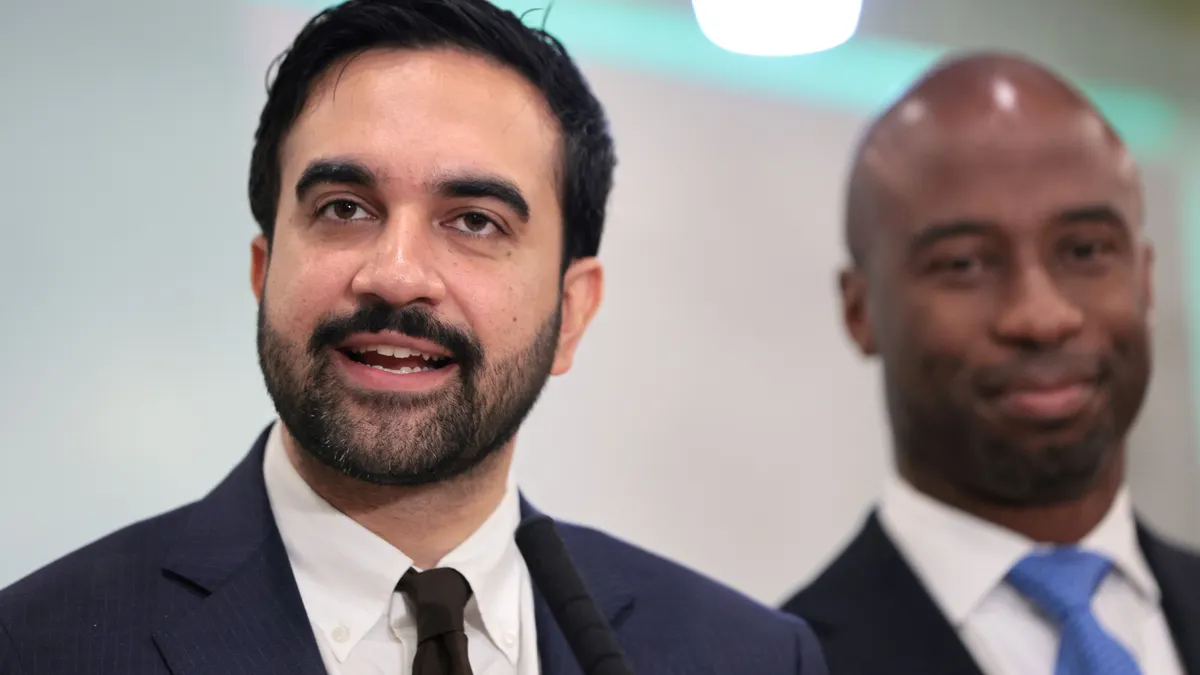
“The tech industry wants us to believe that A.I.-powered early education is not only inevitable, but necessary. We do not see it that way,” said NYC Mayor Zohran Mamdani in a Wednesday statement.
Concerns with AI bans
Some leading advocates for ed tech expressed concern over the negative implications the pause on AI use in NYC will have on other districts nationwide.
For a long time, the largest U.S. school systems like NYC and Los Angeles Unified School District have been a “beacon” in innovation for other districts, said Jean-Claude Brizard, CEO and president of Digital Promise. But as both these school systems begin to implement student screen time limits and consider AI bans in classrooms, he said they’re “asking the wrong questions and pushing the wrong things.”
Banning AI tools is not the solution, he added. Rather schools should be focused on educating and training adults to help guide students on how to properly and effectively use it, he said.
“I don’t know how you ban AI in tools because it’s like asking someone to remove added sugar in your food,” Brizard said. “It is everywhere. It is pervasive.”
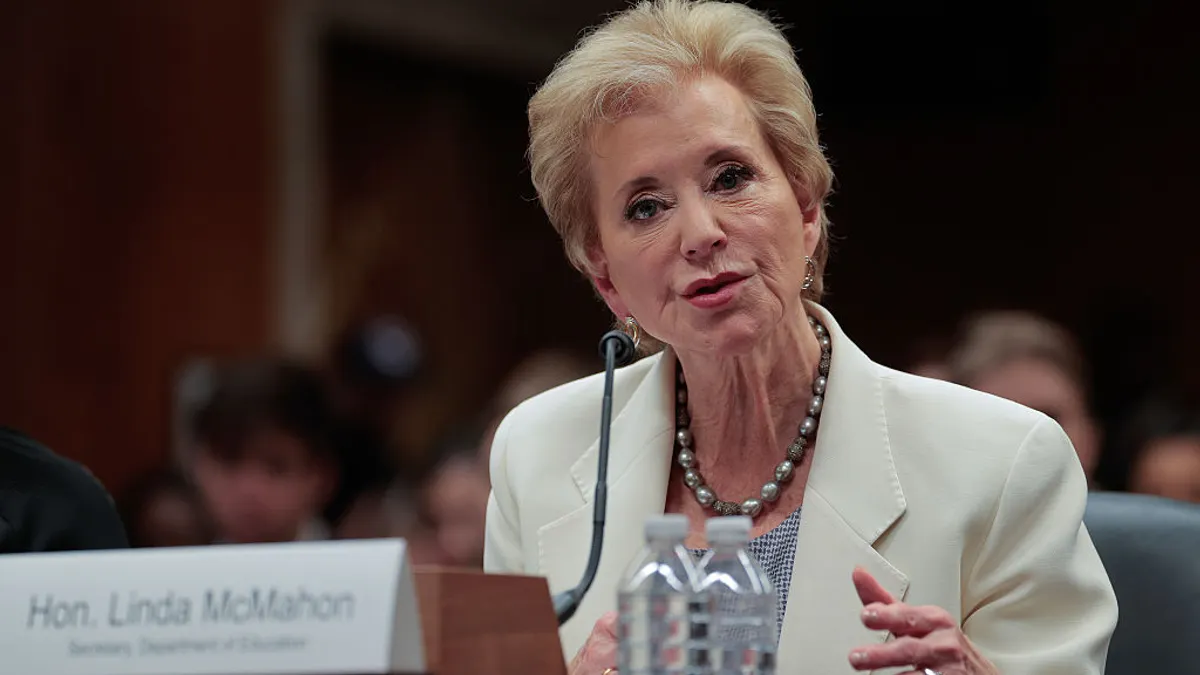
NYC’s AI and screen time decision comes just weeks after the U.S. Department of Education issued a Dear Colleague letter stressing that the use of ed tech in classrooms is not the same issue as recreational technology use more broadly. That same letter, however, acknowledged policies on screen time and technology use in schools should be made at the state and local level.
“What I’m seeing in New York City does not really honor, in my opinion, the Dear Colleague letter from the assistant secretary,” Brizard said.
A time to build evidence, vet and test AI properly
Erin Mote, CEO and founder of InnovateEDU, said she’s not supportive of sweeping, minute-based restrictions for screen time and that the conversation needs to be geared toward screen value instead. But she said she’s optimistic that NYC Public Schools will consider that more in the coming years.
She added that she sees a lot of concern around AI and ed tech in schools being driven by confusion between personal cellphone use, consumer tools and classroom technology. There’s also broader fears and a lack of understanding around AI in the public, she said.
But NYC’s pause on AI appears to be an opportunity for the district to build and develop evidence on any future ed tech and AI tools it may use, Mote said.
As part of the moratorium, the school system is also piloting five AI programs at the high school level with vetted tools.
Mote noted that NYC's AI pilots will use evidence-based approaches that will lean on localized data and explore whether the tools tested will actually improve student outcomes.
“I think that's the type of evidence infrastructure that's going to be necessary to ascertain screen value versus screen time,” Mote said. “So I'm hopeful that by this calling in of a diverse group of stakeholders — students, parents, educators, experts — that there is real deliberation about screen value and really, I hope, good guidance for educators in this work.”
Is NYC going far enough?
Meanwhile, advocates who initially called for a two-year AI moratorium in NYC Public Schools said the latest policy doesn’t go far enough.
The AI Moratorium Coalition said in a Wednesday statement that it was relieved to hear NYC Public Schools is ending its use of Amira and prohibiting AI companion chatbots from being used on school devices in addition to disabling Google’s AI tool, Gemini.
However, the coalition said it’s concerned that there are certain exceptions to the AI moratorium and added that the policy only applies to the current school year. The group also flagged the AI pilot program as “dangerous” and said it will be implemented in “an unknown number of high schools without clear product evaluations, learning objectives, or opt-in/opt-out structure — treating our students as guinea pigs and unpaid beta testers.”
On top of that, the coalition said there is no clear guidance on the procurement process or spending on AI in NYC Public Schools. One year, the group said, is not enough time for a thorough review process to develop a long-term AI and ed tech policy for the school system.
“We’ve spent all year calling for a full AI moratorium because the myriad documented harms of generative AI — to students’ cognition, emotional and mental health, privacy, and the planet — affect students of all ages,” the coalition said. “We hope this new policy is a first step toward a more comprehensive policy, and in the meantime we’re calling for the AI pause to be extended beyond this first year.”