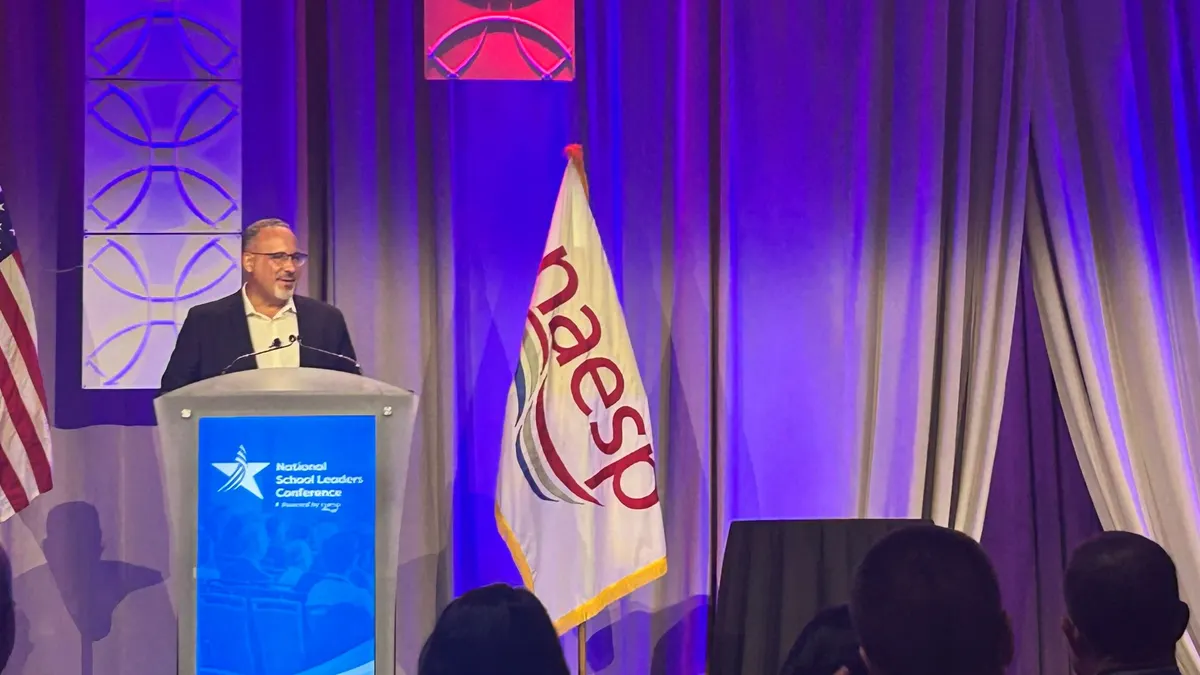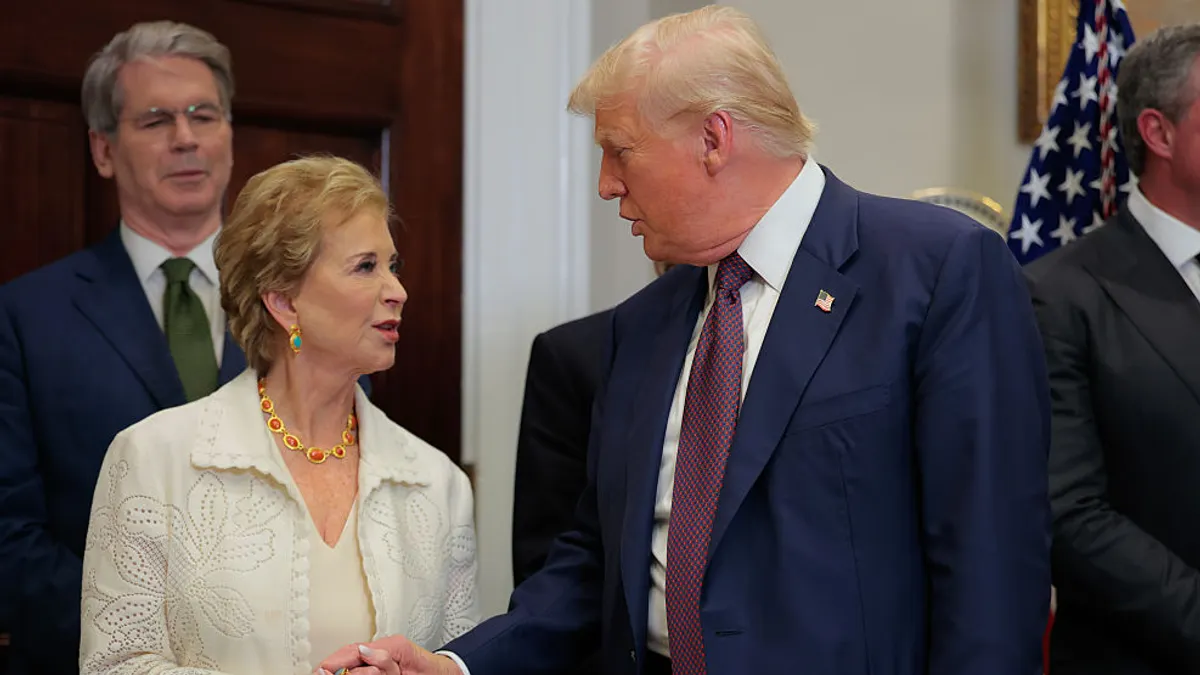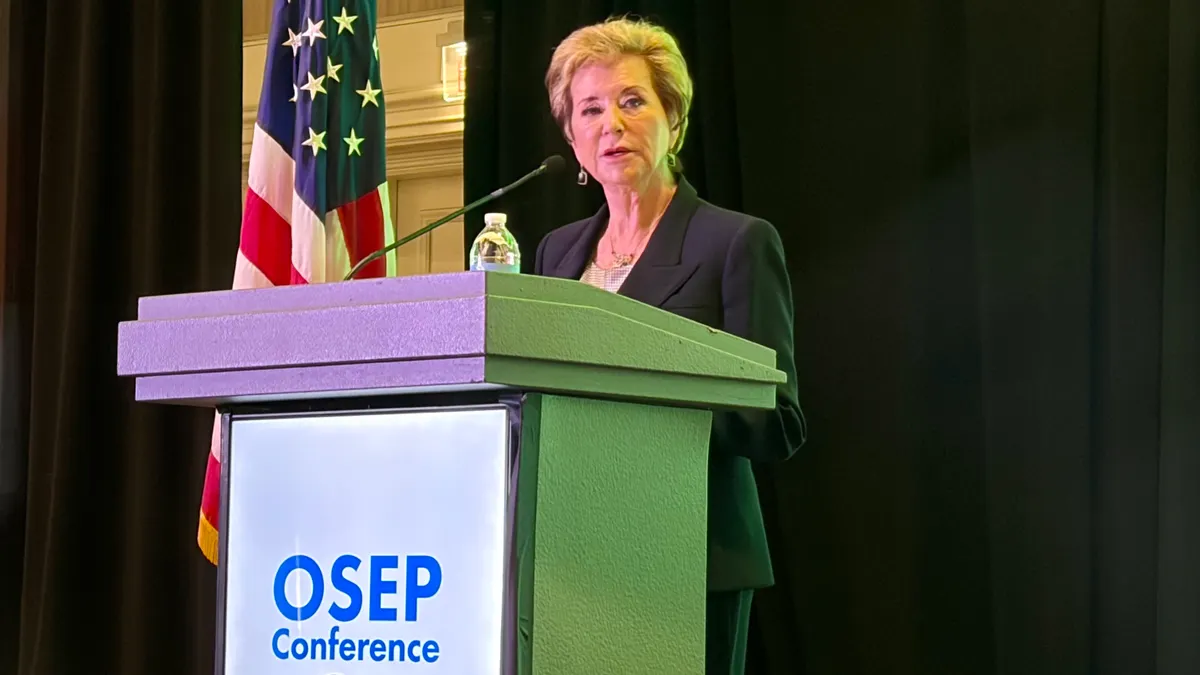
ARLINGTON, Va. — U.S. Education Secretary Linda McMahon, during a keynote address on Tuesday, emphasized the federal government's obligation to enforce protections for students with disabilities, while touting the Trump administration's efforts to give states, districts and families more flexibility and authority over how special education programs operate.
The Education Department is doing "everything in our power to create lasting improvements that support your state and local efforts to make systems that are successful for parents, educators and communities serving individuals with disabilities," McMahon told 1,250 attendees — project directors and program staff who support special education programs nationwide — at the annual conference of the department's Office of Special Education Programs.
"This work begins with a firm and unwavering commitment to fully supporting the protections guaranteed, first and foremost, under federal law," she said.
The most significant achievement of this work, McMahon said, has been the Education Department's June interagency agreement between its Office of Special Education and Rehabilitative Services and the U.S. Department of Health and Human Services. That agreement pulls various functions — such as formula and discretionary grant programs components for IDEA Part B, Part C and Part D — out of the Education Department and into HHS.
It is one of 14 interagency agreements the Education Department now has with six other federal agencies. The Education Department still retains legal responsibilities for education laws under these partnerships.
"As we strengthen our processes and coordination, none of the rights guaranteed to individuals with disabilities under federal law will change," McMahon said. "My hope is that decades from now, Americans will look back on the work that we've done today and see it as a start of a brighter future for millions of individuals with disabilities who deserve dignity, care and meaningful opportunities in every stage of their lives."
Although McMahon projected optimism, there has been significant pushback on the interagency agreements, particularly the OSERS-HHS one. Critics say the changes will cause confusion and reduce accountability for state and district compliance to IDEA.
Those opposing the OSERS-HHS partnership include organizations representing special educators and disability rights and civil rights advocates, as well as some members of Congress.
'Significant concerns remain'
Another keynote speaker, OSERS Acting Assistant Secretary Kelly Rogers, also promoted the OSERS-HHS interagency agreement. "Through this partnership, OSERS is leveraging HHS' expertise, research and broad portfolio of programs to improve services across the lifetime, from early childhood through adulthood."
For example, she said, there will be stronger coordination with programs like Head Start, mental and behavioral health services, home visiting initiatives and assistive technology. "At its core, this partnership strengthens its federal capacity, so we can better support your capacity."
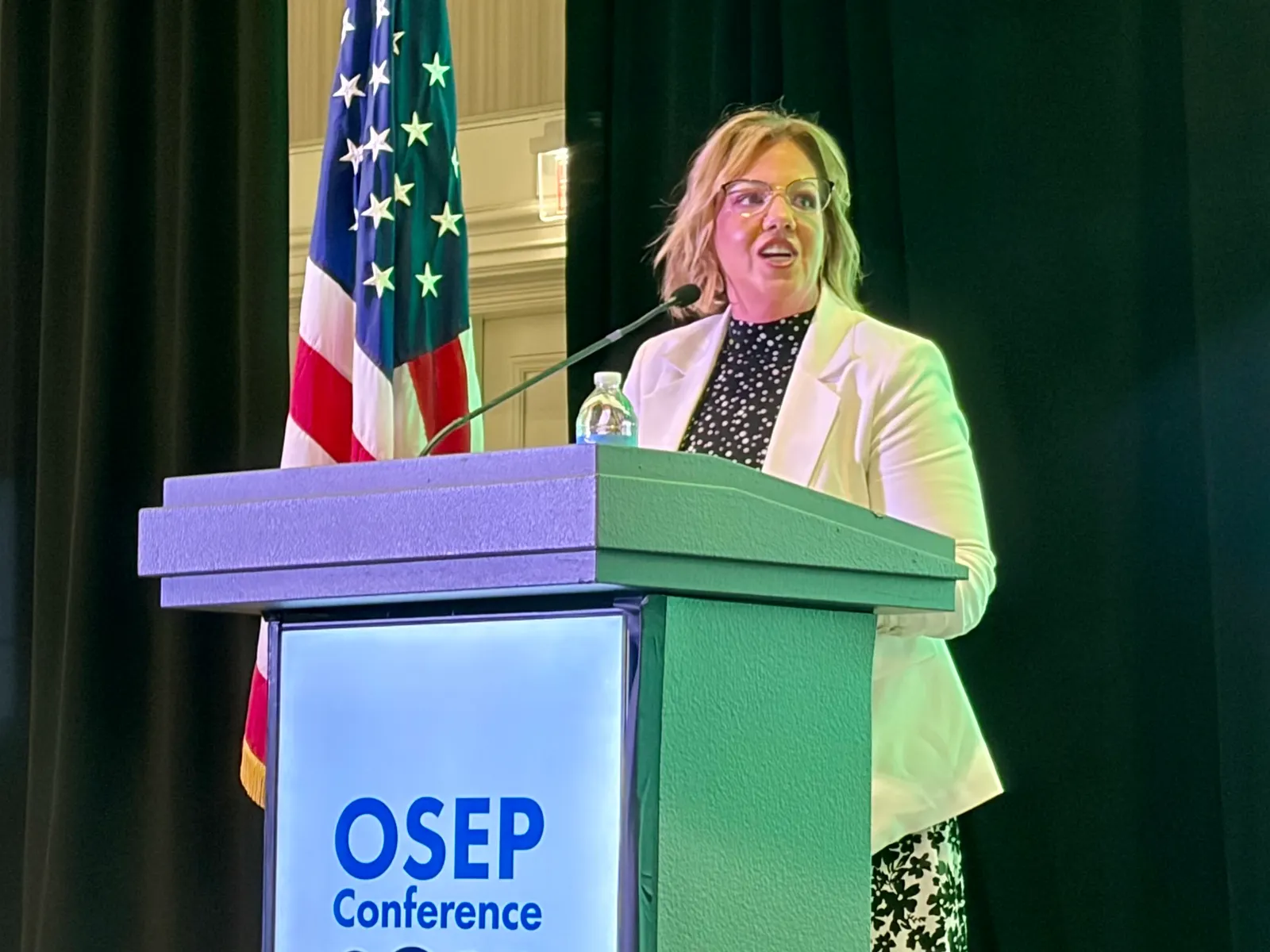
Rogers pointed to the 50th anniversary of IDEA in November 2025, saying there has been "real and measurable" progress for students with disabilities over the past five decades, such as expanded access to inclusive education and stronger transition planning for postsecondary options.
Yet, she said "significant concerns remain," including persistent noncompliance with IDEA requirements, large gaps in performance on statewide assessments between students with and without disabilities, declining proficiency rates on alternative assessments based on alternative academic achievement standards, and wide variations in graduation and dropout rates.
OSERS is continuing to simplify processes, improve transparency and modernize IDEA oversight, she said, to support states, districts and families in boosting outcomes for children and families.
"To deliver better outcomes, we must be willing to fundamentally rethink how we engage with states, how we use data, how we enforce compliance, and how we support families, because real change requires new strategies, not recycled processes," Rogers said.
In an interview after her speech, Rogers discussed how the two-day conference was organized to highlight best practices from states that have put systems in place to address noncompliance or systemic issues.
"We want states to hear from each other. They are the experts." Rogers said. "For too long, D.C. and the federal government has treated the growth of bureaucracy as evidence of progress. It's not. It's the systems at the state and local levels that are making the real difference for outcomes for children with disabilities and their families."
K-12 Dive was not allowed to attend the conference's breakout sessions.
But the conference agenda listed a Tuesday session where state leaders from Maryland, Guam and Iowa were to speak about new IDEA Part C appropriations language that allows states to use IDEA funds to help expectant parents of children with disabilities.
Another Tuesday session featured Idaho and Indiana leaders presenting with OSEP staff on how to navigate IDEA funding for school choice.
In some sessions, state officials planned to present their success stories within certain policy areas.
Conference attendees include project directors and program staff supporting the Individuals with Disabilities Education Act, including personnel development, technical assistance, parent training, and IDEA Part B and Part C directors and coordinators.