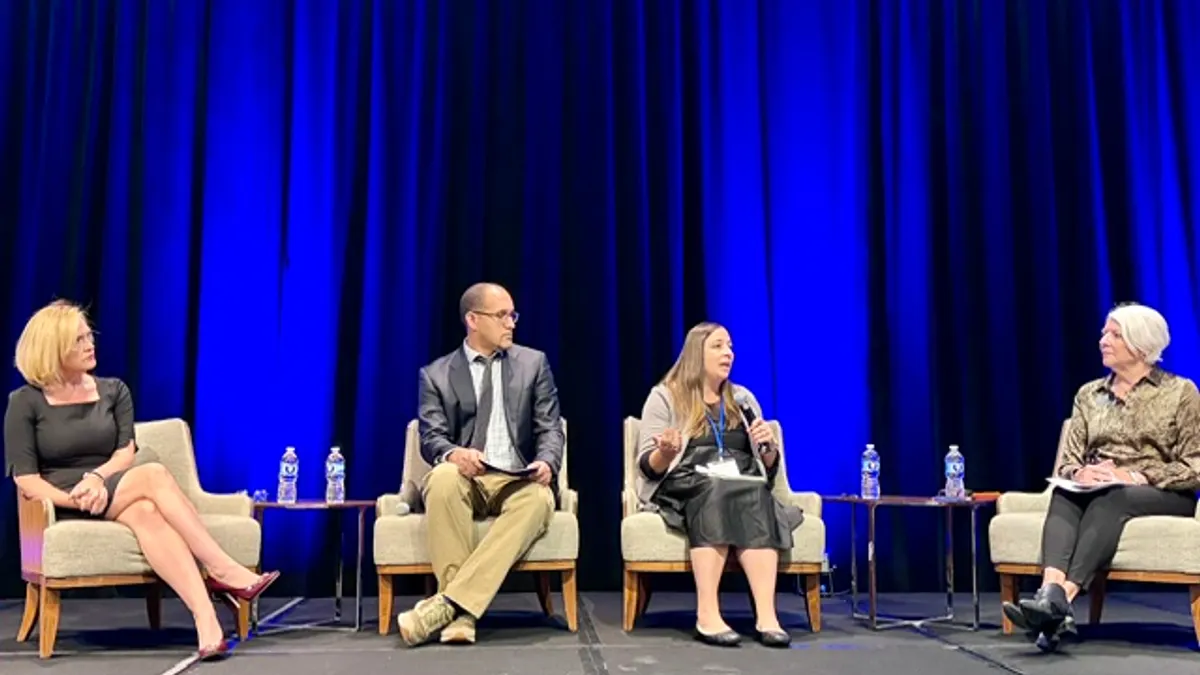
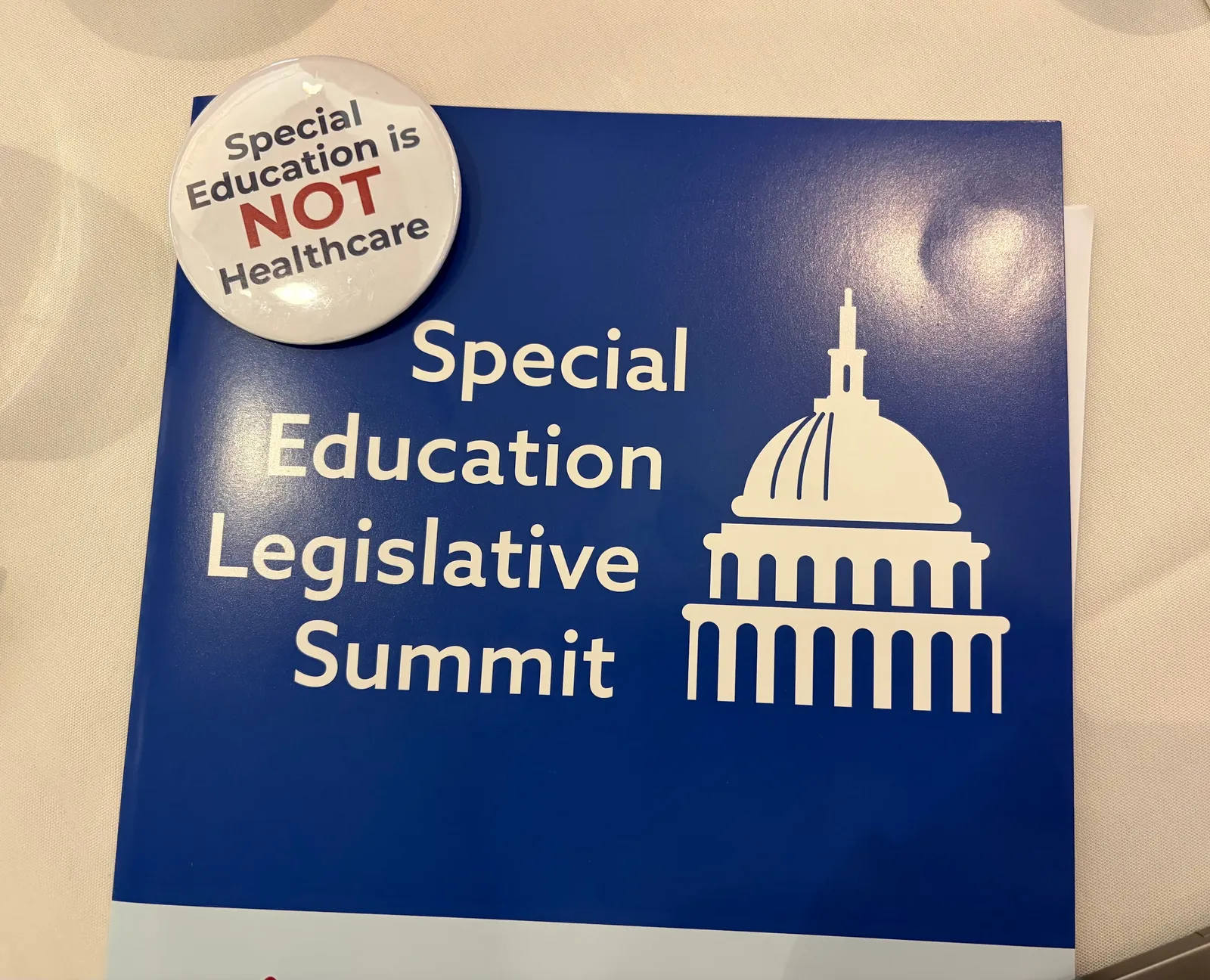
ALEXANDRIA, Va. — Moving special education functions out of the U.S. Department of Education would be detrimental to students with disabilities because it would cause disparities in services across the states and reduce accountability measures, said special education professionals and advocates at the Special Education Legislative Summit on Monday.
Several former Education Department officials, speaking to the summit's nearly 300 attendees, said the Trump administration's efforts to shrink the Education Department's footprint by moving core responsibilities to various federal agencies is causing concerns regarding special education funding, policy, accountability and coordination with other K-12 services.
The summit, which runs Sunday through Wednesday, is hosted by the Council for Exceptional Children and the Council of Administrators of Special Education. Both organizations support special education professionals.
Meghan Whittaker, a former chief of staff in the Education Department's Office of Special Education and Rehabilitative Services, said that moving various federal K-12 programs across different agencies could make it harder for districts and states to comply with federal education laws affecting services for students. OSERS includes the Office of Special Education Programs, which supports the implementation of the Individuals with Disabilities Education Act.
"There's a real risk here that the guidance you're getting from one agency and the guidance you're getting from another makes it impossible or harder to administer all of the laws that you need to actually administer," said Whittaker, who is now program director at The Learning Agency.
The interagency agreement announced last month between the Education Department and the U.S. Department of Health and Human Services would move key responsibilities for special education formula and discretionary grants, compliance and monitoring, and annual state performance determinations to HHS. The Education Department, however, would maintain statutory responsibility for the functions being outsourced.
The Education Department-HHS special education partnership is one of 14 agreements the Education Department has entered into over the past year with six other federal agencies. Another agreement moves certain Education Department Office for Civil Rights activities to the U.S. Department of Justice.
The moves are part of the Trump Administration’s Returning Education to the States campaign, which aims to end the “education bureaucracy” in Washington, D.C., and give parents and districts more control and responsibility for federal funding decision making.
In a June interview with K-12 Dive, Kelly Rogers, the current acting assistant secretary of OSERS, said that nothing in the interagency agreement changes a student with disabilities' individualized education program or services.
The Trump administration has said the Education Department's interagency agreement with HHS will align federal services to improve academic outcomes and strengthen access to programs and information for infants, toddlers, students, young adults and adults with disabilities.
The interagency agreements are the first steps in eliminating the Education Department altogether, say supporters. Last week, House Republicans on the Education and Workforce Committee approved a package of 10 bills that would permanently move some Education Department functions to other agencies.
Initiatives to codify the special education and civil rights interagency agreements were not included in the legislative package.
Additionally, the Trump administration has touted an extra $144 million this year for early intervention services for infants and toddlers and for K-12 special education programs. That's in addition to the $15.5 billion for IDEA services in fiscal year 2026.
CEC and CASE say this level of funding is not enough to address the needs in the field, such as severe teacher shortages, growing demands for student mental health services, and year-over-year increases in special education enrollment.
In 2024, about 8.2 million students ages 3-21 qualified for IDEA Part B school-aged services. That was a 3.8% increase compared to the year before. IDEA’s Part C program served nearly 460,000 infants and toddlers with disabilities and developmental delays in 2024.
Growing pushback on special education outsourcing
Many special education professionals and disability rights organizations have said the special education partnership with HHS will cause confusion and make it more difficult for states and districts to abide by IDEA.
"To those who think that moving OSEP to another agency and reducing its staffing is empowering, like returning power to the states, it's not," said Marcus Hedrick, a former attorney at the Education Department and currently an attorney with Sligo Law Group, speaking to the summit's attendees. "It's really just abdicating some of the responsibility to support you in implementing the program."
Whittaker said that Education Department staff "see that disability is a natural part of the human existence" so that children with disabilities "can achieve the best outcomes possible."
"I think stepping into the culture of HHS is going to have a really big and potentially negative impact on how students access services and how we support them and their families," she said.
Whittaker echoed a concern voiced by several other opponents of the Education Department-HHS agreement, including 13 former federal special education senior officials from both Democratic and Republican presidential administrations who on July 13 wrote to members of Congress urging them to block efforts to eliminate the Education. Department and move core functions to other agencies.
"Moving IDEA's implementation into a health agency risks substituting medical management for educational access," the formal officials' letter said.
U.S. Education Secretary Linda McMahon, in a June 16 letter addressed to parents of individuals with disabilities, said the Education Department-HHS partnership was created after “careful deliberation and collaboration with stakeholders," adding that "IDEA, as an education law, ensures that a child’s disability isn’t viewed as a medical condition that needs to be treated."
Audrey Levorse, interim executive director of the National Association of State Directors of Special Education, said during the summit that the special education interagency agreement with HHS could impact states' abilities to measure how students with disabilities are progressing, particularly if there are fewer federal staff to provide technical assistance and support to states.
The Education Department's proposed FY27 budget recommends reducing special education and rehabilitative services staff from 163 in FY25 to 31 in FY27.
Also on Monday, 86 House Democrats sent a letter to McMahon calling for the reversals of the special education interagency agreement with HHS and the Office for Civil Rights agreement with the Justice Department. The letter mentioned the loss of Education Department staff who are knowledgeable and familiar with K-12 programs if other agencies take over education-related functions.
"We worry that the loss of institutional expertise could cause irreparable damage to these offices that millions of students and their families rely on," the letter said.
The Education Department has said OSERS staff with expertise in special education will still be doing their jobs in coordination with HHS.
Sen. Patty Murray, D-Wash., in a Monday press call alongside disability rights, parent and teacher representatives, said the interagency agreements for special education and civil rights are "illegal" and that "dismantling the Department of Education — continuing on this path — will be devastating for kids with disabilities in America.”