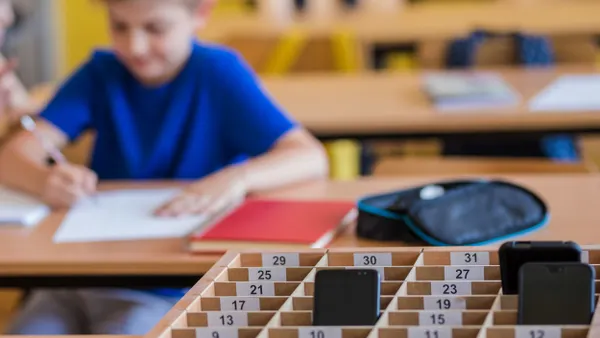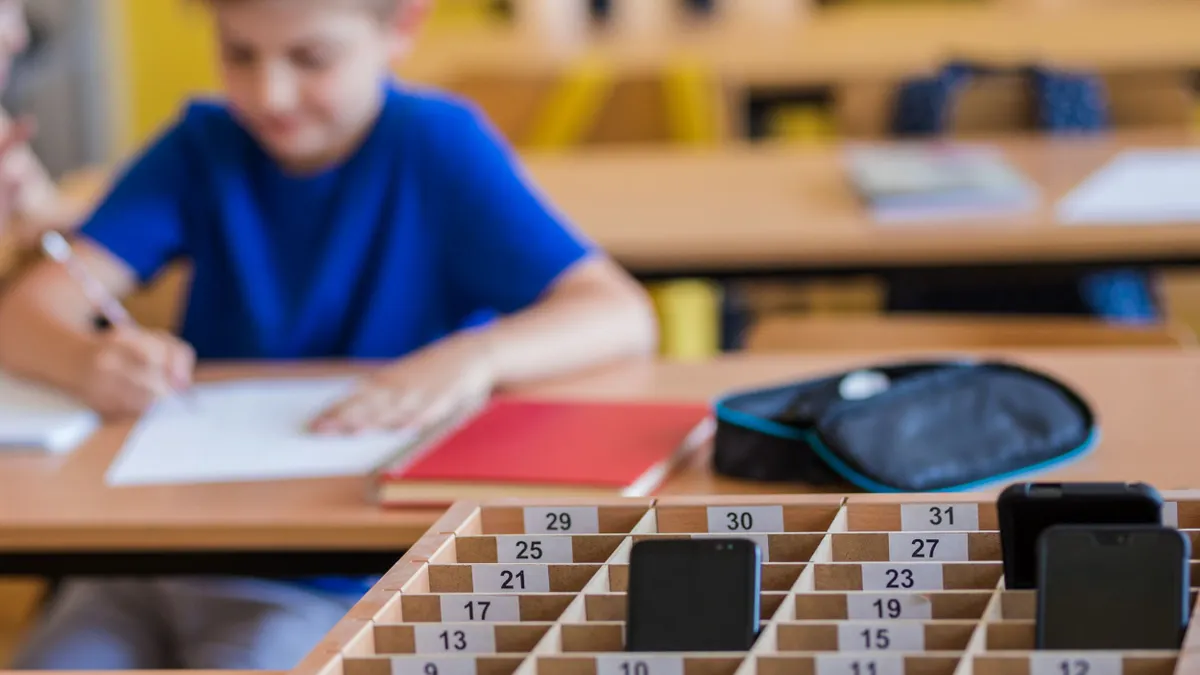
Despite supporting cellphone limitations to some extent during the school day and saying such policies limit distractions, a majority of high school students still oppose bell-to-bell bans — overwhelmingly due to safety concerns in case of emergencies.
The results come as part of a larger survey of nearly 1,500 youth ages 13 to 24 from Hopelab and Data for Progress.
“Students are telling us they support the goal of limiting distractions, but they also live with the reality of school shootings, lockdowns, and other emergencies,ˮ said Mike Parent, principal researcher at Hopelab, in a Tuesday statement. “This reflects a very real concern about gun violence in schools, and it points to a design gap in cell phone policies."
Currently, 42 states and Washington, D.C. have enacted legislation related to cellphone usage in schools, according to the survey. A count by the National Council of School Safety Directors, last updated Oct. 8, shows that 21 states require bell-to-bell cellphone bans.
According to Hopelab's joint survey findings, 80% of high school students attend a school with a cellphone ban, and 42% have full-day bans. While 64% of students supported an in-class ban on cellphones, 80% opposed all-day bans.
“Anyone can walk into my school and put us into harm, what if I want to text someone and say my goodbye? What if the staff members are unsafe and have no way to contact authorities?" asked one high school survey respondent. "I can make a quiet phone call and save lives! What if I was in the bathroom and had no way of getting back to a classroom? What if I escaped school? How do I tell someone my school needs help?!ˮ
Hopelab, a social innovation lab and research group, and Data for Progress, a progressive think tank and polling firm, said the report's findings challenge “the presumption that cell phones are merely a distraction to students, and highlights their essential role as a safety and accessibility tool," as some students also rely on cellphones for translation apps and reading aids.
The findings follow another study published by The Brookings Institution in September that suggested bell-to-bell policies may be more durable over the school year compared to less strict cellphone policies. That’s because teachers’ enforcement of in-class restrictions tends to wane over the school year, said researchers from the Center for Applied Research in Education, part of the University of Southern California’s Center for Economic and Social Research.
The Hopelab research happened to be released shortly after a mass school shooting at an Oregon elementary school last week, which resulted in the deaths of three children and one teacher reportedly by a former student.
Hopelab and Data for Progress suggested in their findings that cellphone restrictions should have clear emergency protocols and formal accommodation pathways for students who need assistive technology like translation services or reading aids.
"Working with young people to build exceptions for safety, accessibility, and family connection is how schools and policymakers can meet both goals," said Parent.