Key K-12 programs would be level-funded or slightly boosted for fiscal year 2027 under a budget plan proposed by the Republican-led Senate Appropriations Committee as the deadline looms for enacting a funding bill.
Appropriations for programs such as Title I, Part A for low-income school communities ($18.4 billion), Title III for English learners ($890 million) and safe schools and citizenship education ($431 million) would stay the same as FY26 appropriations. Funding for the Office for Civil Rights would remain at $140 million, according to the spending plan.
The proposal recommends increases for several other programs, such as an additional $50 million for special education education programs ($15.5 billion), $60 million more for charter school funding ($500 million), and $5 million more for 21st Century Community Learning Centers, which help fund after-school and summer activities ($1.3 billion).
Overall, the Senate Appropriations committee’s budget proposal recommends $93.9 billion for the Education Department in FY27, a 19% increase over FY26 appropriations.
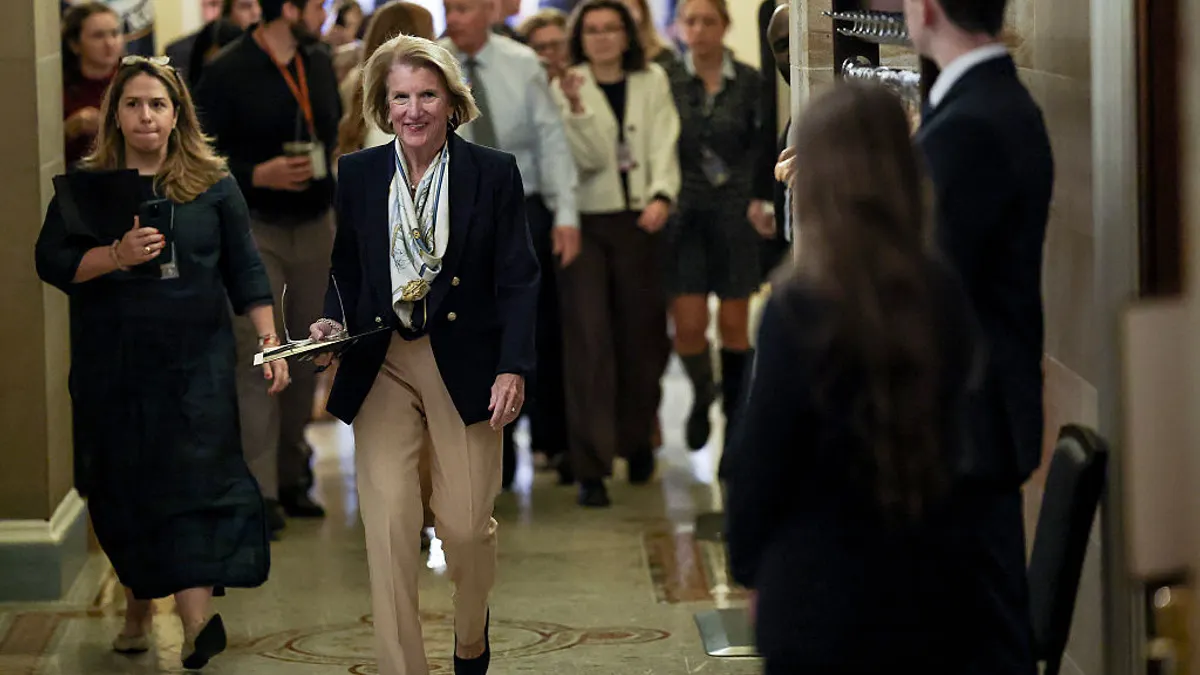
The FY27 proposal "makes meaningful investments" in programs such as childcare and education, said Sen. Shelley Moore Capito, R-W.Va., in a Monday statement. Capito is chair of the Senate Appropriations Labor, Health and Human Services, Education and Related Agencies Subcommittee.
But the full committee's vice chair, Sen. Patty Murray, D-Wash., said in a Monday statement that the larger Labor, Health and Human Services, Education and Related Agencies proposed funding bill "fails to rein in this administration — to stop the dismantlement of the Department of Education, prevent [President Donald] Trump from politicizing every federal grant, and so much more. We need to invest way more to help students thrive, protect people’s health, and help families afford the basics, like child care and their heating bill.”
A separate budget proposal for the U.S. Department of Health and Human Services recommends raising funding for Head Start early childhood education programs by $50 million for a total of $12.4 billion.
A tight fiscal timeline
FY27 began Oct. 1, but before the deadline, Congress enacted a continuing resolution to delay decisions for an overall final federal budget until Dec. 11. By that date, Congress will either need to finalize the FY27 appropriations or enact another continuing resolution. If lawmakers do neither, there could be a government shutdown.
In June, the House Appropriations Committee advanced its FY27 spending plan that recommended an overall allocation of $71 billion, or a 10% cut, to the Education Department. That proposal included a $2 billion cut for Title I funding, a $46 million boost for special education programs and the elimination of the Office of English Language Acquisition.
Both the House and Senate committees' bills differ from Trump's proposed budget, which sought to cut Education Department spending by 3% to $76.5 billion by consolidating or eliminating several programs, such as English learner supports and Teacher Quality Partnership grants.
The Trump administration's spending proposal also recommended the elimination and consolidation of several Individuals with Disabilities Education Act national programs like teacher training and technical assistance, but that recommendation is not reflected in the House or Senate committees' budget plans.
The paths for the House and Senate committees' spending bills are unclear given the advancing fiscal deadline and partisan politics at play, said Tara Thomas, senior government affairs manager at AASA, The School Superintendents Association, in a Nov. 17 post on AASA’s website.
Starting the first week of January, Democrats will be the majority party in both the House and Senate and will take over key committee leadership roles.