Dive Brief:
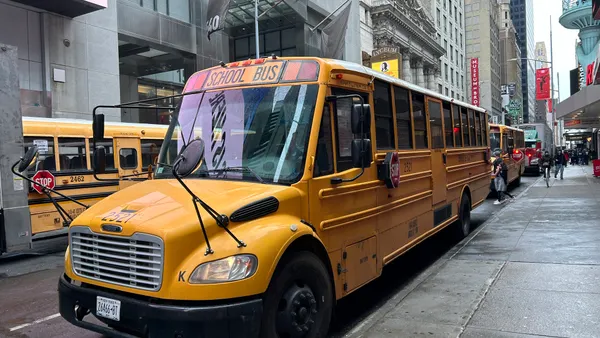
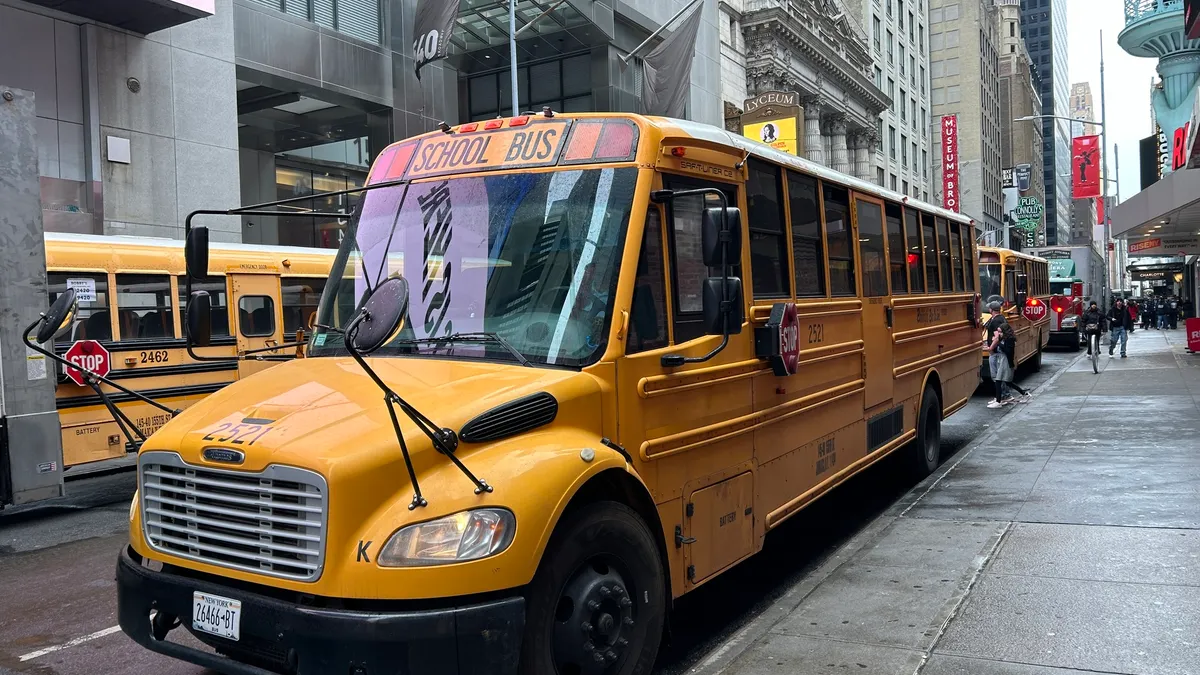
- The number of school bus drivers dropped 5%, or by 10,200 jobs, between fall 2025 and fall 2026, worsening a workforce shortage that has continued for the past decade, according to a Thursday report by the Economic Policy Institute.
- School bus driver positions have become less competitive compared to other bus driving professions. Hourly pay for school bus drivers dipped 0.7% since September 2025, after adjusting for inflation, while pay for other bus drivers has remained steady over the same time period, EPI said.
- According to EPI, districts with school bus driver shortages can face cuts to bus routes, transportation delays, increased safety risks, canceled athletic away games and other hardships like higher traffic congestion during student driving times. "Entire communities suffer" if they lack adequate public school funding and competitive wages for public school employees, the report said.
Dive Insight:
EPI's analysis included school bus drivers employed by privately contracted firms and those employed directly by districts.
There were nearly 15% fewer school bus drivers employed at the start of this school year compared to September 2019. Private sector school bus driver employment fell 35.9% over the same period, while state and local government bus driver employment declined 9.2%, the EPI report said.
Hourly wages for school bus drivers as of Sept. 1, 2026, were $22.49, a 0.7% drop compared to the same date last year. Meanwhile, overall bus driver hourly wages as of Sept. 1, 2026, were $23.89.
But even with the lower hourly wages for school bus drivers, inflation-adjusted median weekly wages rose 3.9% year-over-year. The EPI report said this may be because school bus drivers are working longer shifts or driving extra days to make up for employment shortages. This, however, is not a long-term solution for districts with school bus driver shortages, because it could lead to an overworked driving staff, EPI said.
EPI points to several factors that are negatively impacting districts’ abilities to pay more competitive wages for school bus drivers. Those include the expiration of federal COVID-19 emergency relief funds, ongoing federal and state funding cuts, and the expansion of private school choice.
Additionally, increased costs like higher diesel prices are straining public school budgets, the report said.
"If state and local lawmakers want the children in their regions to get to school on time, have reliable access to after-school programs, and otherwise attend healthy, supportive schools, then they must provide stronger funding for public schools and better pay for school staff," the report said.