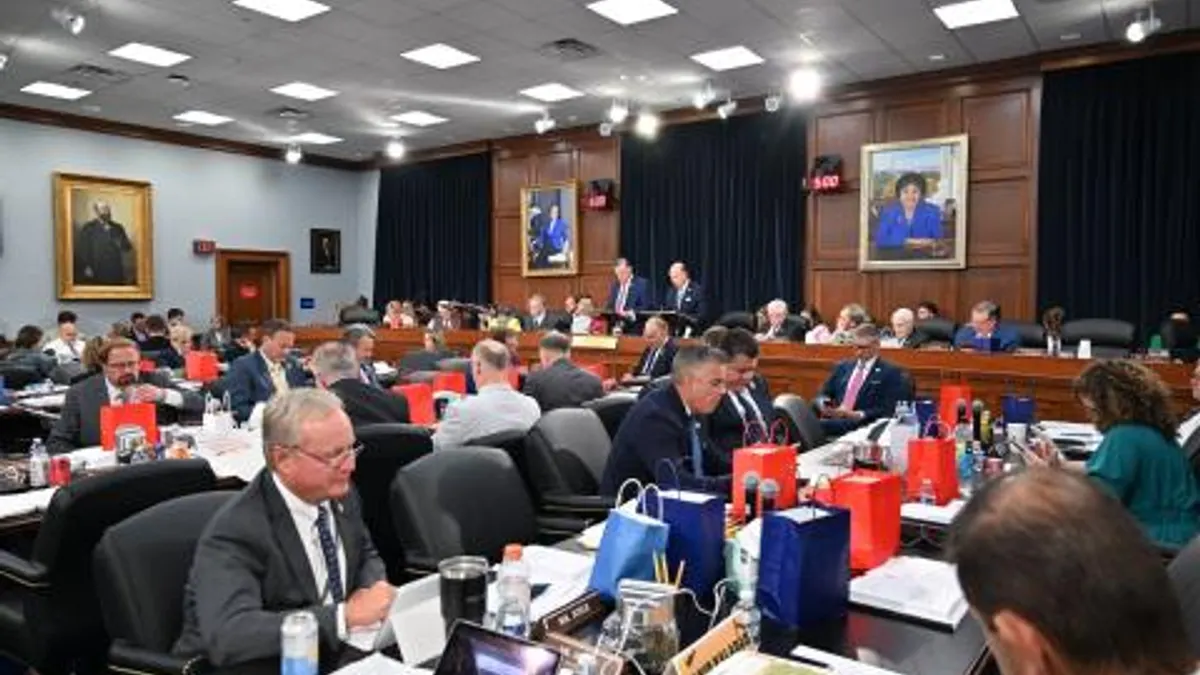
The U.S. Department of Education would see a 10% cut in funding for fiscal year 2027 with a funding reduction for low-income schools and a slight boost for special education spending, under a bill approved Tuesday by a Republican majority on the House Appropriations Committee.
The bill, which now heads to the full House, recommends $71 billion for the Education Department, down from $79 billion this fiscal year. The committee's proposed funding level is even lower than President Donald Trump's recommended $76.5 billion. But the panel rejected the Trump administration's proposal to eliminate and consolidate several IDEA national programs like teacher training and technical assistance.
For K-12, the legislation proposes $40.2 billion, a $4.6 billion cut compared to FY 2026, according to the committee's Democrats.
The bill, which also covers the U.S. Labor and Health and Human Services departments, strikes “a balance between physical stewardship and maintaining necessary investments," including for student supports, said Rep. Robert Aderholt, R-Ala., chair of the House Appropriations Subcommittee for Labor, Health and Human Services, Education, and Related Agencies.
Noting the nation's $40 trillion debt, Aderholt said, "We would be foolish to ignore discretionary spending reductions as part of the answer."
But Rep. Rosa DeLauro, D-Conn., ranking member of the Appropriations Committee, said the bill "undermines education." Its proposed cut to Title I funding for low-income schools would lead to 30,000 fewer teachers, DeLauro said.
"These cuts are an attempt to undo the progress we have made, to cut off access to these opportunities," DeLauro said. "It is a step down the path toward eliminating public education."
For specific K-12 programs, the bill recommends:
- $16.5 billion for Title I funding for low-income schools and districts, a decrease of nearly $2 billion from fiscal year 2026.
- $15.5 billion for special education programs under the Individuals with Disabilities Education Act, an increase of $46 million.
- Elimination of funding of the Office of English Language Acquisition, which got $890 million in FY26.
- $500 million for charter schools, a $60 million increase.
- $1.5 billion for career and technical education state grants, an increase of $10 million.
- $40 million for the Innovative Approaches to Literacy program, a $10 million increase.
- Level-funding of $1.3 billion for 21st Century Community Learning Centers, which helps fund after-school and summer activities.
Additionally, the Appropriations Committee's bill would fund Head Start at $12.4 billion — or about $10 million above the FY26 level. The program, which serves children up to age 5 from low-income families, is overseen by the Health and Human Services Department.
The committee also suggests level funding for the Education Department's Office for Civil Rights at $140 million, an increase of $50 million over Trump's proposed budget.
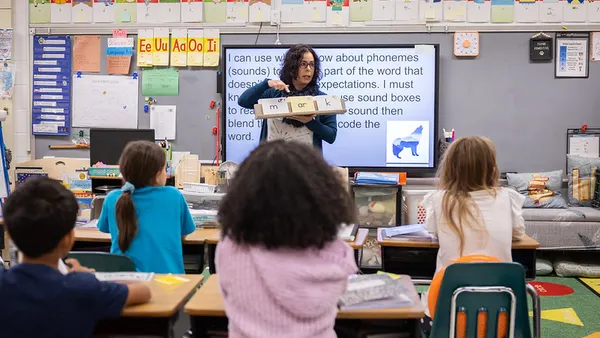
One of the most bipartisan K-12 efforts in the bill is a focus on reading and literacy.
Support came from both Republicans and Democrats to reinstate the National Reading Panel, which was convened in 1997 and concluded its work in 2000 after presenting a report to Congress. Under the bill, the panel would evaluate effectiveness of various approaches to teach children to read and present a report to Congress and the Education and HHS departments. As in the past, panelists would include reading researchers, representatives of colleges of education, reading teachers, administrators and parents.
"Over the last two decades that important work on literacy has really degraded, and it's come at a cost," said Rep. Josh Harder, D-Calif. "We have paid for that neglect." Harder said that students graduating from high school are scoring lower in literacy than "at any other time since we've been tracking records."
The Senate will take up its version of a Labor, Health and Human Services Education and Related Agencies FY27 appropriations bill in the coming months.
FY27 starts Oct. 1.
Correction: A previous version of this story had the incorrect proposed FY27 amount for Head Start funding. We have updated our story.