Public and private school advocates eager for details of the country's first private school choice program available nationwide will need to wait a bit longer — until the end of September, according to initial guidance issued by the U.S. Department of the Treasury on Wednesday.
In the meantime, the Treasury gave a preview of a proposed rule for the new federal scholarship tax credit enacted in the “One Big, Beautiful Bill” legislation approved nearly a year ago.
The preview was delivered Tuesday by Kevin Salinger, deputy assistant secretary for tax policy at the Treasury Department, during a roundtable discussion with scholarship-granting organizations, education representatives, technology providers, state representatives and other partners.
Salinger told the group that while the proposed regulation for the scholarship tax credit is undergoing legal reviews and will be released "no later than the end of September," scholarship-granting organizations, states and taxpayers will be able to refer to the proposed rule for tax year 2027.
The program becomes available to taxpayers Jan. 1, 2027, which is when they can begin to make charitable donations to be spent on K-12 services, including private school tuition and public school expenses.
Starting in 2027, taxpayers will be able to donate up to $1,700 annually to a scholarship-granting 501(c)(3) organization. They then would be eligible for a 100% federal income tax credit for their contributions. But only students living in a state that opts into the program will be eligible for a scholarship.
Although the program's rule is expected to give official guidance on how states can opt into the program, the IRS offered states an early opt-in process so states and scholarship-granting organizations can begin to make plans. More than half the states — 27 — said they wanted to participate as of April 15, according to the IRS.
A sneak peek at the proposed rule
Among the issues previewed by Salinger and summarized in a two-page document, were:
- What it means for a scholarship-granting organization to be "located in" a participating state. Those organizations can be listed on more than one participating state list of scholarship-granting organizations. States may not impose more stringent requirements on scholarship-granting organizations.
- What the program defines as a school. The proposed rule is expected to be inclusive of public, private and religious K-12 schools as determined under state law. A home school would be treated as a school in this program if state law recognizes the same.
- How scholarship-granting organizations can verify a student's income qualification for participation. Students could qualify to participate if their state opts into the program and if they are from a household with income no greater than 300% of the area’s median gross income. The IRS expects the proposed rule to allow scholarship-granting organizations to verify a student's eligibility in ways that are reliable but not burdensome.
- What educational expenses are covered by the program. The IRS said it intends that the scholarships could be used to support "additive academic tutoring and special needs services," in addition to private school tuition and public school expenses.
“At Treasury, we take seriously the work of implementing this federal tax credit faithfully and effectively," said Treasury Secretary Scott Bessent, in a Wednesday statement. "We are committed to providing certainty to states, scholarship-granting organizations, taxpayers, and families alike, as well as making certain that this process is easy to navigate.”
Support and opposition
Even as the federal scholarship tax credit program is advancing through the formal rulemaking process, the program is drawing strong support and opposition.
Proponents of the program said they were grateful for the guidance released this week.
"For millions of families across the country, this program represents a once-in-a-generation opportunity to access educational options and resources that best meet their children's needs," said Anne Lesser, president and CEO of Invest in Education Coalition, in a Wednesday statement. The Invest in Education Coalition is a nonprofit supportive of school choice.
Norton Rainey, CEO of ACE Scholarships, a national scholarship-granting organization, said in a Wednesday statement that he is "encouraged" by the new guidance and that he hopes "final regulations provide a clear, consistent framework that removes unnecessary barriers for families and SGOs. The more streamlined and predictable the process is, the greater the program’s impact will be for students in every learning environment."
Organizations, educators and lawmakers opposing the scholarship tax credit say the program initiated under the Trump administration is an effort to undermine public schools and will harm students who rely on public school supports.
Augustus Mays, vice president of partnerships and engagement at EdTrust, said the nonprofit is concerned about several aspects of the scholarship tax credit program, including a lack of accountability for student outcomes and a lack of authority states would have to ensure the taxpayer-generated scholarships are directed toward students most in need of support.
"The majority of our school leaders and educators in public systems want to make sure that what they're doing is actually benefiting kids. This program is not set up that way," Mays said.
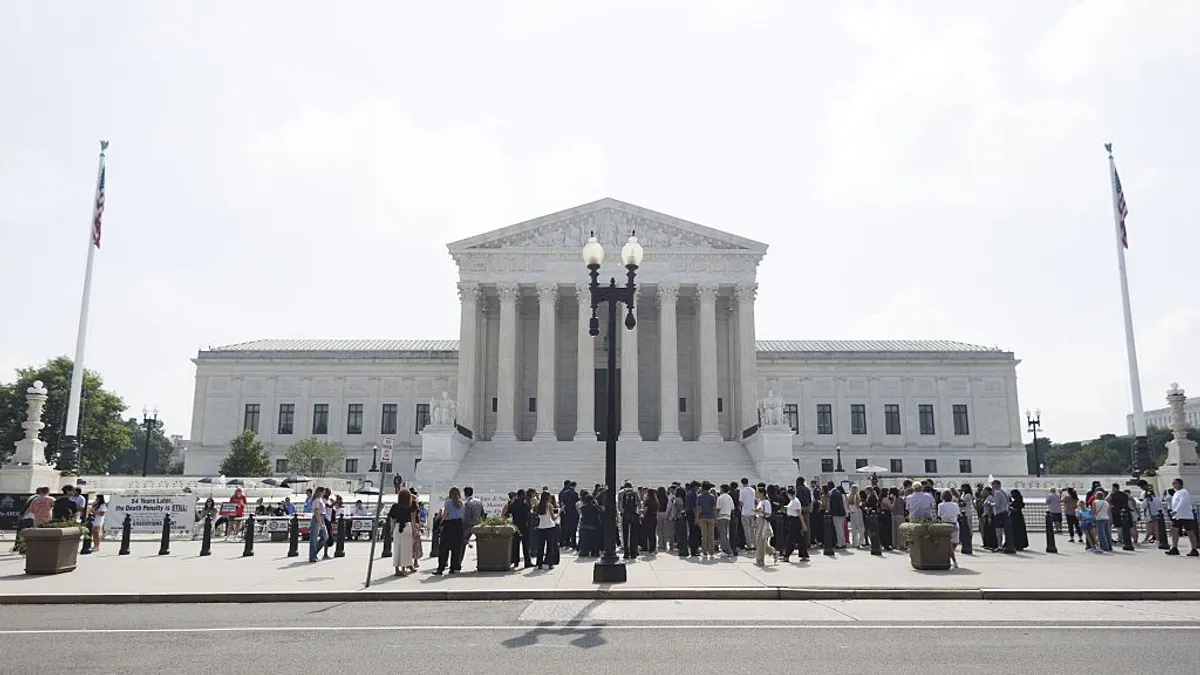
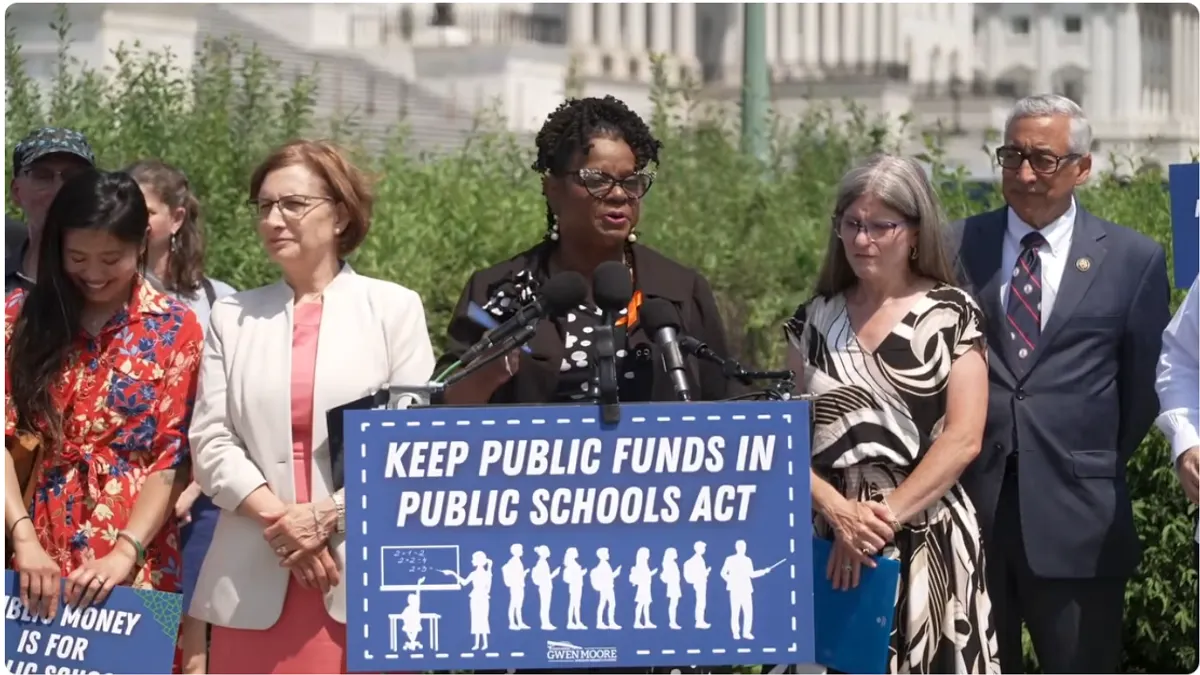
Rep. Gwen Moore, D-Wis., introduced a bill titled "Keep Public Funds in Public Schools Act" in Congress on Thursday that aims to repeal the scholarship tax credit provision. At a press conference in Washington, D.C., that same day, Moore called the program a "voucher scheme" that would disproportionately benefit wealthy students who already attend private schools.
"Your tax dollars should not go to fund private religious schools, who can pick and choose who they want to admit — no disabled students, no LGBTQ students, no Black students, no students who are not of a certain religion," Moore said. "We need to be investing in schools that serve the majority of America's students and ones that accept every student regardless of their ZIP code."