Most-clicked story of the week:
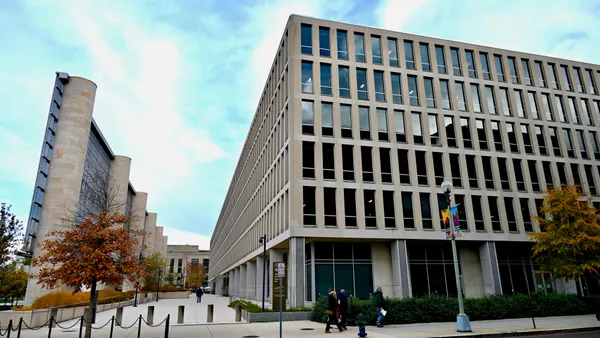
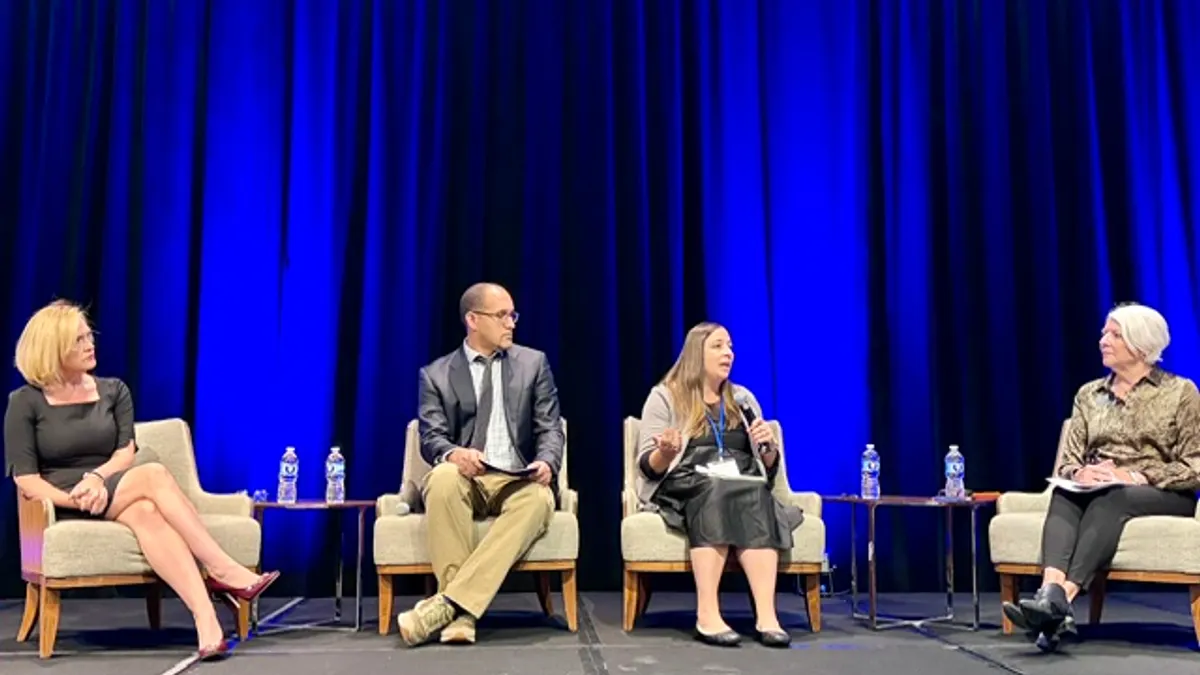
At the Special Education Legislative Summit on July 20, several former officials from the U.S. Department of Education told attendees that the Trump administration’s efforts to shrink the department by transferring core responsibilities to other federal agencies is raising concerns about special education funding, policy, accountability and coordination with other K-12 services.
Transferring federal K-12 programs to different agencies could, for instance, make it more difficult for districts and states to comply with federal education laws that impact services for students, said Meghan Whittaker, a former chief of staff in the Education Department’s Office of Special Education and Rehabilitative Services.
School districts with consistently high absenteeism rates were about this much further from math achievement recovery than those that never experienced high absenteeism during the COVID-19 pandemic, according to an analysis from NWEA, a testing and research company. Additional findings from the American Enterprise Institute also suggest that these chronic absenteeism levels are not falling fast enough, and that the long-term baseline could become about half the level of pandemic-related absenteeism increases.
High-impact proposals advance in Congress
- The Senate Health, Education, Labor and Pensions Committee will consider two newly proposed bills that aim to block the Education Department from outsourcing programs to other federal agencies. One bill — sponsored by Sens. Tim Kaine, D-Va., Susan Collins, R-Maine, and Lisa Murkowski, R-Alaska — would bar the agency from transferring offices that oversee special education, postsecondary education, elementary and secondary education, and Native American education programs. The other, proposed by Sen. Bill Cassidy, R-La., would prevent special education programming from being moved to the U.S. Department of Health and Human Services.
- The House Education and Workforce Committee advanced four bills that would impact schools if passed — including a proposal to codify Title IX’s definition of “sex” as biological sex. The other three proposals include requiring an option for parents to opt their children out of school-issued surveys or evaluations, allowing the use of federal education funds to train students and teachers on safe and effective artificial intelligence use, and reviving the Presidential Fitness Test.
School operations updates
- A recent Rand Corp. survey finds budget shortfalls and declining enrollment are the two most common challenges school district leaders are grappling with. Some 54% reported struggling with budget shortages, while 36% were vexed by declining enrollment in spring 2026. Some 40% of districts said strategies they’re considering to combat the latter issue include marketing campaigns that promote the benefits of public schools, while a third are weighing expanded pre-K options to attract families early.
- Federal school meal reimbursement rates will edge up 3.54% for the upcoming school year compared to 2025-26, according to a U.S. Department of Agriculture announcement. The updated reimbursement rates issued also cover the Special Milk Program for Children and the Afterschool Snack Payments in Afterschool Care Programs. They apply to the period from July 1, 2026, through June 30, 2027.
- As school building systems become more digitally entwined and always online, they’re a key point of vulnerability that facility managers must contend with. According to Consortium for School Networking CEO Keith Krueger, bad actors are using security weak points in buildings’ HVAC or other systems to get access to valuable institutional data on schools’ networks. Among other things, Krueger advises school facility managers to partner with district technology officers to understand these fast-changing security needs.