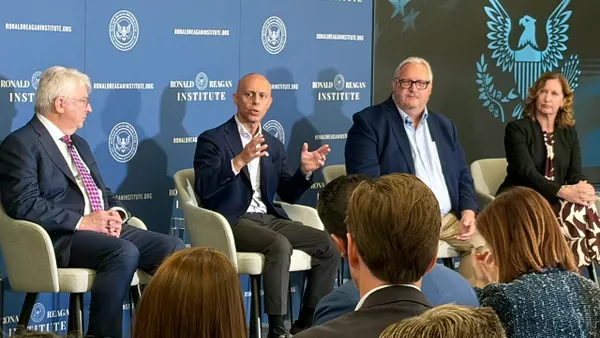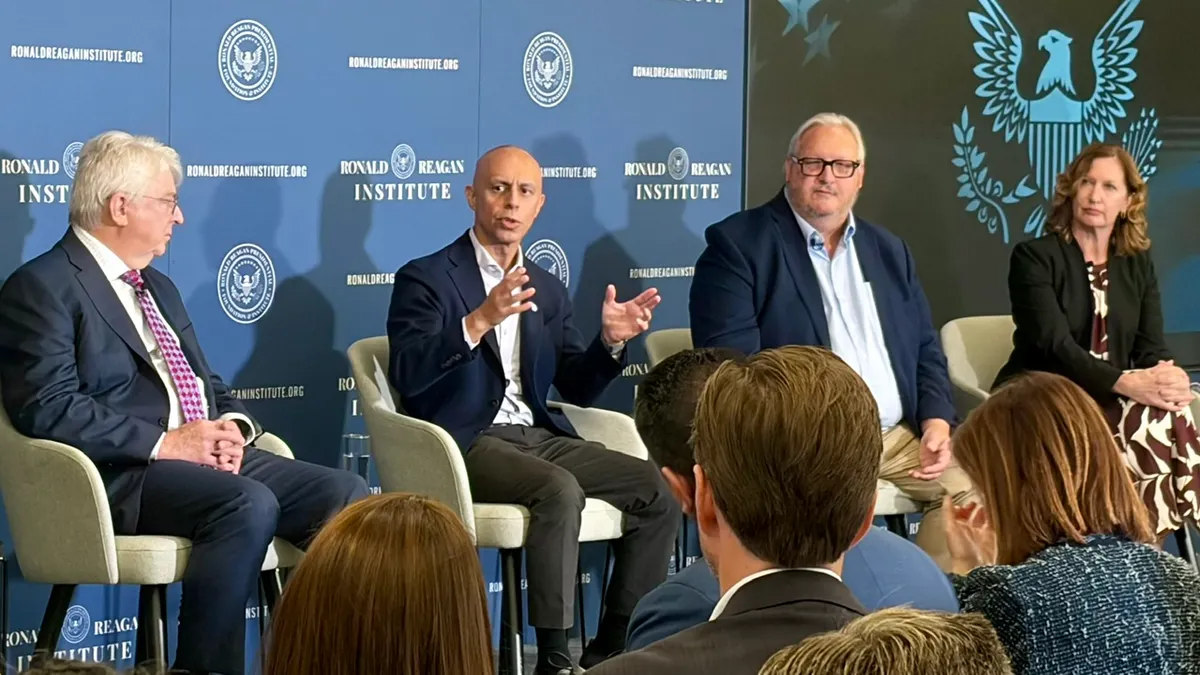
WASHINGTON — Education in the U.S. is at a pivotal moment: While there are opportunities for reforms that improve student outcomes, there are also challenges for equitable access to quality schools, pressures to innovate and potential risks from artificial intelligence, said panelists during two Thursday morning sessions at the Reagan Institute Summit on Education.
Several panelists speaking during a session about the state of education amid the nation's 250th anniversary said they are optimistic that an evolving U.S. education system is helping to prepare students for success in college, career and as community-minded citizens.
"I think we have a generation of young people that I see every day in our K-12 system that are very interested in giving to their community," said Kirsten Baesler, assistant secretary of the U.S. Department of Education's Office of Elementary and Secondary Education. Baesler said that when she visits schools she sees students who have a "greater sense of purpose and responsibility that they know that they're shouldering."
She added that to get the most out of a K-12 education, students need to put in the work. "Attendance matters. Effort matters. All of those things matter, and it shouldn't be an easy pathway to achieve the American dream."
Baesler said that school systems need to have quality teachers and opportunities for inquiry, debate and discourse to help students thrive. They also can't continue operating on a one-size-fits-all model.
"It’s, I think, horribly narrow for us to think that one model of education — the 50-minute class time — is going to serve 54 million children," she said.
Stephen Moret, president and CEO of Strada Education Foundation, emphasized that educational opportunities should be attainable for all students. "I think what our public and our policymakers are increasingly demanding today is that education should deliver more consistently on its commitment to providing pathways to opportunity for all Americans," Moret said.
The Strada Education Foundation is a nonprofit that supports the connection between education and carers.
When it comes to AI's influence on the future of jobs, Moret said he was hopeful.
"I do think AI involves a lot of risk. It involves a lot of important public policy issues and how we sort of manage this technology, but I think human ingenuity is going to win at the end of the day, and I think we're going to do more good with it," he said.
Baesler also voiced cautious optimism. "I don't think we should be threatened by it, but I do think we should take it seriously and understand our responsibility as society," she said.
Giving families school choice
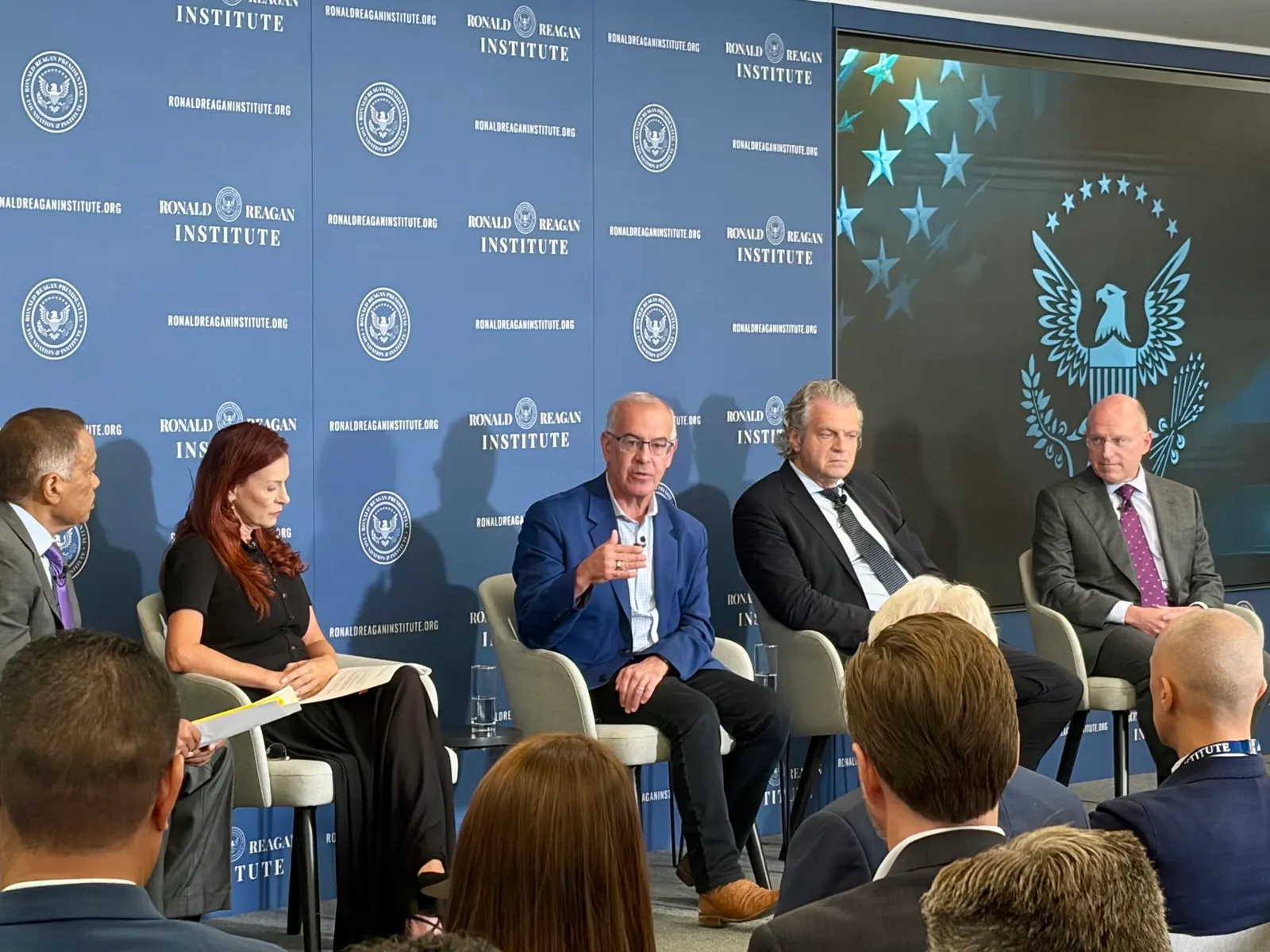
A separate panel at the summit delved into the benefits of expanding school choice for families — along with some words of caution.
All the panelists agreed that the growth of schooling options such as public school choice, private school choice and other models like microschools over the past 30 years has been a positive development in U.S. education.
There are now 75 private school choice options operating in 34 states, plus the District of Columbia and Puerto Rico, said Robert Enlow, president and CEO of EdChoice, a nonprofit that supports private school choice options.
Additionally, a new federal school choice program set to launch next year will allow taxpayers to donate — in return for a federal tax credit — to scholarship-granting 501(c)(3) organizations that would manage and distribute the student scholarships for public and private school students, as well as those being homeschooled.
Jim Blew, an advisor to the Federal Scholarship Tax Credit Coalition, said that a marker of a good school choice system is that families have information about their child's educational options and that schools are accountable to families for its performance.
Jorge Elorza, CEO of Democrats for Education Reform, said the school choice movement is helping to empower families and spur improvements.
"It does introduce a healthy level of competition," said Elorza. "It creates a system that is more student-centered, creates a system that's more innovation-serving, creates a system that's more simple to adapt to the changing needs of society."
However, the panelists also said school choice access and outcomes vary by states and districts across the country. Several panelists noted that having school choice programs doesn't guarantee good schools and that quality instruction and evidence-based practices are core features of any school option.
"The thing about choice is it's risk and opportunity, and it's up to us to design to maximize the opportunity and minimize the risk," said Robin Lake, director of the Center on Reinventing Public Education. "I think the most important thing for state leaders to think about right now is to listen to families and to students about what they want, what they are missing, and try to respond to that."
While school choice has a lot of potential, Lake said there needs to be recognition that many families will opt to enroll or stay in their neighborhood public schools. "We have to recognize that districts are not going to magically vanish," she said.