Lessons In Leadership is an ongoing series in which K-12 principals and superintendents share their best practices as well as challenges overcome.
The Clark County School District covers a nearly 7,900-square-mile stretch of Southern Nevada that includes Las Vegas, two U.S. Air Force bases and a variety of urban, suburban and rural communities. As such, the nation’s fifth-largest school system has access to partners in a wide range of industries.
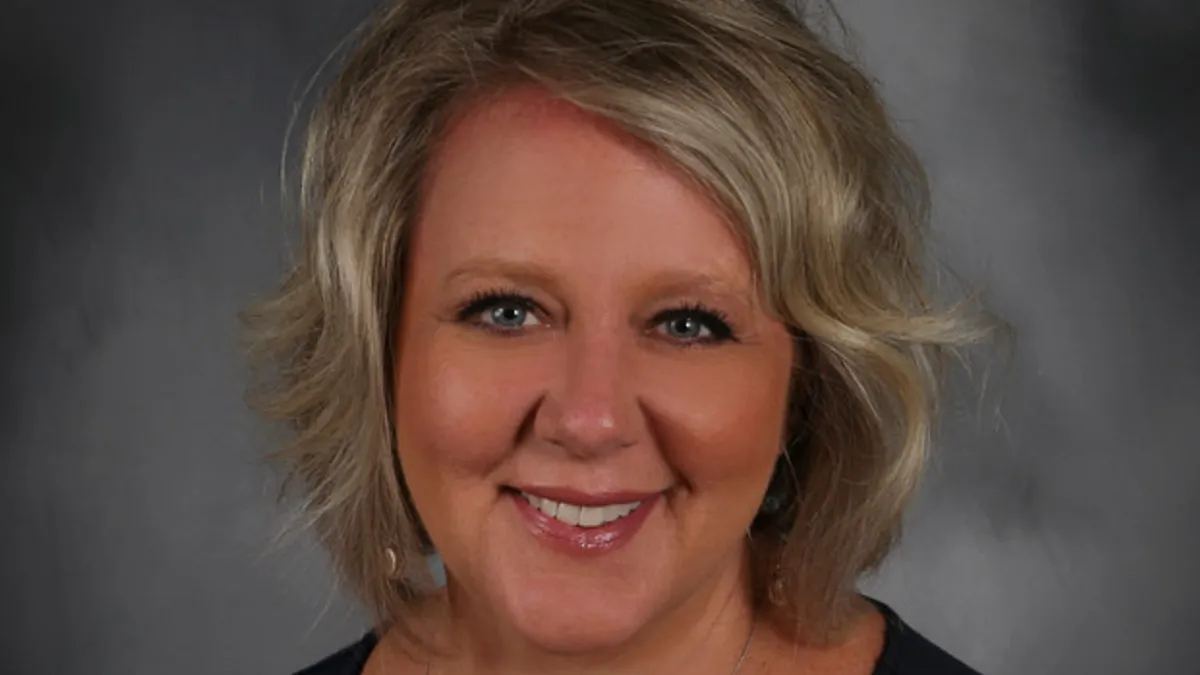
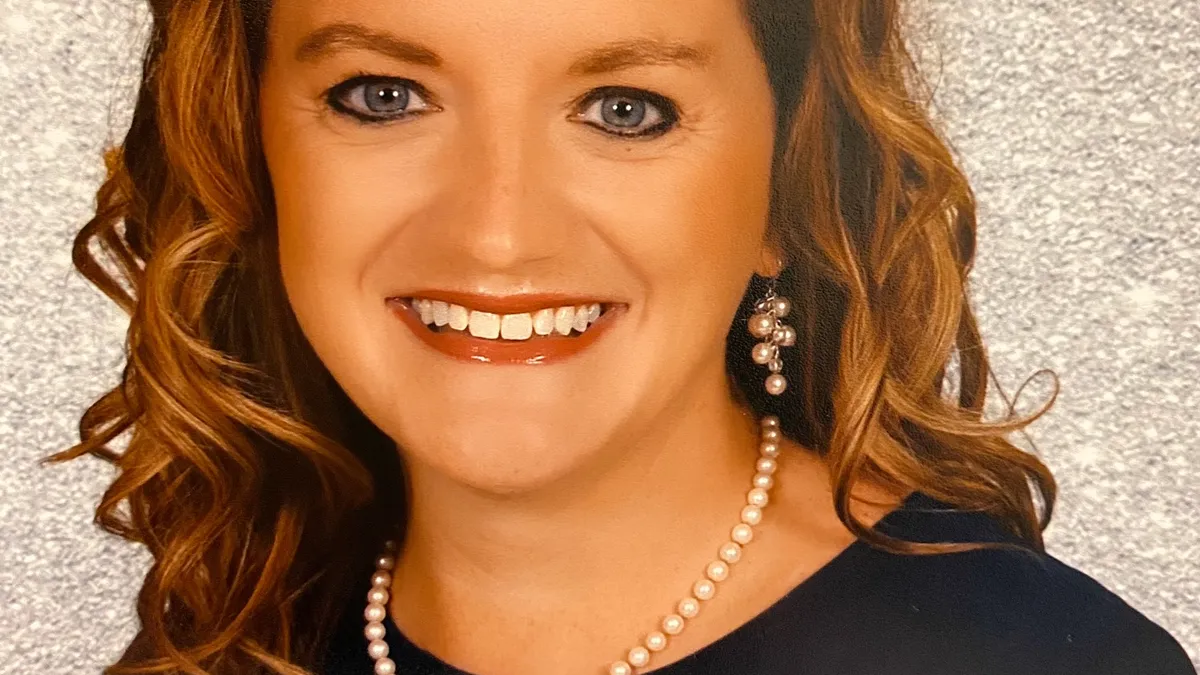
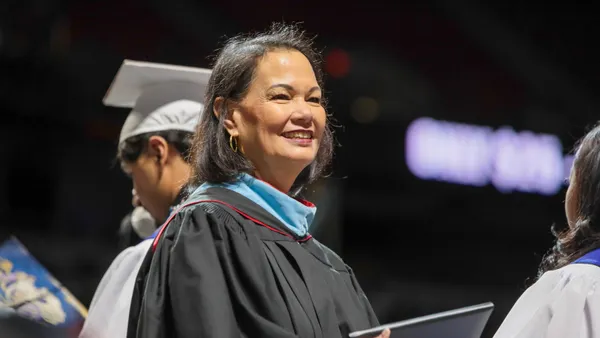
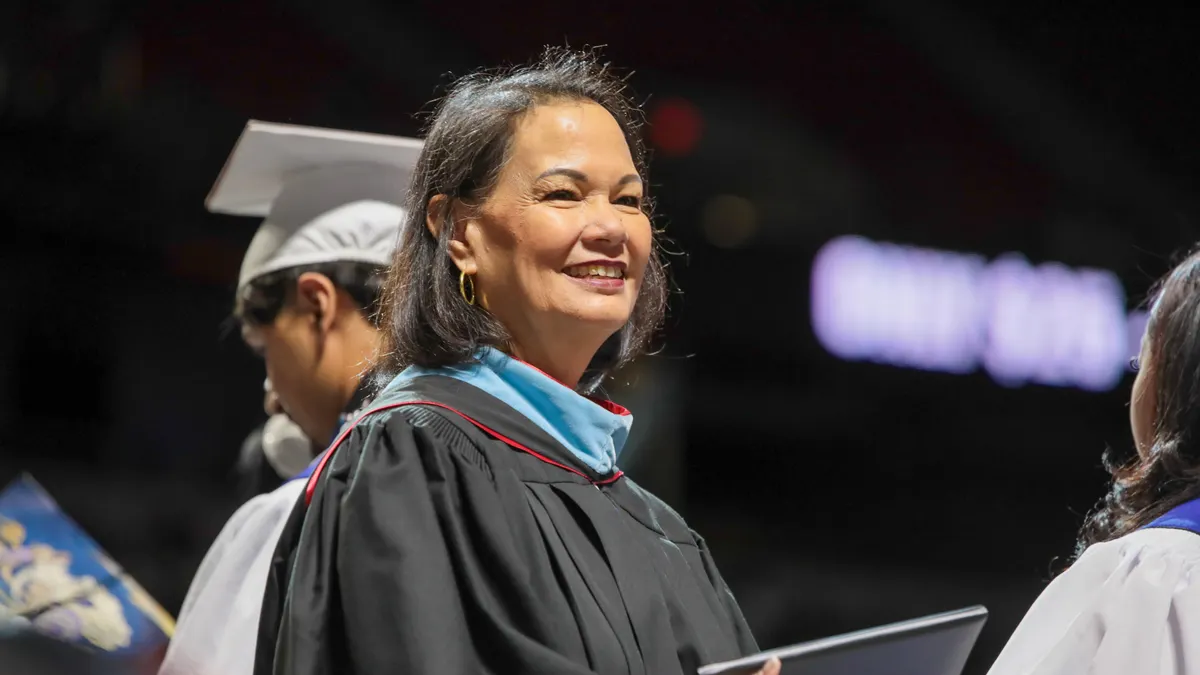
Under Superintendent Jhone Ebert, it is capitalizing on that access to equip the 370-school district’s 280,000 students — who account for about 63% of the state’s public school students overall — with career-connected learning opportunities.
Ebert spent the first 25 years of her career in Clark County, rising from a math teacher to the district’s chief innovation and productivity officer, before taking a role in 2015 as senior deputy commissioner for education policy with the New York State Department of Education. In 2019, she returned to Nevada to serve as the state’s superintendent of public instruction — a role she held until taking the reins in Clark County in 2025.
K-12 Dive recently caught up with Ebert to learn about the five-year strategic plan for Clark County, which was released in May, the district’s goal to have every student graduate with a “marketable asset” by 2031, and how the school system markets itself in an increasingly competitive K-12 landscape.
Editor’s note: The following interview has been edited for brevity and clarity.
K-12 DIVE: What led to the development of Clark County School District’s five-year plan, and what was that process like?
JHONE EBERT: The prior plan, when I came in, had already expired in 2024. So it was perfect timing to jump in.
We had over 30,000 students participate in a survey and face-to-face components. I invited people that have moved here to Southern Nevada to retire — they've never had any children in the Clark County School District — to participate. I invited private school parents and homeschool parents to participate.
And we had 48,000 people participate online in over 130 languages, so that was exciting. There were only two questions:
- “If you could have what you want, what would you have?”
- “What is it that the Clark County School District needs to do better?”
People would write things like, “The district needs more funding.” I appreciate that, but what was really exciting is the AI [artificial intelligence] that we used with this would then prompt the person filling out the survey, “OK, what would the funding be used for?”
Part of that plan is for every graduate to leave with a marketable asset by 2031. What does that look like?
EBERT: It was so fascinating to sit with business partners who really want to support the Clark County School District, and they want to see our students graduate with durable skills. They want to see the collaboration. They want to see communication and civic engagement. They want our children to be part of the community and to make sure that the students make a purposeful impact.
What we want to do is have them leave with a marketable asset.
[If they’re going on to college,] they either have AP [Advanced Placement] courses or dual-credit courses under their belts. They know they're going on to higher education — whether it be community college, directly into a four-year institution, or maybe even to career and technical school.
We have 100,000 jobs that are available today in Southern Nevada. We have jobs that are available, and some of them are high-skill, high-wage positions. We cannot find enough HVAC [technicians]. We cannot find enough plumbers or carpenters.
We have our students working on the A’s stadium. They're working alongside the carpenters union. We have students who are working alongside our HVAC technicians here in the Clark County School District, and we just hired some of them right when they graduated.
We’re making sure our students gain those practical experiences in high school and they're ready to go right into the workforce.
Another area where we thrive in Southern Nevada is the military. We have 23 or 24 ROTC programs.
And then last but not least: portfolios. We want to make sure if students are maybe not quite sure [of their pathway], they leave with a portfolio — a body of work that they have accomplished in high school, that they could share right out of high school, and do an internship or higher education or go directly into the workforce.
You mentioned when you were developing the five-year plan, you involved private school parents and homeschool parents. With the increase in competition that public schools have from school choice programs, do you also see that as an opportunity for Clark County School District to market what it has available to those families?
EBERT: Yes, 100%. To your point: It is competition.
There didn't used to be as many charter schools in Southern Nevada. In fact, when I left in 2015, I think there were only maybe six. Now, there's a lot more than that.
There's about 50,000 children in Southern Nevada who participate in schools other than the Clark County School District. So with that in mind, we’re making sure that we're very clear on what we do.
We have world-class magnet school programs, our fine and performing arts programs — I mean, the fact that these students are able to go back-of-house at the Las Vegas Strip. Some of them want to go into tech theater — they just want to help with all the amazing things like, “How did you turn that floor into a 40-ton swimming pool in 60 seconds?”
I believe in parents making the choice with their child, and I want their first choice to be the Clark County School District. We have got 100% open enrollment, so the entire school district is open to choice now. And we actually received a grant from the state Department of Education to provide families with up to about $1,500 per family for the year for gas to transport their child from one school that may be a 1- or 2-star school to a 3-, 4- or 5-star school.
So it's finding the right placement — whether it's academics or athletics or fine and performing arts. Choice is within the Clark County School District.