Pressure on the U.S. Department of Education over its decision to lay off half its staff and gut many of its offices is mounting, with states and former Education Department employees claiming the agency bungled the reduction in force that took place last year.
Led by New York, more than 20 states and the District of Columbia sued the Education Department last year in the wake of the layoffs said in a new court document — filed Sept. 14 as part of New York v. McMahon — that the department is withholding over 1,000 documents related to how the RIFs were planned and carried out. As part of the litigation's discovery process, the department identified 1,212 documents, out of which approximately 1,072 were allegedly withheld in June.
This information comes as part of the Sept. 14 court motion filed by the states hoping to compel the department to produce documents.
The Education Department continued to withhold hundreds of documents — such as memoranda, worksheets and communications — into August, saying the internal agency documents were "privileged," the states claim. One document titled "RIF Brief," for example, was authored and dated five days prior to the layoffs on March 11, 2025.
"These materials are central to understanding the decision making behind Defendants’ unlawful dismantling of the Department — the very discovery the Court ordered in February," the suing states said in their motion.
In February, U. S. District Court Judge Myong Joun required the department to provide information "sufficient to aid the court in understanding the Agency’s decision-making" and comply with the states' requests for information, as long as those requests were "narrowly tailored toward understanding the true reason behind the RIF." The order also required the department to produce a list of employees affected by the terminations.
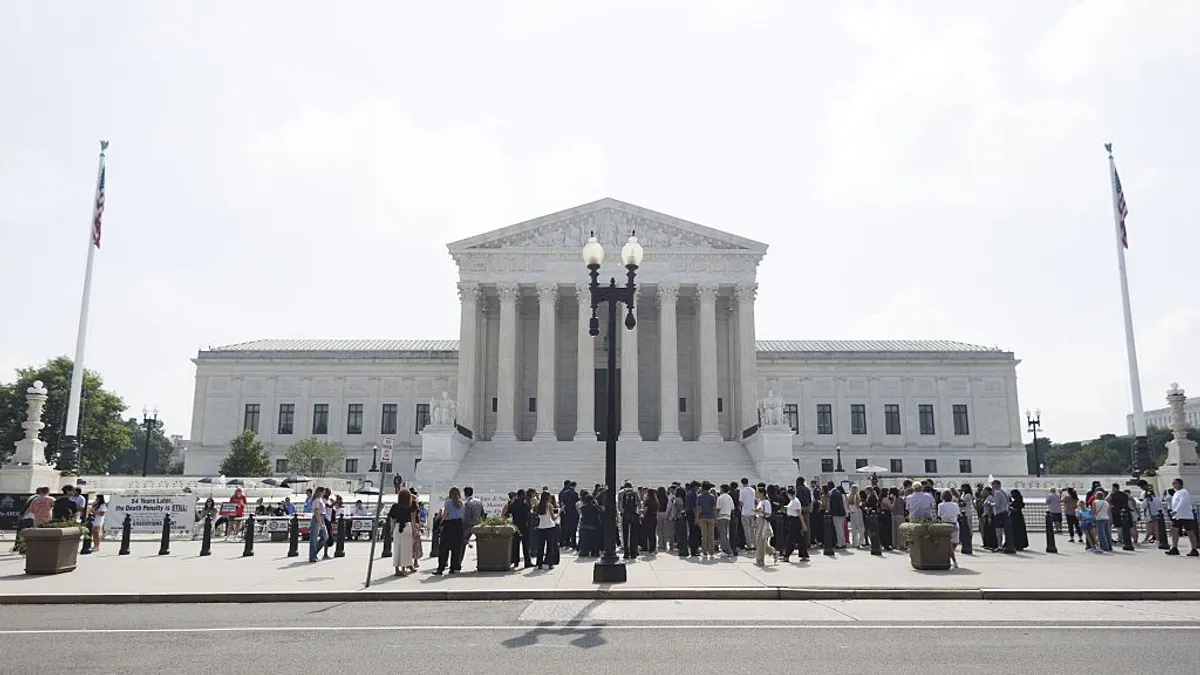
Joun also last year temporarily paused the RIFs as part of New York v. McMahon, but the pause was eventually appealed to the U.S. Supreme Court and overturned in July 2025, with the high court letting the RIFs through.
"The Department of Education’s reduction in force (RIF) was implemented carefully and in compliance with all applicable regulations and laws," said an Education Department spokesperson in a Sept. 15 email to K-12 Dive. "We will continue our work to return education to the states and improve outcomes for our nation’s students.”
Requests to investigate 'cost and impact'
As the department wades its way through that lawsuit and others resulting from the layoffs, former Democratic education secretaries and the union representing current and former Education Department employees are asking the agency’s acting inspector general "to investigate the cost and impact" of the RIFs.
They also requested that "subsequent reinstatements and rehiring of hundreds of employees" be investigated, according to a letter dated Sept. 15 to Acting Inspector General Mark Priebe.
Between September 2025 and May 2026, the letter said, 114 open roles were posted by the department, some of which have position descriptions "that are nearly identical to those of RIFed employees." In the meantime, the department has contracted out some of its work to law firms and other government contractors, including work involving civil rights investigations, the letter said.
Over the course of the last year, the Education Department has announced 14 interagency agreements, in which it has partnered with other federal agencies like the U.S. Departments of Justice and Health and Human Services to carry out many of its key responsibilities that were previously tasked to the now-terminated Education Department staff.
"Clearly, the Department cut positions during the RIF that conducted statutorily required work, and the American people deserve to understand the cost to replace those positions, rather than reinstate fired workers as is required by federal law and regulations," said AFGE Local 252 President Rachel Gittleman and former U.S. education secretaries Arne Duncan, John B. King Jr., and Miguel Cardona in their letter. "The Agency has wasted an exorbitant amount of taxpayer money on actions that it knew, or should have known, were illegal. This is waste."
In their Sept. 15 statement, the Education Department spokesperson said, “It’s interesting that the Education Secretaries who brought you the failures of Common Core, the botched FAFSA rollout, and a campaign to redefine 'boy' and 'girl' are concerned about the Trump Administration’s efforts to reform a demonstrably broken bureaucracy."
Government reports doubt RIF effectiveness
The Education Department’s layoffs have been repeatedly defended by the agency and the Trump administration as necessary in order to cut down on government waste and bureaucracy.
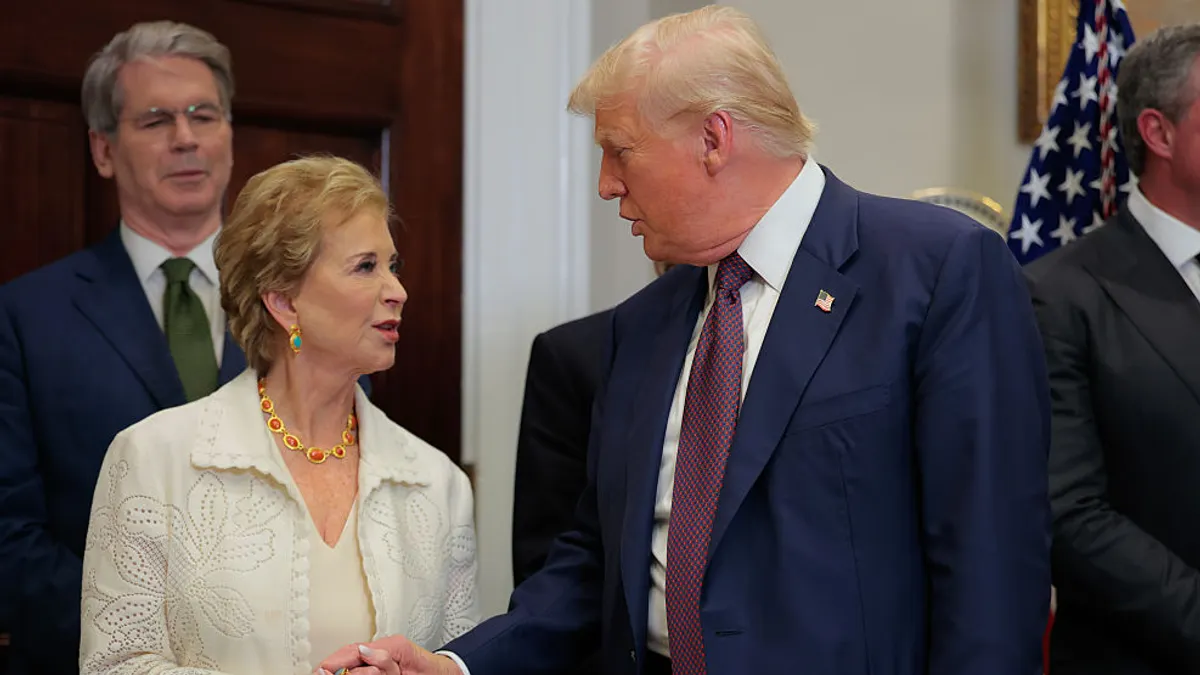
On her first day on the job in March 2025, Education Secretary Linda McMahon publicly said she was planning for the “historic overhaul” of the department as its “final mission.”
“Closing the Department does not mean cutting off funds from those who depend on them — we will continue to support K-12 students, students with special needs, college student borrowers, and others who rely on essential programs,” said McMahon in a March 2025 statement praising a Trump executive order requiring the closure of the department to the "maximum extent appropriate."
What followed were at least two rounds of layoffs, up to $1 billion or more in cancelled grant funding for states and districts, and a slew of lawsuits in response to those decisions that many — including states, civil rights groups, districts and others — are calling unlawful.
The department has repeatedly assured lawmakers and others that it would fulfill its statutory obligations and is operating within the bounds of the law.
But last year, when pressed by lawmakers, McMahon said “no” analysis was conducted about how the firings would impact the agency’s functions or how it would continue its statutorily required responsibilities without much of its staff. The department did read “training manuals and things of that nature” prior to the layoffs, she said.
Yet several laid-off staffers told K-12 Dive that they were never spoken to about how their responsibilities would continue to be fulfilled after their departure.
A report released by the Education Department's Office of Inspector General in June said that staffing reductions in the agency appear to have impacted units that were performing legal duties, such as conducting monitoring and oversight.
In February, a Government Accountability Office report also found that the Education Department spent nearly $1 million per week on salaries for civil rights enforcement staff it had put on administrative leave beginning in March 2025. By December 2025, the department paid up to $38 million in total salaries for those staff members who worked for the department's Office for Civil Rights.
The GAO report concluded that the department “lacks reasonable assurance that its actions achieved the stated goal of reforming the federal workforce to maximize efficiency and productivity, including whether such actions saved taxpayer dollars” and that it “cannot ensure that OCR improved service to the American people.”