Most-clicked story of the week:
All 50 states now have a registered teacher apprenticeship program in place with the U.S. Department of Labor. And programs geared toward helping apprentices earn a teaching degree have been launched in 44 states and the District of Columbia, according to Amaya Garcia, director of pre-K-12 research and practice in New America’s education policy program.
A report released this month by the nonprofit think tank and co-authored by Garcia found that education is the top occupation in the U.S. for degree-based apprenticeships, followed by nursing. Teacher apprenticeship programs have “really exploded” in recent years, she said.
The number of the nation’s 100 largest school districts without any fiscal red flags, such as carrying more debt than assets, according to a recent analysis by the Reason Foundation. The 100 large school districts averaged 2.4 red flags and had the worst financial performance at any government level examined by the Reason Foundation in its analysis. The report looked at states, counties and cities in addition to school districts.
New policies prioritizing student safety, parent rights
- The U.S. Department of Health and Human Services, in partnership with other federal agencies, said it is developing the first national alert system for missing children and adults with autism. The effort is aimed at helping with the problem of “elopement,” or when students wander away from schools. Roughly 53% of autism-related elopement fatalities in 2025 involved children ages 5-9, according to the National Autism Safety Council. Five elopement-related fatalities occurred in school settings.
- Project Safe Schools — a cross-agency collaboration among the U.S. Department of Justice, FBI, and other state and federal agencies — is working to halt the practice of “passing the trash,” or the hiring and concealment of sexual predators in schools, beginning with North Texas. Thus far, the initiative has resulted in criminal charges against two educators and over $14,000 in civil penalties in Forney Independent School District. Officials say the effort could eventually be scaled nationwide.
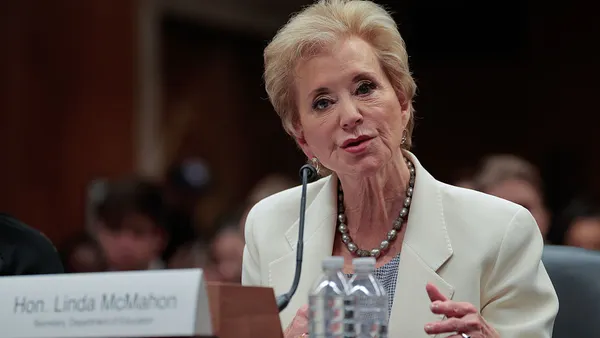
- In a Dear Colleague letter issued Aug. 26, the U.S. Department of Education told school districts it will consider all mental health screenings and other student surveys — such as those related to sex behavior or attitudes — to be “required” by a district even when presented as optional. As a result, these surveys, evaluations or analyses are subject to parental notification and consent procedures, the agency said. “Because an authority figure is on the other side of the survey, evaluation, or analysis, students also rarely feel the need to ask a parent to review or approve it beforehand.”
K-12 in the courts
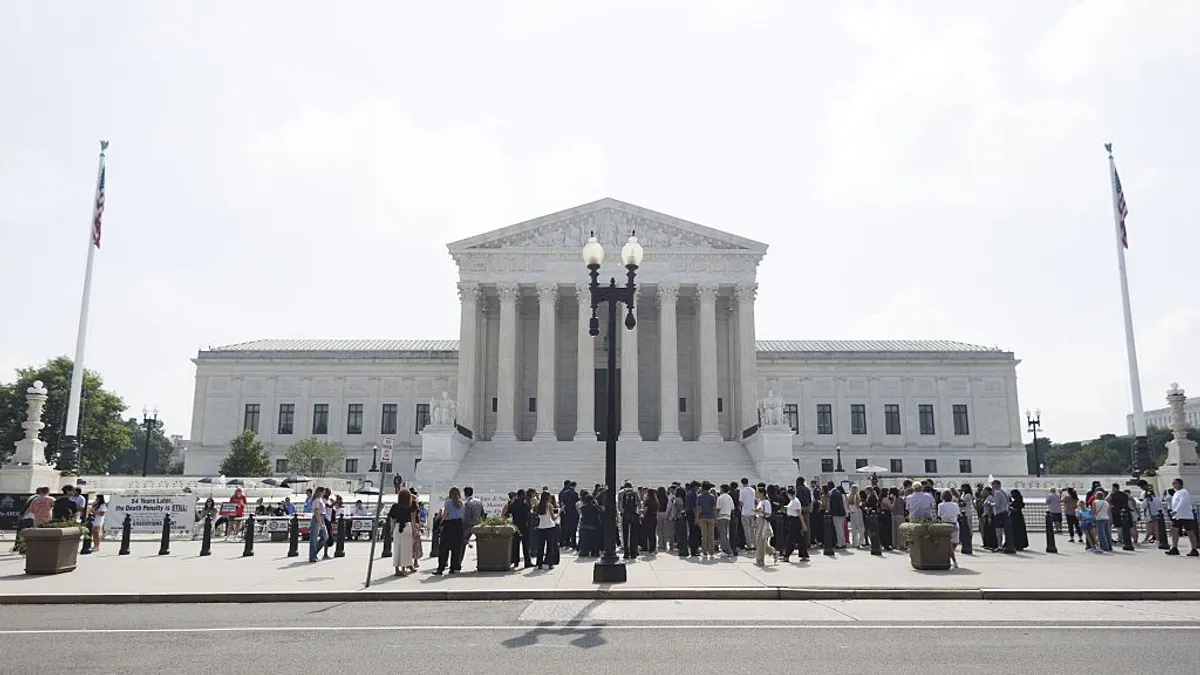
- The U.S. Supreme Court is being asked to consider during its October 2026 term whether state educational benefits extend to students attending private schools. Two Massachusetts families appealed their challenge to a state regulation that allows their private school children to access public school special education services, but only at a public school or “neutral” location. The families claim that the state’s policy punishes private school students, who they argue have a constitutional right to attend private schools but want access to publicly funded special education services.
- Pearson Education will pay $150,000 to settle a lawsuit brought by the U.S. Equal Employment Opportunity Commission over claims that the publishing giant violated the Americans with Disabilities Act. EEOC alleged the company failed to accommodate visually impaired employees in part by not providing benefits, leave and training platforms that were fully accessible. According to the complaint, vendor-provided platforms were incompatible with screen-reading software and exhibited other technical issues, hindering affected employees from accessing training and information readily available to non-visually impaired counterparts.