Lessons In Leadership is an ongoing series in which K-12 principals and superintendents share their best practices as well as challenges overcome.
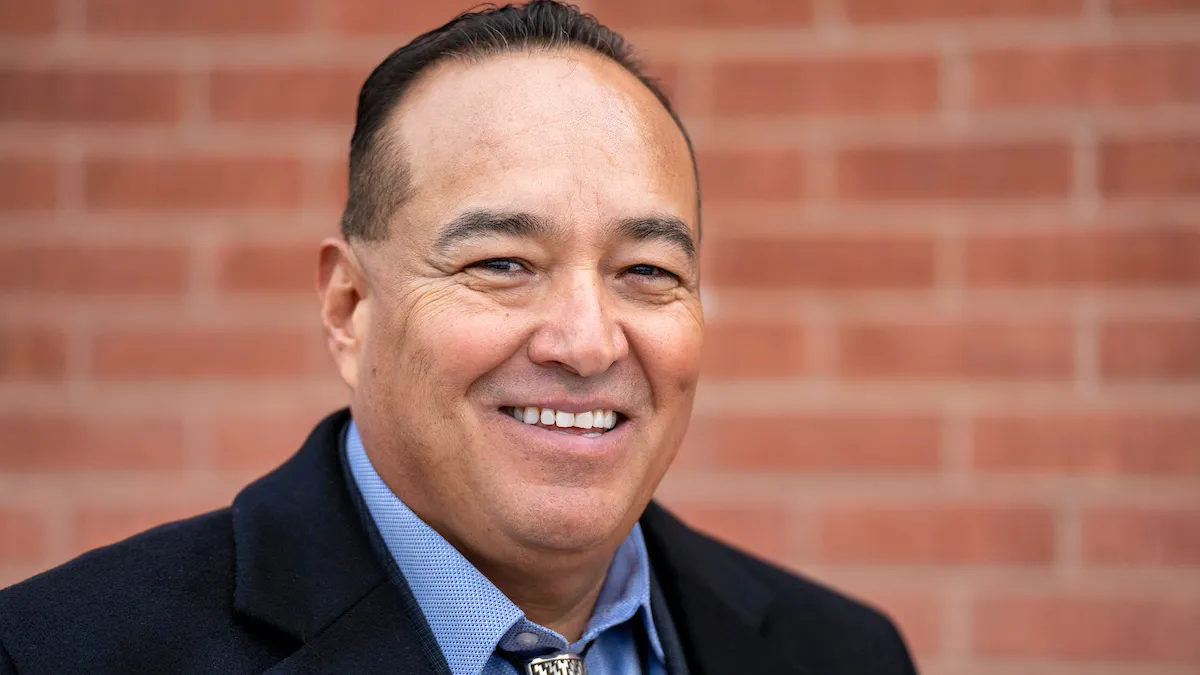
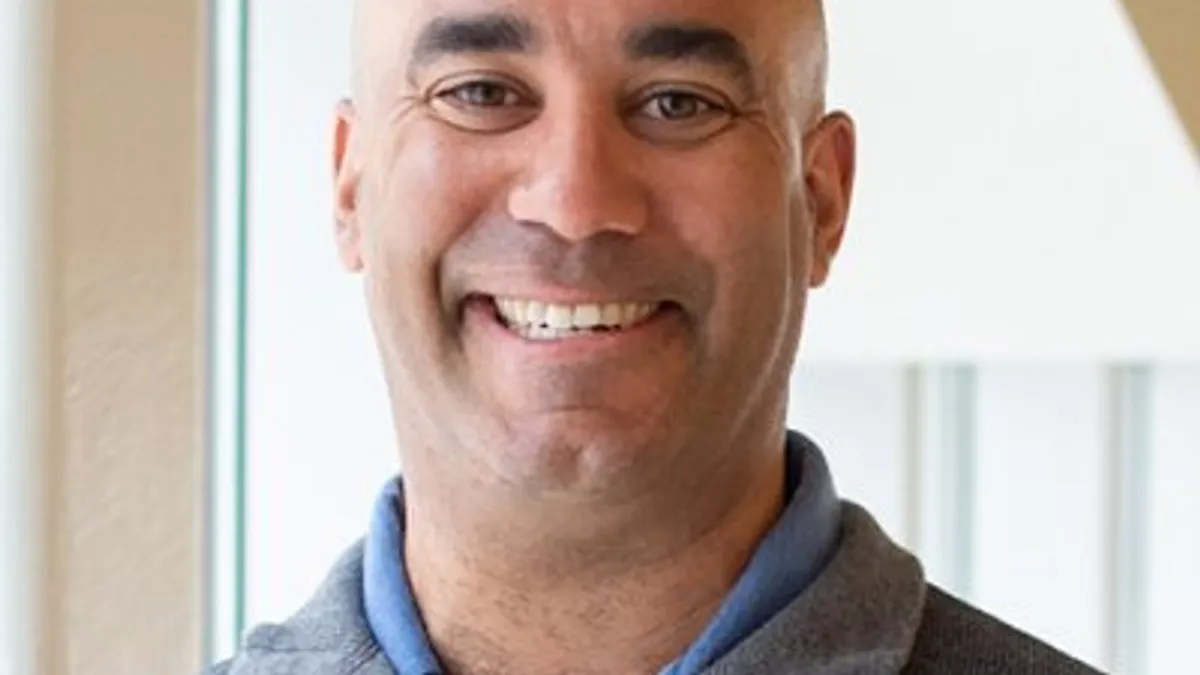
Before he became an educator, Jared Bloom was a “dot-commer,” working in various roles in the burgeoning internet-based business world of AOL, startups and tech staffing.

When the dot-com bubble burst, however, he found himself drawn to education. In 2000, he entered the classroom as an English teacher at Franklin K. Lane High School in New York City. Soon after, his prowess for writing grants and integrating technology led to administrative roles.
First came eight years as assistant superintendent of curriculum and instruction in New York’s South Huntington Union Free School District. Then he joined Franklin Square Union Free School District, also in New York, where he is now going on his eighth year as superintendent.
Bloom's career pathway has given him valuable insight, he says, as the 1,900-student pre-K-6 district integrates AI into learning with an approach that keeps humans and core skills first.
K-12 Dive recently caught up with Bloom to learn more about how Franklin Square UFSD is using AI tools, training educators on the technology, and navigating conversations about AI with parents.
[Editor’s Note: The following interview has been edited for brevity and clarity.]
K-12 DIVE: You're doing a lot as far as navigating the role of artificial intelligence in education. What are some of the approaches you've explored on that front?
JARED BLOOM: We adopted policies and procedures for how it could be used and when it should be used, and then we started to look at how, with our learners, we would want to use AI. It fits into a couple of different buckets.
One bucket is how teachers are using it in the classroom, and that is both in making their lives easier but also allowing us to target things in classrooms that we wouldn't be able to do as quickly. Differentiating with AI allows you to really customize things in a much faster way. And that allows you to move the dial for kids much faster.
Safety and security is No. 1 for us, so we're always making sure that, whatever we're doing, there is no personally identifiable information going into any AI we are using in the district.
And then the other bucket is tools that use AI to support learning in the classroom. We start to teach our students how to use AI in a meaningful way in a very “walled-off garden” tool that teachers completely control and monitor — and which allows us to see what they're doing and how they're doing it.
I'll give you an example of a library lesson I saw recently, where students were actually having “conversations” with famous individuals they were researching. If you have two or three students doing the same individual, and if they're getting different answers, which one's right?
So now, we have to go to primary sources to make sure we're verifying all of the information we're getting. But it really motivates you to learn about that person in a way that maybe you wouldn't have been motivated before, because it makes it a little bit more active. So we're looking for those opportunities.
“I think that is the wonderful thing AI can do. But again, we have to be really clear it does not replace great teachers ever.”

Jared Bloom
Superintendent, Franklin Square Union Free School District
The reason we're allowing students to have some level of exposure and making sure our parents understand what's going on is, No. 1, students are going to grow up in a world where it is going to be important to understand this and how to use it.
No. 2, we don't want to be in a situation where it's the social media crisis all over again. If we don't teach it, if we don't share about it, they're going to go home, they're going to use it, and they're not going to know how to use it in an appropriate way. We want to make sure we're providing those guidelines.
With the parental and community pushback that has been seen in some places across the U.S. in regard to AI, what are some particular ways you've navigated that in your district? And what would you recommend as far as approaches for other school leaders who are seeing pushback?
BLOOM: We have been transparent from the start. When we've used it, we’ve talked about it. It's in my newsletters. We do parent workshops. We talk about it at coffee with the superintendent.
We can't pretend it doesn't exist, so the first thing is just having conversations around what students are being exposed to both on the outside and in what we are going to, in an instructional way, help students to learn.
We're very careful at looking at our tools and our data and then cross-referencing that with other data. So when we look at these tools, we're able to share that what we're doing matters — and if it doesn't work, we're not going to use it anymore.
I think it's just being open to parents asking questions, because they want to know what we're doing and how we're doing it. Most of what we're seeing out there right now is just not understanding how schools are using these tools. And it's on us as a school district to make sure what we're saying is what we're actually doing, and make sure we are not compromising personally identifiable information.
What are some steps you've taken with educators to help them figure out how to integrate these tools into their classrooms?
BLOOM: We do a number of different things. We have a director of technology innovation and data systems who is very hands-on. We have a full-time technology coach who works with our teachers. We have, in each of our [three] buildings, “champions” or tech mentors who help at the grade level with technology and supporting our teachers.
We offer in-service courses for teachers, and we've had many go through those courses, whether it's becoming a Google educator or learning about AI. We have a number of online tools we allow teachers to use that offer courses, and then we offer professional development after school, during the school day and on superintendent conference days.
There are tremendous opportunities for our teachers to take advantage of in learning the various tools. Some are mandatory, some are optional. But so many of our teachers take advantage of the optional as well, because they want to learn, and they want to continue to grow.
When it comes to looking at AI not just as a tech trend but as a practical tool — both in the classroom and from an administrative perspective — are there any lessons you've learned from your previous experience with different ed tech products that you take to heart now?
BLOOM: I've been through a number of tech initiatives. Some have been incredibly successful. Some, there was quite a bit of pushback and took a lot of convincing. I've learned over the years you really have to listen to your team, and you have to appreciate where they're coming from.
Our teachers are the experts, and they know our kids better than any technology will ever know our kids. But if the technology is going to help them do their jobs better, if the technology is going to give them the data to drive instruction in a way they wouldn't be able to do as quickly, that's what we want.
I remember being an English teacher, and if I was going to teach a particular subject or topic and I had kids at all different levels, it would take me a week to pull four or five different passages at different levels.
Let's say with a writing assignment, now with the click of a button and some thought behind a prompt, you can do that in 20 minutes, sometimes even 10.
So I think that is the wonderful thing AI can do. But again, we have to be really clear it does not replace great teachers ever.