Dive Brief:
- A bipartisan bill introduced in the House on Wednesday seeks to prevent the transfer of four U.S. Department of Education offices to other federal agencies. Those Education Department offices lead activities for special education, postsecondary education, Native American education, and elementary and secondary education.
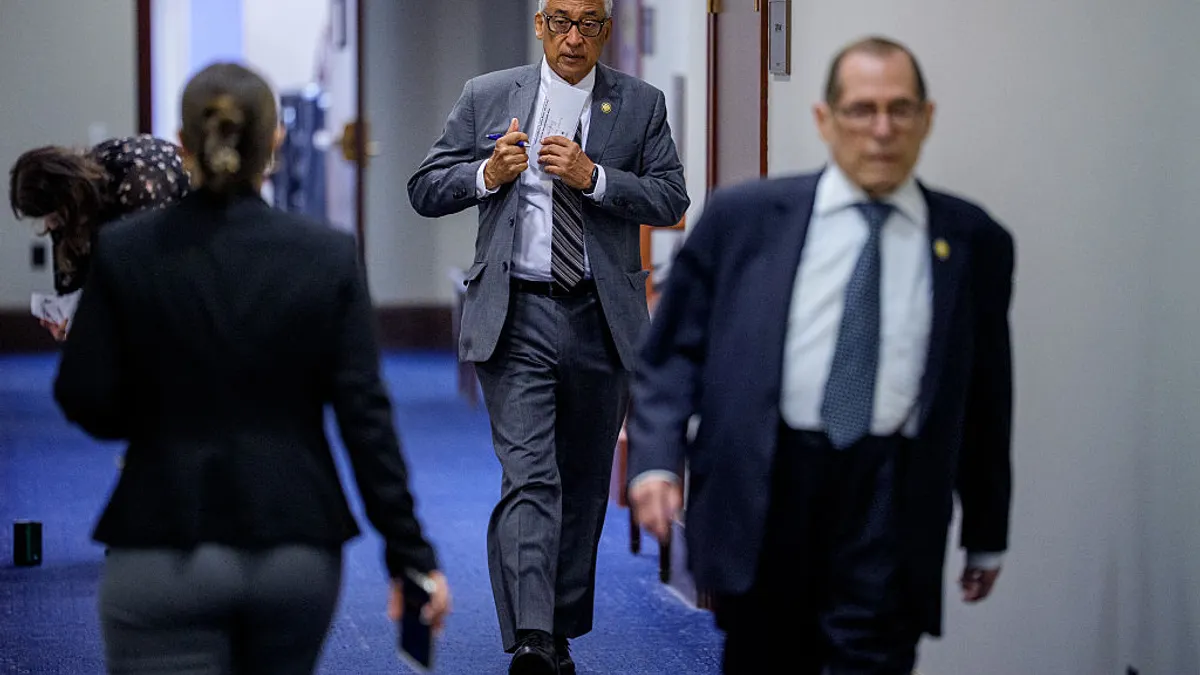
- The bill — introduced by Reps. John Mannion, D-N.Y., Bobby Scott, D-Va., and Brian Fitzpatrick, R-Pa. — is companion legislation to a Senate bill that currently awaits a full vote.
- The Education Department under the Trump administration has a total of 14 interagency agreements with six other federal agencies to offload many K-12 and higher education responsibilities. The administration has said the agreements will break up federal bureaucracy, but critics say they add confusion and prevent cohesion among the offices being outsourced.
Dive Insight:
In a joint statement issued Thursday, Mannion, Scott and Fitzpatrick said their bill seeks to prevent the four offices' transfers to agencies that "lack the staff, experience, and expertise needed to administer them."
In the statement, Fitzpatrick said, "The families I represent should never have to wonder whether a federal reorganization will cost their child a service, a protection, or an opportunity."
Fitzpatrick said that when constituents raised concerns about moving the Office of Special Education and Rehabilitative Services out of the Education Department, he "took those concerns directly to the Administration and demanded answers about how it would protect IDEA [the Individuals with Disabilities Education Act], preserve critical resources, and prevent disruption for students."
Chad Rummel, CEO of the Council for Exceptional Children, praised the House bill in a Thursday statement. "Transferring special education to the Department of Health and Human Services is misguided — it segregates special education from other education programs and jeopardizes the rights of students with disabilities."
The House bill was referred to the Education and Workforce Committee for consideration.
The companion bipartisan Senate bill passed that chamber’s Committee on Health, Education, Labor and Pensions in July.
Under the interagency agreements, the Education Department retains statutory responsibility for the offices being outsourced, while duties such as grant management, technical assistance and other services are moved to another federal agency.
Savannah Newhouse, Education Department press secretary, addressed the House bill in an email Thursday: "The era of coddling a failed status quo must end. It is an insult to American families — and downright malpractice — that Washington politicians are rushing to protect a system where roughly 30 percent of our nation’s students are proficient in math and reading. The needs of the system cannot be more important than the needs of the kids."
Newhouse added that it is "entirely premature to sabotage this effort before it has the chance to eliminate bureaucratic barriers and fully deliver the results that our students, families, and educators deserve."
Neither the House or Senate bill addresses the transfer of the Education Department's Office for Civil Rights to the U.S. Department of Justice. Many civil rights and special education advocacy organizations have expressed concerns about the weakening of student civil rights protections and the Justice Department’s capacity to handle K-12 and higher education-specific complaints.
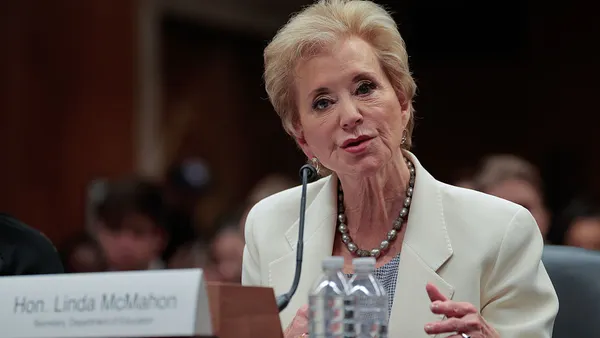
During the Education Department's annual Office of Special Education Programs conference in August, U.S. Secretary of Education Linda McMahon said the department's work to reduce federal red tape is rooted in the "firm and unwavering commitment to fully supporting the protections guaranteed, first and foremost, under federal law."
A House Republican-backed package of 10 bills, which was introduced in July and passed by the Education and Workforce Committee that same month, proposes codifying several interagency agreements by permanently moving select legal responsibilities out of the Education Department to other federal agencies.